A strapless dress is the most architecturally honest garment in a woman’s wardrobe. There are no straps to disguise a loose bodice, no sleeves to hide an ill-fitted armhole, and no collar to frame a neckline gone wrong. Everything rests on construction, proportion, and restraint. The women who wear strapless dresses best are not the ones who pile on the most jewelry or the boldest shoe. They are the ones who understand the garment’s engineering well enough to let it do the talking. This is a guide to that quieter kind of mastery.
The Architecture of a Strapless Bodice
Before any conversation about accessories or shoes, you need to understand what is actually holding a strapless dress up. A well-made bodice relies on a combination of internal structure: vertical boning channels (traditionally spiral steel or rigid plastic), a fitted inner lining cut on the straight grain for stability, and often a waist stay, a grosgrain ribbon anchored at the interior seams that sits snugly against the natural waist to bear weight and keep the garment from migrating downward as you move. Many couture-level bodices also incorporate silicone grip tape along the top interior edge, a near-invisible strip that creates friction against the skin so the dress does not slide during a dinner, a toast, or a dance.
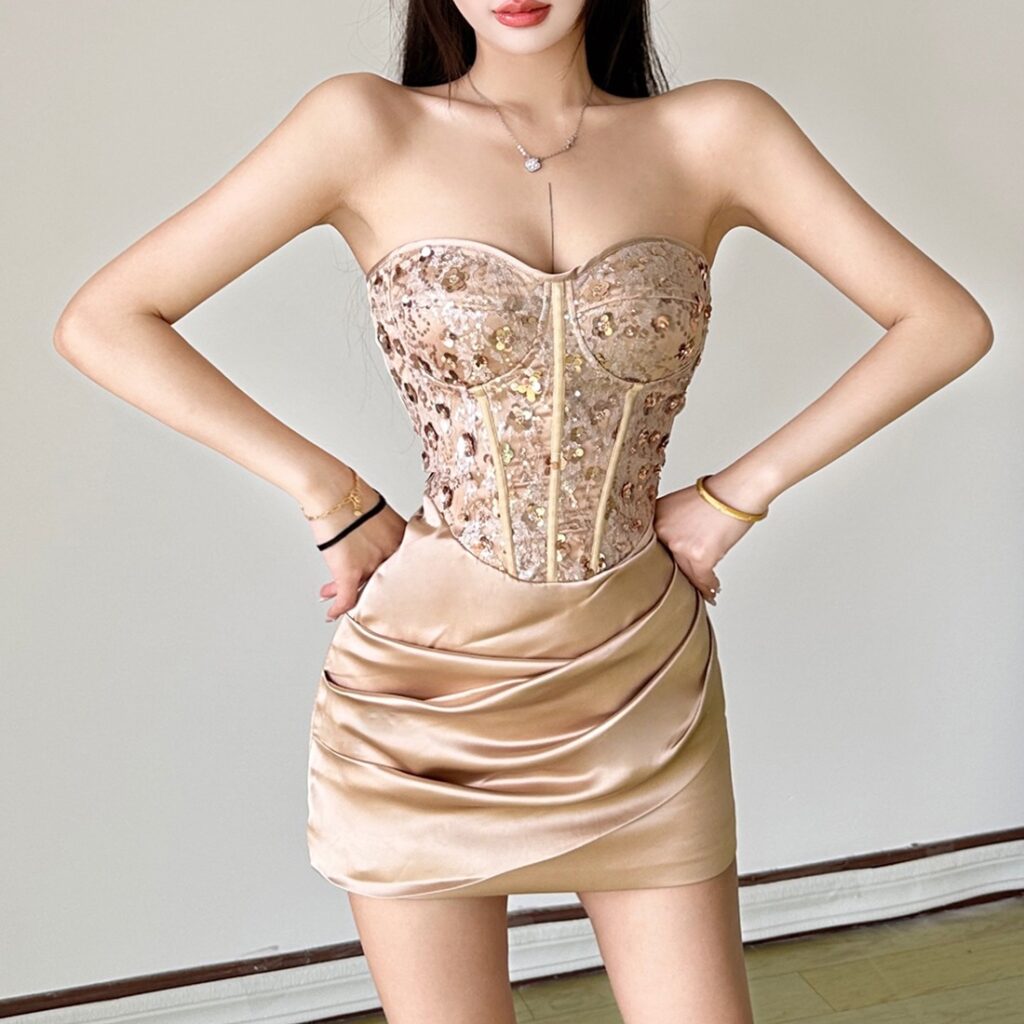
The curvature of the top edge matters just as much as what is sewn inside it. A straight-cut neckline across the bust tends to dig in at the side seams and gape at the center front on fuller busts, while a gently curved, sweetheart-influenced edge follows the natural line of the ribcage and distributes tension evenly. This is why a dress like the Helene Strapless Dress relies on a shaped bustline rather than a flat band: the curve itself becomes part of the structural engineering, not just a design flourish.
The Helene Strapless Dress relies on a curved bustline and internal boning for structure, not surface decoration.
If you are shopping for a strapless piece, run your hand along the inside of the bodice before you even try it on. You should feel distinct boning channels, a waist stay, and a smooth, fully lined interior. A dress without these elements is a costume. A dress with them is a garment built to move through a full evening without a single adjustment.
Solving the Slip: Common Fitting Problems and How to Fix Them
Even a beautifully constructed strapless dress can fail if it is not fitted to your specific torso length and bust shape. The three most common complaints I hear in fittings are bodice slipping, gaping at the center front or side seams, and a bodice that rides up or down because the torso length does not match the wearer’s proportions.
Slipping is almost always a sizing or foundation issue rather than a design flaw. If the dress slides down when you raise your arms or sit, the first fix is foundation, not safety pins. A long-line strapless bra with its own boning adds a second layer of structure beneath the dress and distributes weight more evenly than the garment alone. For dresses with delicate embellishment, like the Valentine Embroidered Strapless Dress with Slim Fit, a seamless low-back bra or fashion tape applied directly to the skin along the interior edge prevents the embroidery from being compressed while still giving you grip.
Gaping at the center front usually signals that the dress is cut for a larger ribcage than you have, or that the cups are shaped for a different bust projection. A tailor can take in the side seams and re-curve the top edge, but this only works if there is enough seam allowance to manipulate. Gaping at the sides, by contrast, often means the bodice itself is too wide for your frame; sizing down and having a tailor add a touch of extra boning at the side seam resolves this more reliably than any amount of tape.
Torso length is the fitting issue most women overlook. If you are long waisted, a bodice cut for a shorter torso will sit above your natural waistline and feel tight across the ribs. If you are short waisted, the opposite happens: the bodice feels loose and the waist seam droops. A skilled tailor can add length at the side seams or take in horizontal darts at the princess seams to correct this without disturbing the boning structure. The Smithsonian Institution’s costume conservation archives document how historic corsetry and boned bodices solved exactly this problem long before ready-to-wear sizing existed, using individually fitted stays rather than standardized measurements. The principle still applies: a strapless dress is only as good as its fit to your specific torso.
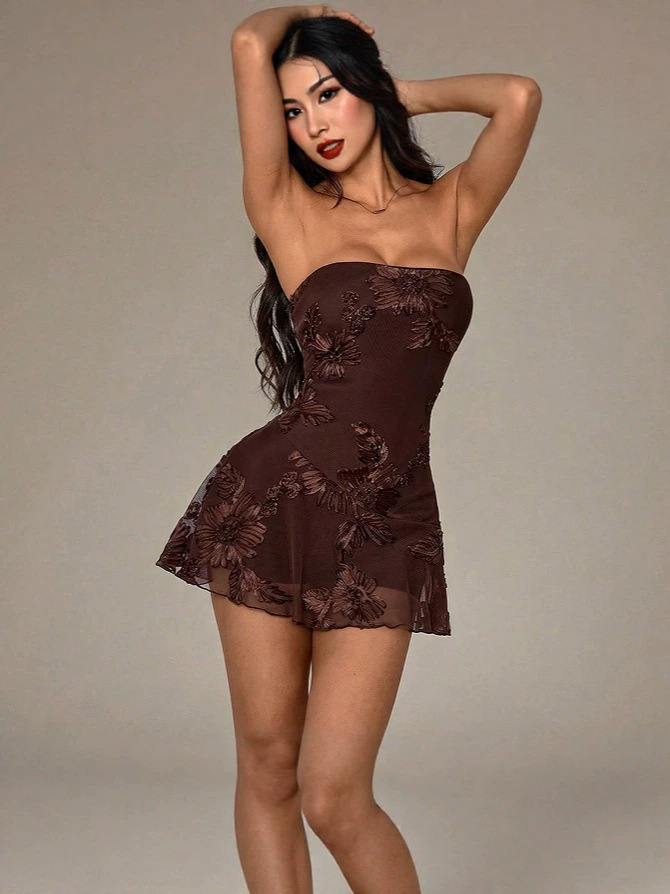
The Valentine Embroidered Strapless Dress with Slim Fit demonstrates how a close, boned silhouette eliminates the need for constant adjustment.
Necklines and Jewelry: The Art of Subtraction
The single biggest styling mistake with a strapless dress is treating the bare neckline as empty space that needs filling. It is not empty. It is the design’s intended focal point, and it was cut specifically to draw the eye to the collarbone, shoulders, and the line of the neck. Loading that same area with a heavy statement necklace competes with the dress rather than complementing it.
The rule I give every client: let the neckline dictate the jewelry, not the other way around. A straight-across bodice, like the one on the Mathilde French Style Strapless Floral Dress, pairs beautifully with drop earrings and a bare neck, because the horizontal line of the bodice already provides visual structure. Adding a necklace here creates a second horizontal line that fights the first. A sweetheart or curved neckline has more room to accommodate a delicate pendant that follows the curve downward, echoing rather than interrupting the shape.
If the dress itself carries embellishment, embroidery, pearls, or beading along the bodice, as with the Nathalie Elegant Strapless Slim Fit Long Dress with Pearl Decoration, treat the dress as the jewelry. A cuff bracelet or a single cocktail ring is enough. The decoration already does the work a necklace would otherwise do, and stacking ornamentation on top of ornamentation reads as cluttered rather than considered.
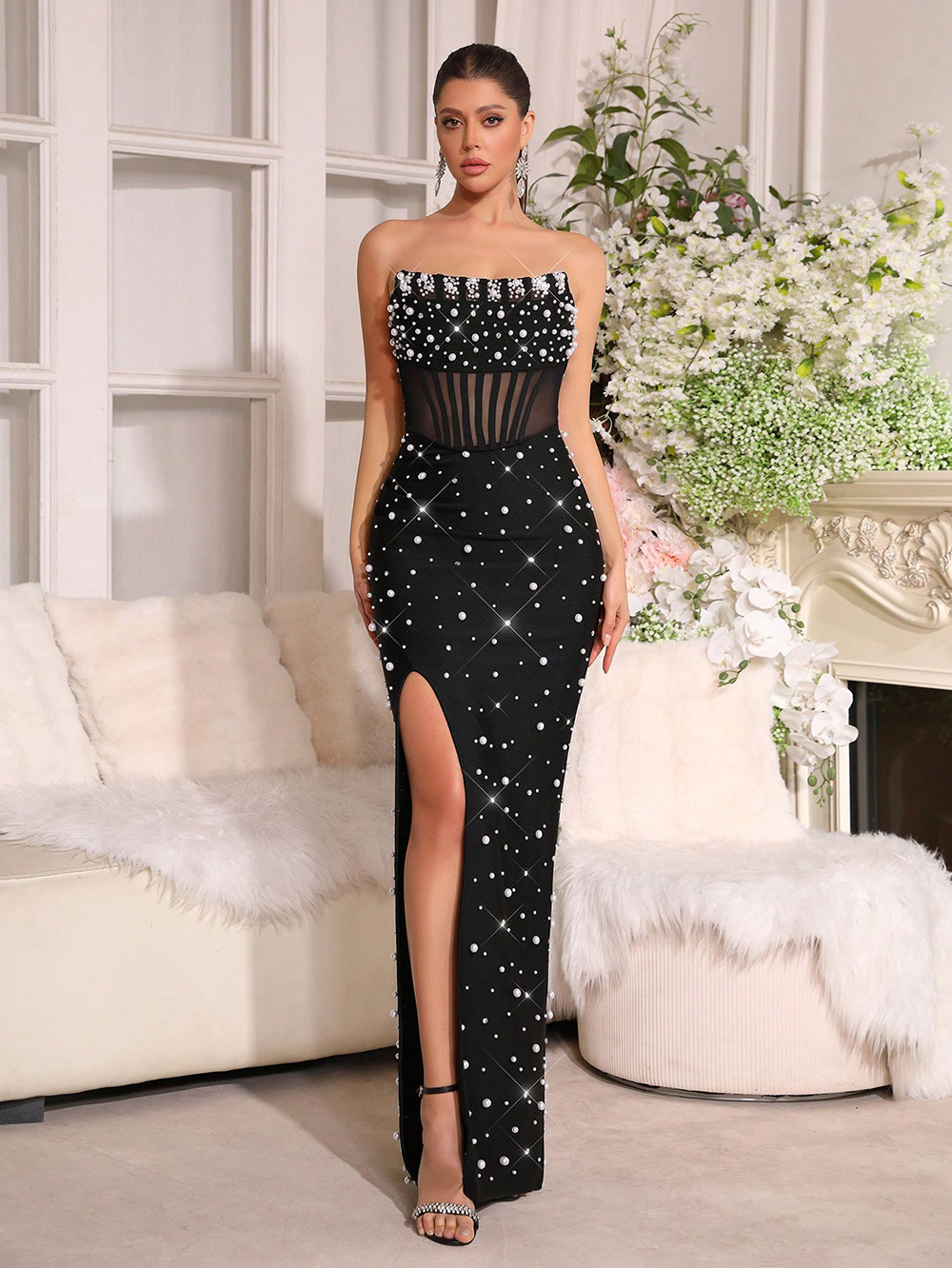
The Nathalie’s pearl decoration functions as its own jewelry; additional necklaces would overwhelm the bodice.
Earrings are almost always the safer accessory with any strapless neckline, because they frame the face rather than compete with the collarbone. A long, articulated drop earring elongates the neck and draws the eye upward and outward, away from the bodice entirely, which is exactly the visual trick you want when the dress itself is already making a strong statement.
Shoulder Lines, Posture, and Proportion
A strapless dress puts the shoulder line on full display in a way few other silhouettes do, which means posture becomes part of the styling, not an afterthought. Rounded shoulders read as collapsed fabric at the top edge of the bodice; a lifted, open chest reads as intentional structure. This is not about standing stiffly. It is about understanding that the horizontal line across your collarbone is now a visible design element, and how you hold it changes how the entire dress photographs and moves.
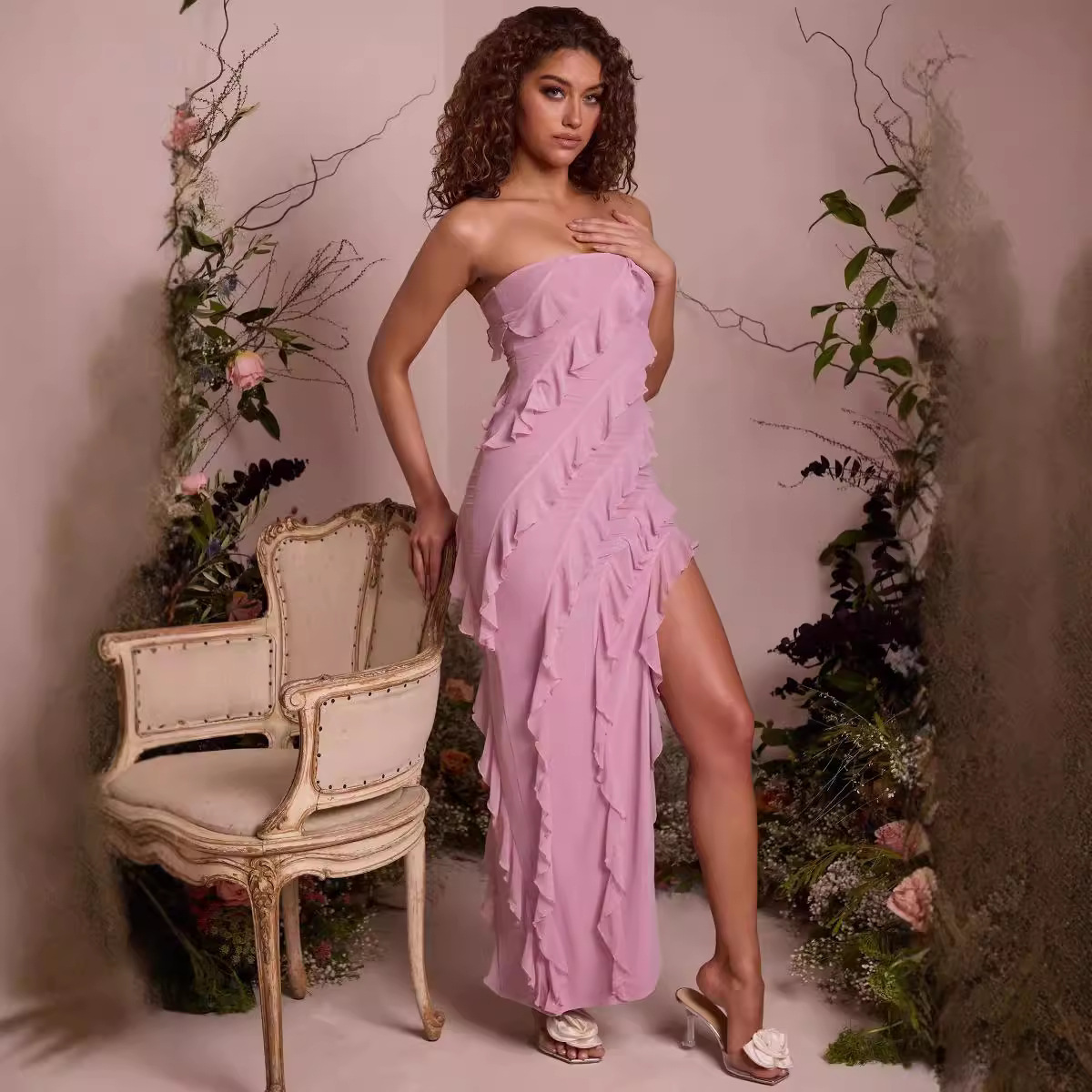
Proportion also matters in how the bodice interacts with the rest of the silhouette. A dress with a dramatic off shoulder ruffle, like the Colette Elegant Off Shoulder Ruffled Strapless Dress with High Slit, already introduces volume at the top of the body. Balancing that volume means keeping the hair either fully swept up, to expose the shoulder line the ruffle is designed to frame, or left in loose, unstructured waves that do not compete with the ruffle’s own movement. A tight, sculpted blowout fights the organic drape of the ruffle; a soft wave or a clean updo lets it read as intentional.
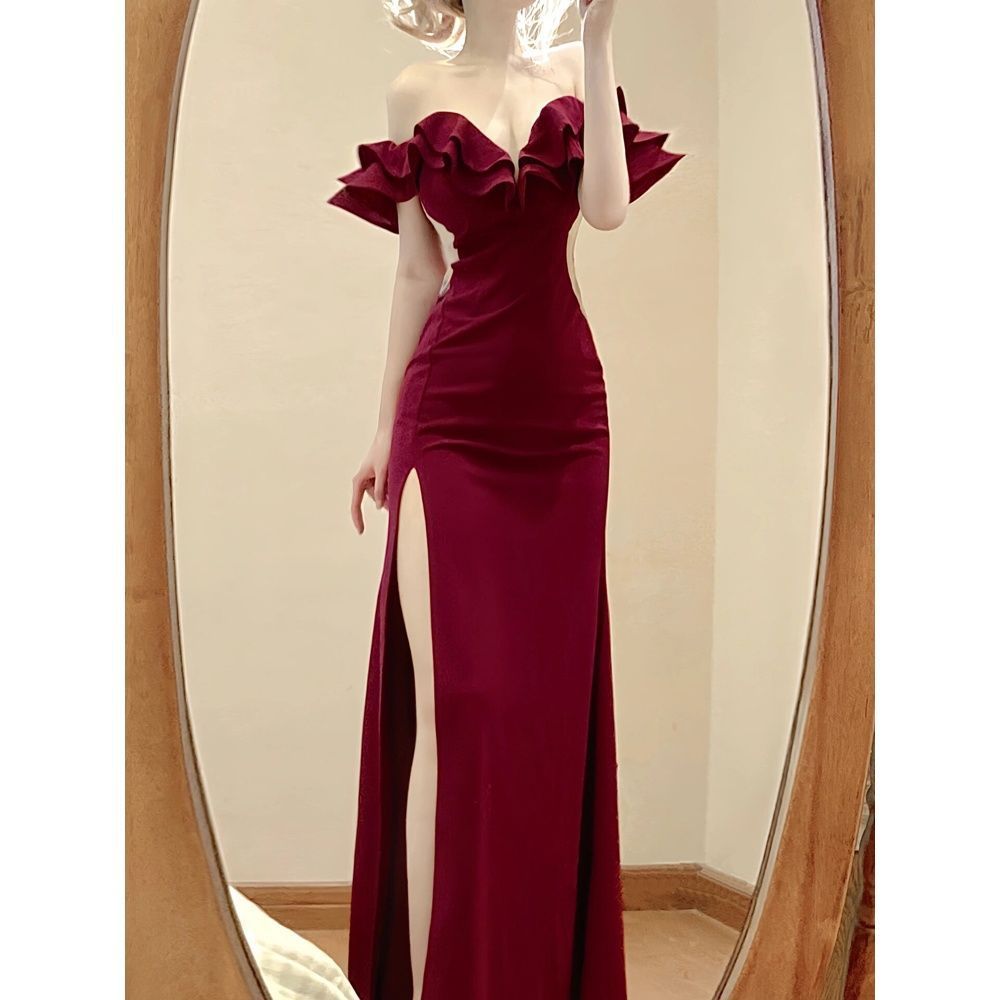
The Colette’s ruffled shoulder line calls for a hairstyle that frames rather than competes with the volume.
If your dress has a high slit in addition to the strapless bodice, as the Colette does, resist the urge to match drama with drama elsewhere. One dominant structural feature per outfit is the rule. The slit already introduces movement and leg line; the bodice already introduces shoulder exposure. Everything else, hair, jewelry, shoes, should settle into a supporting role.
Footwear: The Quiet Anchor
Shoe choice with a strapless dress comes down to one question: does the shoe extend the line of the leg the dress has already established, or does it interrupt it? A dress with a high slit or a leg-baring silhouette wants a shoe with a similarly clean, unbroken line, a pointed-toe pump or a strappy sandal with a thin ankle strap rather than a chunky platform that visually shortens the leg.
For a dress with significant movement in the skirt, like the Sabine Strapless Backless Tassel Dress, the tassel detailing at the hem is already doing visual work as you walk. A simple, minimal heel in a neutral or metallic tone lets the tassels remain the focal point of movement, while a shoe with its own heavy embellishment creates two competing centers of motion in a single outfit, one at the hem and one at the foot, which reads as busy rather than deliberate.
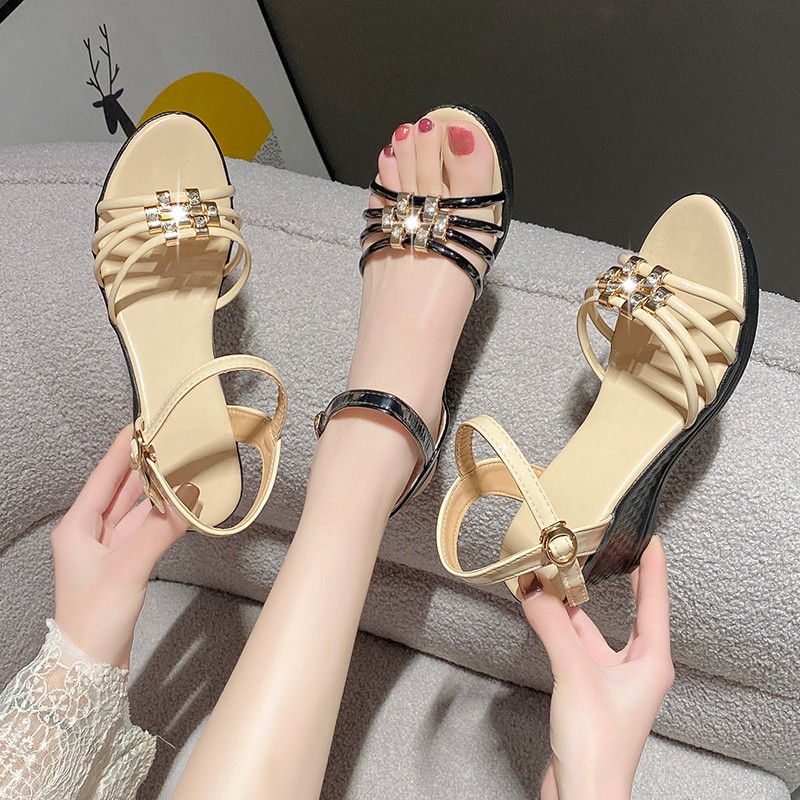
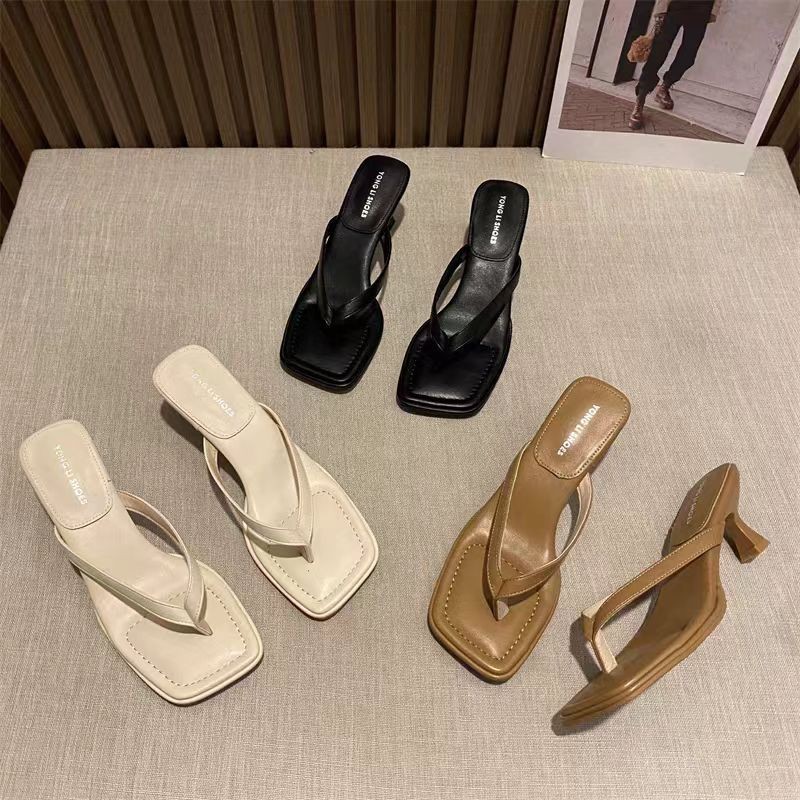
Minimalist strapped sandals ground an open neckline cleanly without competing for visual attention at the hem.
Heel height should also respond to hem length. A floor-length strapless gown wants a heel tall enough to keep the hem from dragging, typically two and a half inches or more, while a midi or cocktail-length strapless dress has more flexibility, allowing a kitten heel or a low block heel for daytime wear without sacrificing the formality the bodice implies.
Layering Without Clutter
The fear of a strapless dress is often less about the dress itself and more about what happens when the temperature drops or the setting shifts from ceremony to reception. The solution is never to add more than one layering piece, and to choose that piece based on how much of the bodice you are willing to cover.
A structured blazer with a slightly cropped length sits just at the waist and leaves the bodice fully visible when worn open, which works particularly well over a straighter-necklined dress where the blazer’s lapel echoes the clean horizontal line beneath it. A silk or wool shawl, draped loosely rather than pinned, offers warmth without hiding the shoulder line entirely, since it can slip to the elbows the moment you are back indoors. According to care guidance from the international textile care labelling authority, natural fibers like silk and wool respond best to gentle, low-heat handling, which is worth remembering before you fold a delicate shawl into a bag for travel between venues.
What you want to avoid is doubling up: a blazer and a scarf, or a shawl and a cardigan. Pick one layering piece that matches the formality of the dress, and let it come off entirely once you are settled. The goal is a seamless transition, not an additional outfit stacked on top of the first one.
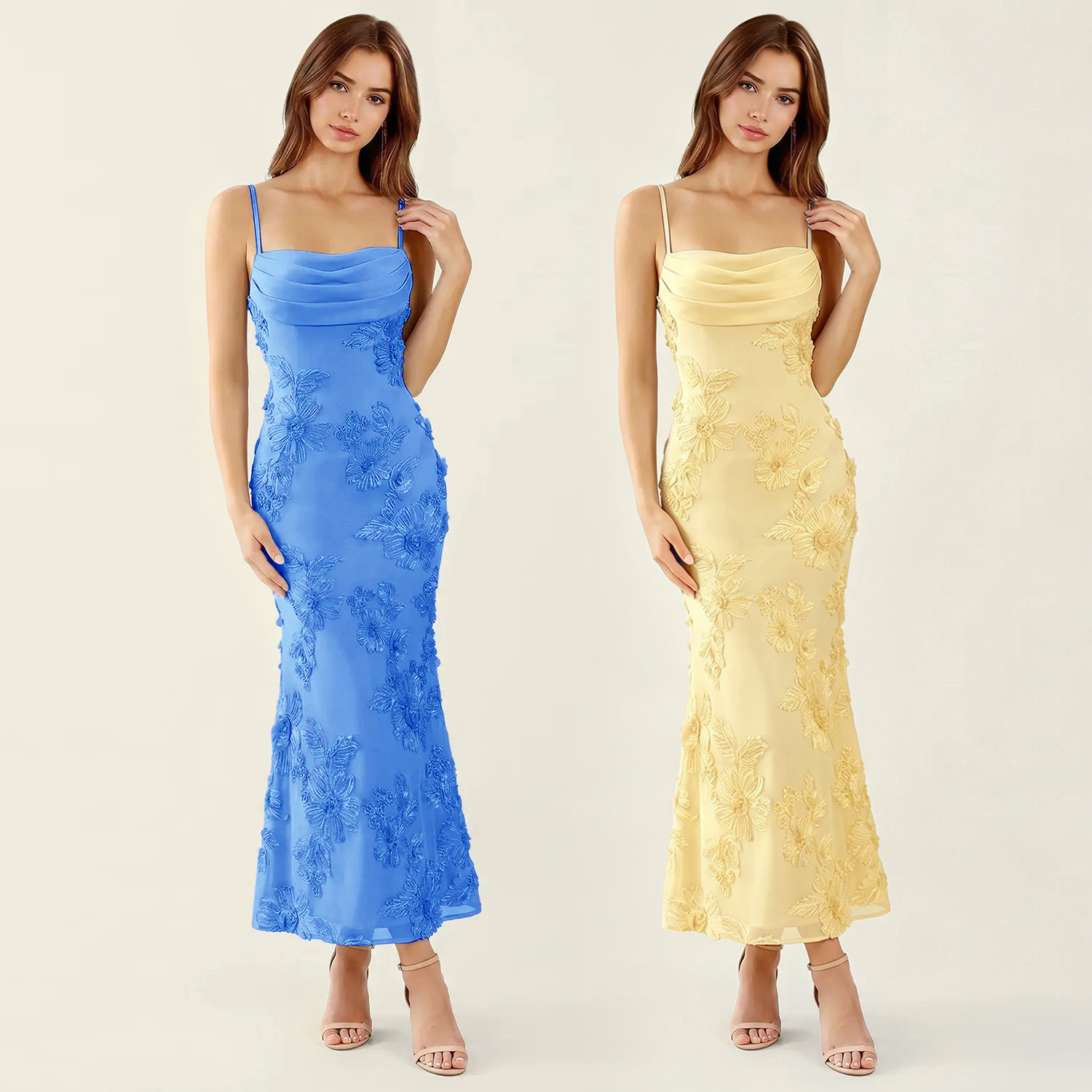
The Mathilde French Style Strapless Floral Dress styled with a single silk shawl, proof that one thoughtful layer outperforms several competing ones.
The Styling Takeaway
Styling a strapless dress well is an exercise in trust: trusting the construction to hold you, trusting the neckline to carry its own visual weight, and trusting that one well-chosen shoe, one earring, one layering piece will say more than five competing accessories ever could. The dresses that photograph best and feel best at the end of a long evening are rarely the most heavily styled; they are the ones where every decision, from the waist stay sewn inside the bodice to the heel chosen for the hemline, was made in service of the garment’s own architecture. Get the fit right first. Let the neckline and the shoulder line breathe. Choose footwear and jewelry that extend the dress’s own lines rather than introduce new ones. Everything else, the shawl, the blazer, the single bracelet, should feel like punctuation, not a second sentence. That restraint is not a limitation. It is the entire discipline of dressing well in a garment with nothing to hide behind.