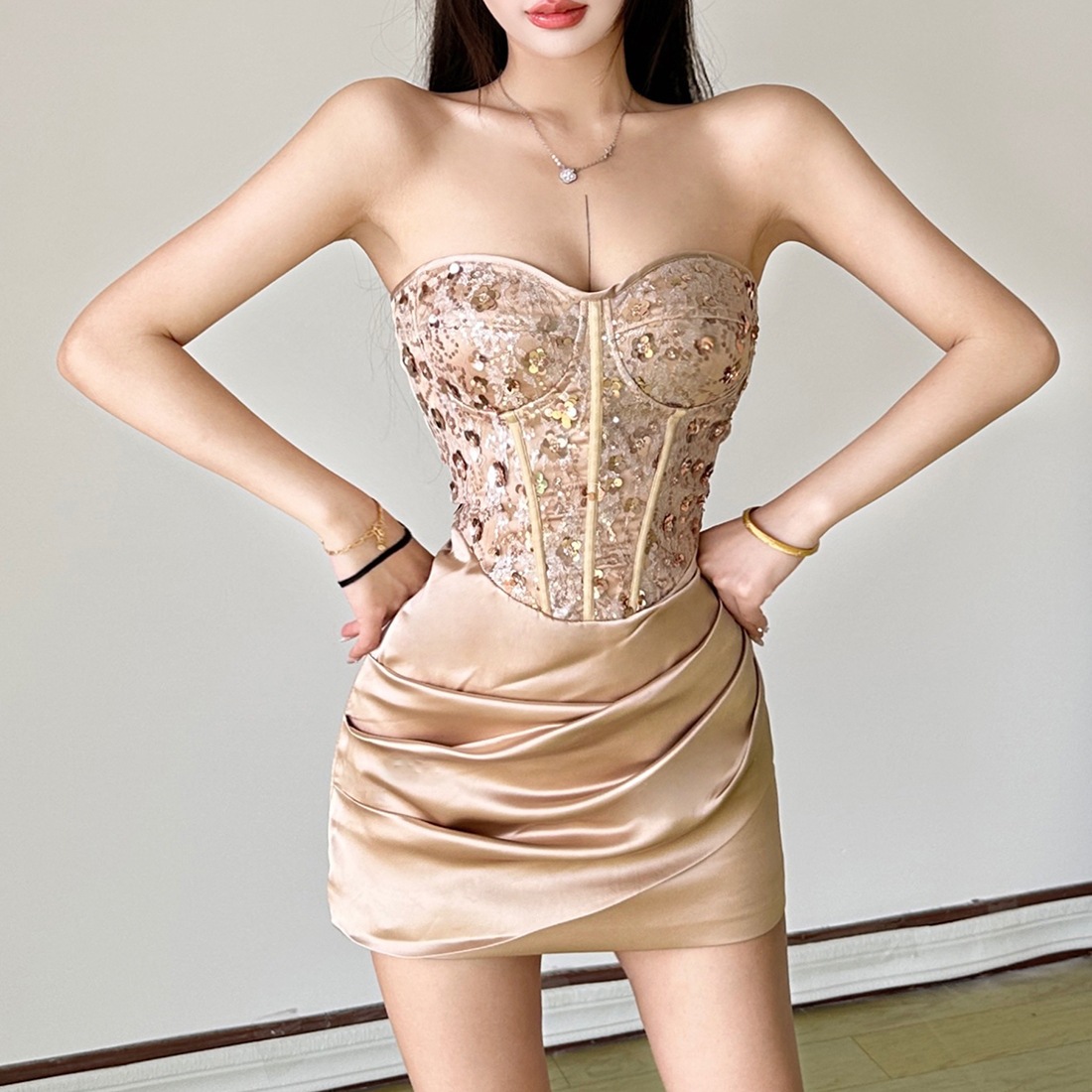
The short answer: let the sleeve be the only loud thing in the outfit. A dramatic sleeve already supplies volume, movement and a focal point, so everything around it (the neckline, the jewellery, the shoes, the bag, even the hair) should work in a quieter register. An outfit feels busy when several elements compete for the same job. Give the sleeve that job exclusively and the rest becomes a supporting cast.
That sounds simple, yet most of us have stood in front of a mirror wearing a beautiful bishop sleeve or a sculpted puff and felt vaguely overdressed, without being able to say why. Usually the culprit is not the sleeve itself but the things stacked around it: a statement necklace sitting right where the fabric gathers, a jacket that crushes the volume, a patterned skirt fighting the shape above it. Below, we work through how to avoid those collisions, starting with the most useful concept in the whole subject.
Why a Statement Sleeve Reads as “Too Much” in the First Place
A sleeve is a large shape that sits at eye level and moves every time you do. Unlike a hem or a waistline, which stay mostly still, a voluminous sleeve swings, drapes and catches light as you gesture, and that constant motion is exactly what makes it so flattering and so attention-hungry at the same time.
Busyness tends to come from three sources, and it helps to name them before you get dressed:
- Competing focal points. A sleeve plus a bold neckline plus chunky earrings gives the eye three places to land, so it lands on none of them.
- Shape repetition without hierarchy. Volume on top and volume below (a full skirt, wide trousers) can look deliberate or can look like a costume. The difference is whether one of them clearly leads.
- Visual noise at the wrists and shoulders. Cuffs, bracelets, watches and shoulder straps all sit in the same zone as the sleeve and can muddy its outline.
Seen this way, the fix is editing rather than subtracting. You are not asking the sleeve to behave; you are clearing a runway for it.
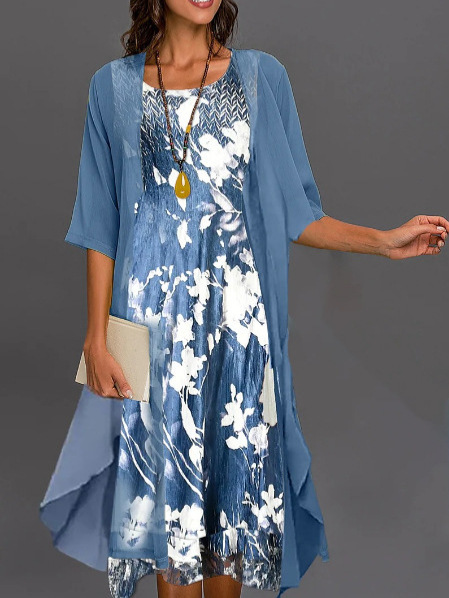
Soft, flowing fabric gives a dress its own movement, which is the cue to keep the accessories quiet.
The Proportion Rule: One Dominant Shape, One Quiet Shape
The most dependable way to keep a sleeve from overwhelming an outfit is to pair it with a streamlined partner. If the top half carries volume, the bottom half should carry line. A pencil skirt, a straight-leg trouser, a slim column dress or a clean midi that skims rather than flares all give the sleeve room to be the silhouette’s headline.
Fitted below, fluid above
A fitted waist is the quickest way to make volume look intentional. When a sleeve billows and the waist is defined, the body reads as a deliberate hourglass of contrast instead of a single undefined mass. This is why a dress that nips in at the waist often handles a dramatic sleeve more gracefully than a shift or a smock does. If you are drawn to dresses with a defined middle, the Marine dress with its fitted skirt and middle is the kind of structured base that suits this approach, since the lower half stays orderly while attention travels upward.
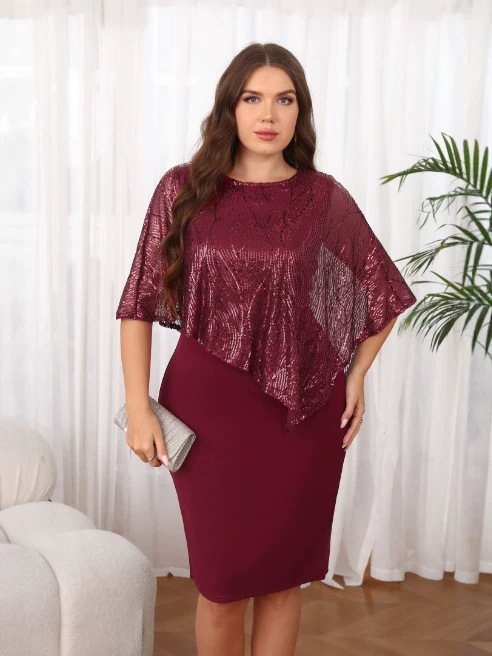
The Marine Dress with a Fitted Skirt and a Middle brings balanced proportion and clean silhouette lines to everyday and occasion styling.
When both halves are voluminous
It can work, but it needs a clear leader. Choose which half you want people to notice, then reduce the other: a big sleeve with a skirt that has only gentle fullness, or a wide trouser worn with a sleeve that is dramatic only at the cuff rather than all the way up the arm. Keeping the two volumes in the same fabric family (both fluid, or both crisp) also helps, because mismatched textures amplify the sense of clutter.
Mind the length
Sleeve length changes what balances it. A dramatic full-length sleeve ending at the wrist pairs well with a hemline that stops at the knee or below, because the long line of the arm is echoed. A shorter puff sitting at the upper arm tends to look sharper with a shorter or midi hem and bare forearms, which keeps the proportions from feeling top-heavy. If you are still deciding on hem length for the occasion, our guide to midi versus maxi dresses covers how each length behaves in practice.
Necklines, Jewellery and the Space Around the Sleeve
This is where most busy outfits are made. The neckline and the sleeve frame the same part of the body, so they have to agree. A statement sleeve rarely needs help from a statement necklace, and the two together can feel like wearing two outfits at once.
Choose a calm neckline
Clean, simple necklines give a sleeve room: a round neck, a boat neck, a gently scooped line or a soft V. Off-the-shoulder shapes can be beautiful, but they tie the sleeve and the neckline into one continuous gesture, so keep everything else minimal. For a closer look at that kind of shape, the Mathilde off shoulder patchwork dress is an example of a neckline-forward piece where restraint elsewhere does most of the styling work.
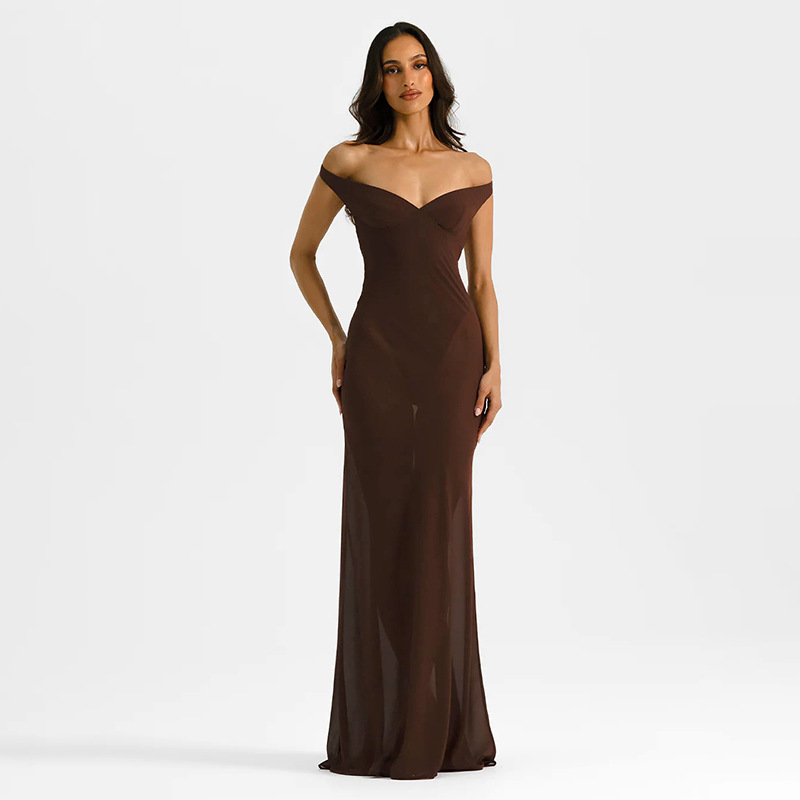
When the neckline and shoulder line already make a statement, jewellery can step back.
Jewellery: move the interest away from the shoulders
If the sleeve is the star, jewellery has two sensible jobs: stay small, or sit somewhere the sleeve is not. Fine studs, small hoops or a slim pendant work well. If you want more presence, shift it downward or outward instead: a ring, a delicate chain, a single cuff worn only if the sleeve ends well above the wrist. Heavy bracelets under a full sleeve tend to get lost in the fabric and add bulk where you do not want it. You can browse options in the jewellery and accessories collection with that principle in mind: pieces that finish an outfit rather than competing with it.
Hair and everything else near the face
A voluminous sleeve and voluminous hair worn down can merge into one soft cloud. Pulling hair back, wearing it sleek, or choosing a low bun gives the shoulder line definition and lets the sleeve’s outline be seen. It is a small decision with an outsized effect on how composed the whole look feels.
Colour, Pattern and Fabric: Keeping the Surface Calm
Colour and pattern determine how loud a sleeve is before it even moves. A sleeve in a solid, deep or neutral tone reads as sculptural; the same shape in a large print reads as busy almost instantly, because the pattern is magnified across a big area of fabric and repeated as it folds.
Let one thing carry pattern
If the sleeve is the statement, the rest of the outfit benefits from being solid or tonal. A monochrome look, where the top, bottom and accessories sit in the same colour family, is one of the most elegant ways to let shape do the talking. Black and white colour blocking can work too, provided the blocks are large and clean. The Capucine black and white colour block dress is a useful reference for how contrast can be organised into clear, simple zones rather than scattered detail. If you are choosing a darker palette, our guide on what colour shoes go with a black dress is handy for finishing the look without adding noise.
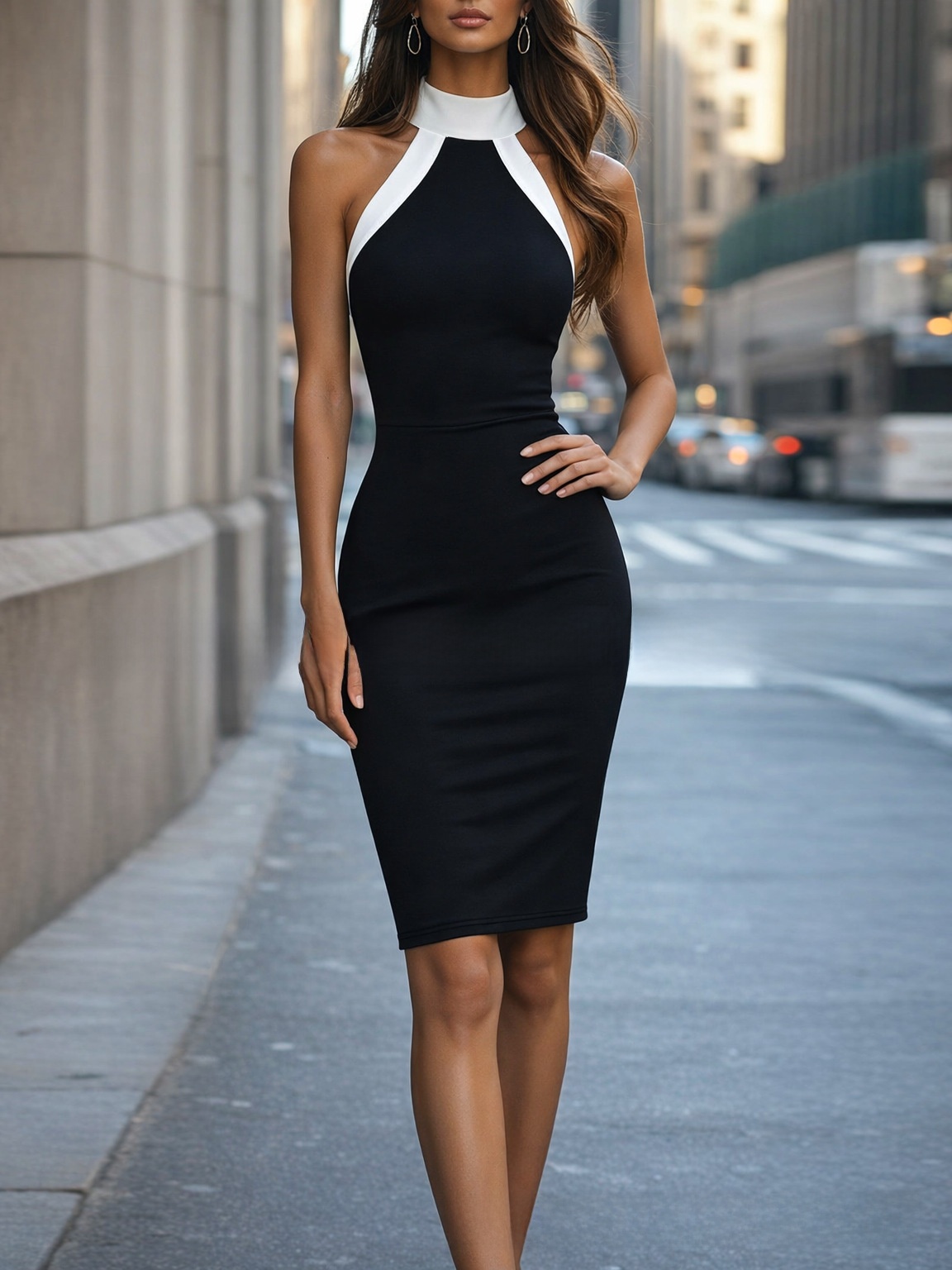
Large, clean colour zones keep contrast readable, a useful lesson for any outfit with a bold shape.
Fabric decides how the volume behaves
The same cut behaves very differently depending on the cloth. Crisp fabrics hold a sleeve’s shape and give it architecture; fluid fabrics let it drape and move. Neither is better, but they suit different goals. Crisp fabric tends to look more structured and formal; soft, flowing fabric tends to look relaxed and romantic. If you are working from a garment’s listed description, check the stated fabric before assuming it will hold or drape, and when care instructions matter, textile labelling symbols are explained clearly by the Federal Trade Commission’s guidance on textile labelling.
A practical point: very sheer or lightweight sleeves can look busier than heavier ones because you see layers, seams and the arm beneath. Lining, a plain slip or a simple underlayer in a tone close to your skin can calm that effect.
Layering Over Statement Sleeves: What Works and What Crushes
The main trade-off with a dramatic sleeve is that it does not like being squeezed. A fitted blazer or a close-cut jacket can flatten the volume, create bunching at the armhole and make the outfit look as though you are fighting the garment.
Choose outerwear that respects the volume
You have a few sensible options, each with its own trade-off:
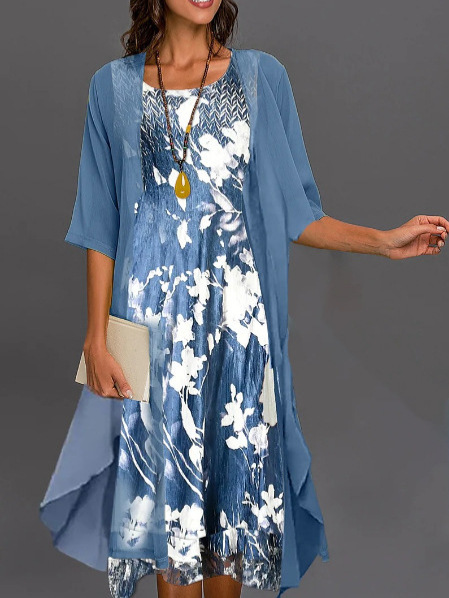
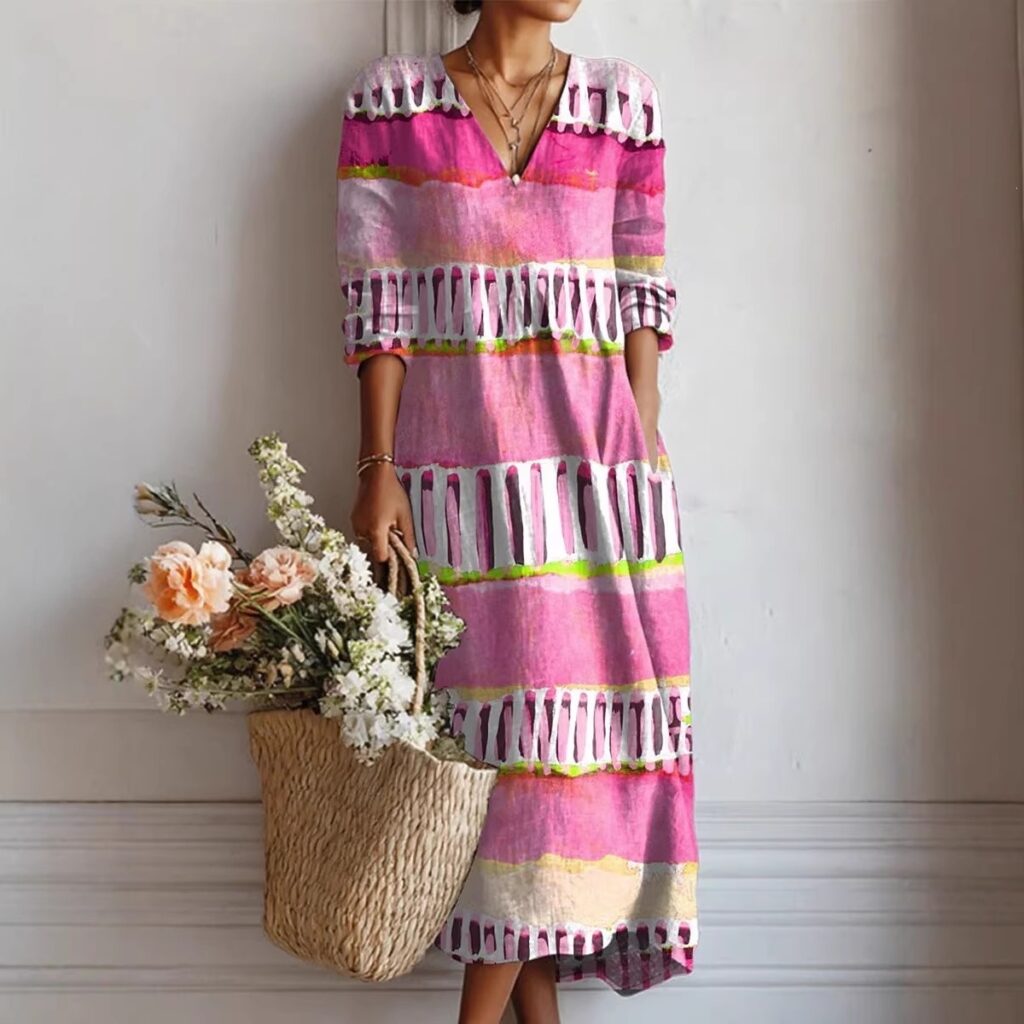
The Anais Fashionable and Elegant Chiffon Dress brings balanced proportion and clean silhouette lines to everyday and occasion styling.
- Cape-style or open coats. These can drape over the shoulders without compressing the sleeve, which preserves the shape but means the arms stay partly uncovered in cold weather.
- Oversized outerwear with generous armholes. A coat cut with room can fit over volume, though sizing up the coat adds bulk overall, so keep the rest of the outfit streamlined.
- Waistcoats and sleeveless layers. These add structure at the torso while leaving the sleeve completely free, which is often the cleanest solution indoors.
- Carrying the jacket. Sometimes the sensible answer is to wear the sleeve alone and bring the layer for later.
For help choosing something that works across different shapes, our guide to choosing a jacket that works with dresses, jeans and everyday outfits goes into fit and proportion, and the jackets and coats collection is a good place to look for outerwear with enough ease around the shoulder.
Bags and straps
A shoulder bag rubbing against a gathered or structured sleeve can crush it and shift the fabric all day. A clutch, a top-handle bag carried in the hand, or a crossbody worn lower can keep the shoulder line clean. It is a minor choice that keeps the outfit looking the same at the end of the evening as it did at the start.
Real-World Scenarios: Desk, Dinner and Weekend
Principles are useful, but outfits live in particular settings. Here is how the same ideas adapt.
For the office
Keep the sleeve as the single expressive element and make everything else disciplined: tailored trousers or a straight skirt, closed or low-profile shoes, a structured bag, minimal jewellery. A sleeve that stays comfortable when you type and reach is worth more than a dramatic one that catches on every surface, so test the range of movement before committing. Our piece on styling a long-sleeve dress for every occasion has more on shifting a sleeved look from desk to dinner.
For an evening out
Evenings can handle more drama, and a statement sleeve is a natural centrepiece. Keep the rest sleek: a slim silhouette, a simple heel, a small bag and perhaps one considered accessory. If you want a body-conscious base that leaves the top half free to lead, the cut of the Gaia round neck slim fit waist slit dress shows how a streamlined line can frame volume rather than compete with it. For building a full evening look, our dinner-to-dancing outfit guide is a useful companion.
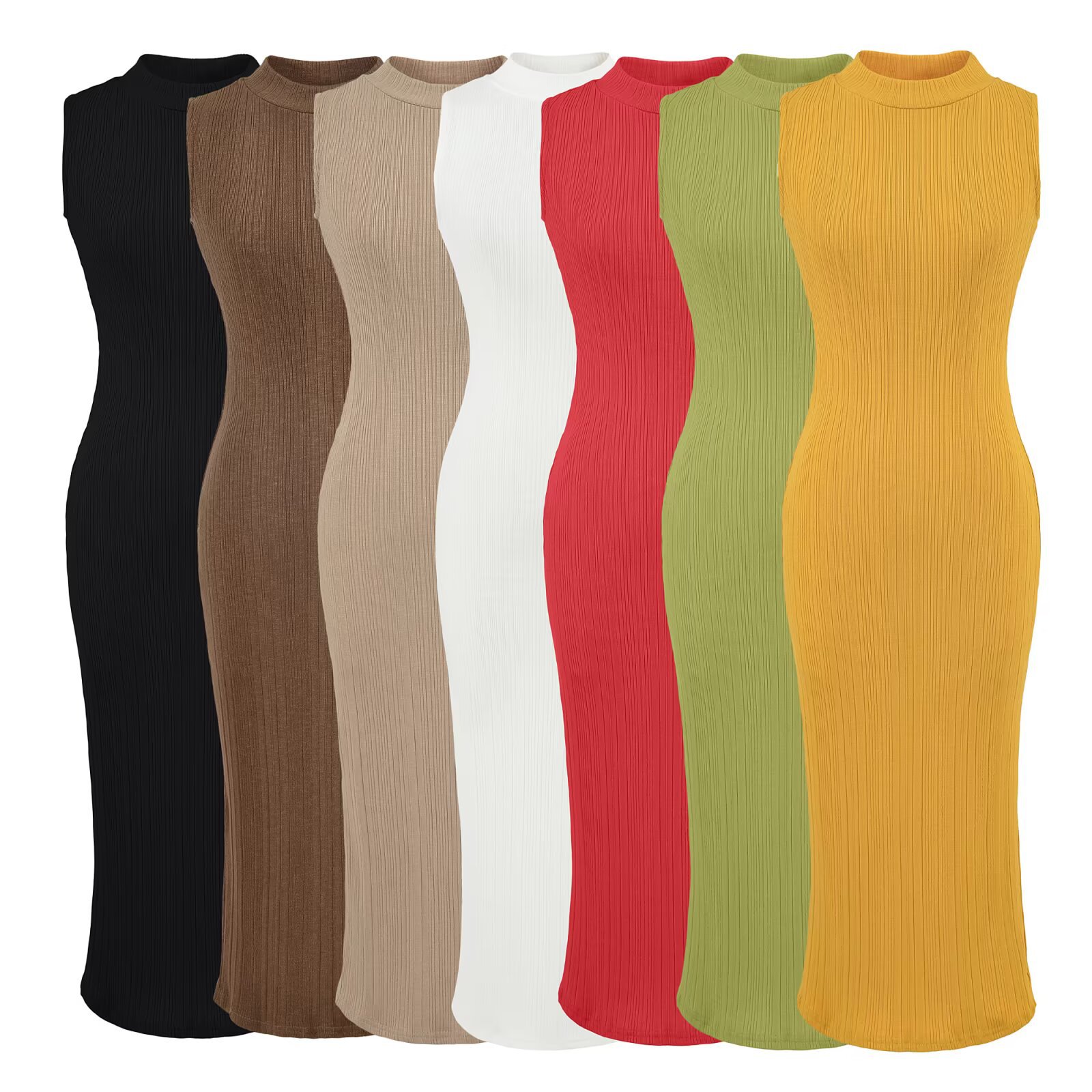
A streamlined base is the quietest way to let a bold element lead.
For a relaxed weekend
Casual settings are the easiest place to wear a big sleeve, because denim and simple footwear naturally quiet things down. A dramatic sleeve over slim, dark jeans with flat shoes and almost no jewellery looks effortless. The risk is adding too many casual details at once (a slouchy bag, chunky trainers and a loose pair of jeans), which turns relaxed into shapeless. Keep one element fitted so the outfit has a point of definition.
A Quick Pre-Departure Edit
Before you leave the house, run the outfit through a short mental check. It takes less than a minute and catches nearly every cause of a busy look:
- Is there exactly one clear focal point, and is it the sleeve?
- Does the bottom half provide a quieter, more streamlined line?
- Is the jewellery small, or placed away from the shoulders and neckline?
- Are colour and pattern restrained everywhere except possibly the sleeve itself?
- Can you move, reach and sit without the sleeve being crushed or catching?
If one answer is no, change that one thing rather than rebuilding the outfit. Often swapping a necklace for studs, or a flared skirt for a straight one, is the entire correction. And if your wardrobe feels full but nothing sits right, our article on what to wear when nothing feels right offers a calmer way to approach the decision.
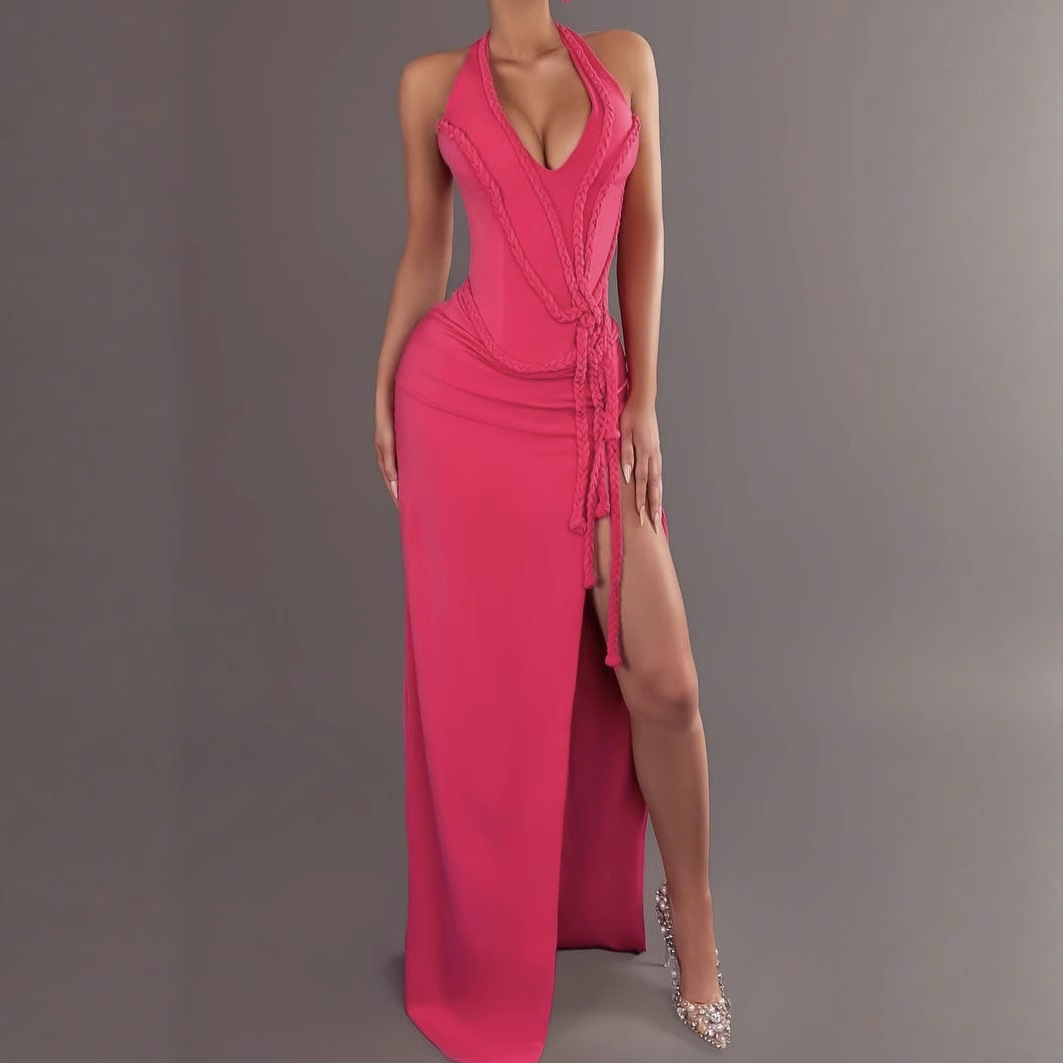
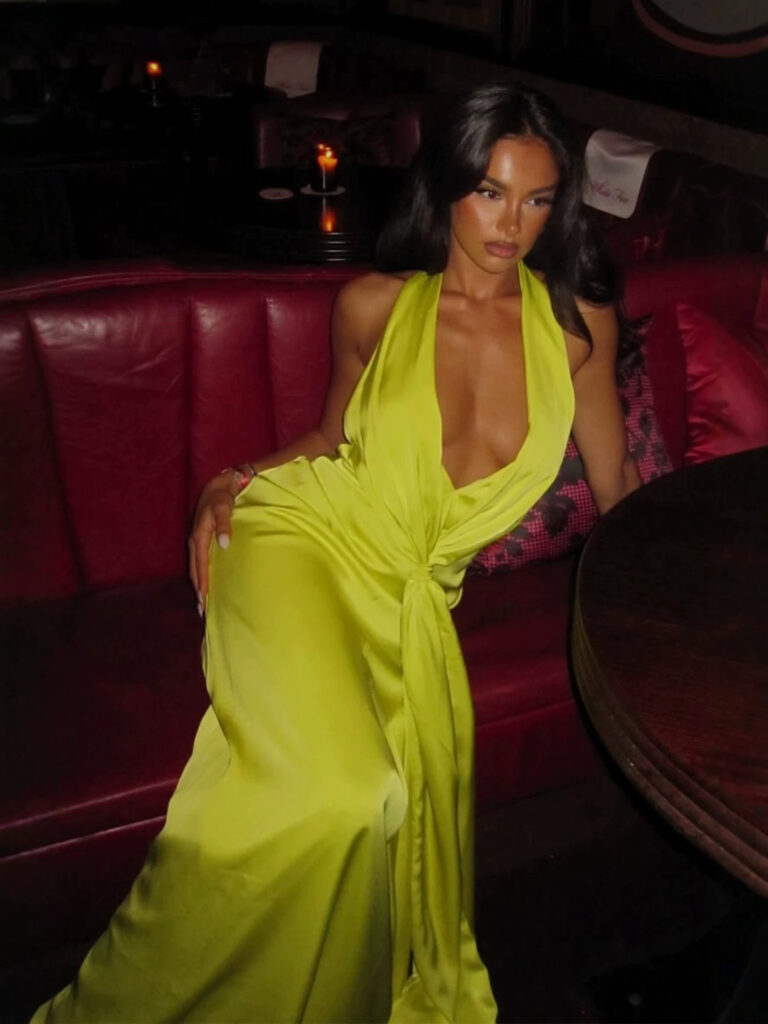
The Roxane Party Hollow Out Backless Long Bandage Dress brings balanced proportion and clean silhouette lines to everyday and occasion styling.
The Styling Takeaway
A statement sleeve does not need to be tamed; it needs to be given space. Choose one dominant shape and pair it with a quiet one, keep necklines and jewellery restrained, let colour and pattern stay calm around the sleeve, and layer with pieces that leave the volume uncrushed. When those pieces fall into place, the sleeve stops looking like a risk and starts looking like a decision. For your next step, browse the women’s dresses collection and look for one clean, streamlined base to build around.