A dress is rarely the finished outfit once autumn air settles in or an evening chill rolls through a restaurant patio. The real test of a wardrobe is what happens next: the layer you reach for when the temperature drops but you refuse to sacrifice the line of the dress underneath. Choosing what to wear over a dress in cool weather is a question of architecture as much as taste. A cardigan behaves differently than a blazer on the body. A hooded jacket changes the shoulder line in ways a draped shawl never would. This guide walks through the construction logic behind each layering option so you can dress for temperature without ever dressing down the silhouette you built.
Why Layering Over a Dress Is a Construction Problem, Not an Afterthought
Most women approach outerwear as decoration, something tossed over the shoulders at the last minute. But a dress has a built silhouette, often shaped by internal boning, a fitted bodice, or a defined waist seam, and whatever you place over it either respects that architecture or fights it. The shoulder seam of your outer layer needs to sit at or near the shoulder seam of the dress itself. If the layer’s shoulder point falls an inch past the dress’s natural shoulder, the entire line droops and the waist definition you worked for disappears under bulk.
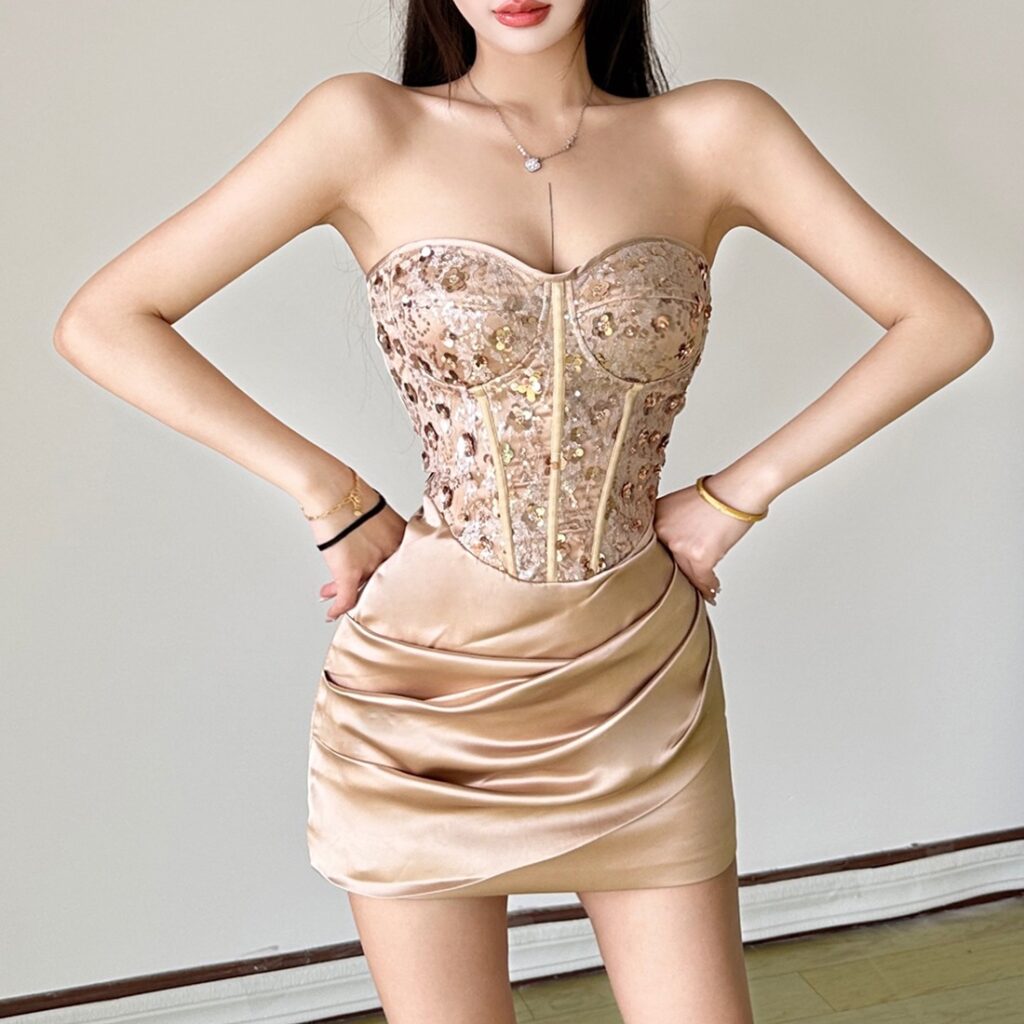
The weight of the fabric matters just as much as the cut. A dress built with a boned bodice or a fitted corset lining, the kind that keeps the torso smooth and the bust supported, needs a layer that complements rather than compresses. Heavy wool will flatten delicate boning channels and crush the curve the dress was engineered to hold. A lighter knit, by contrast, moves with the body and lets the dress do its structural work underneath.
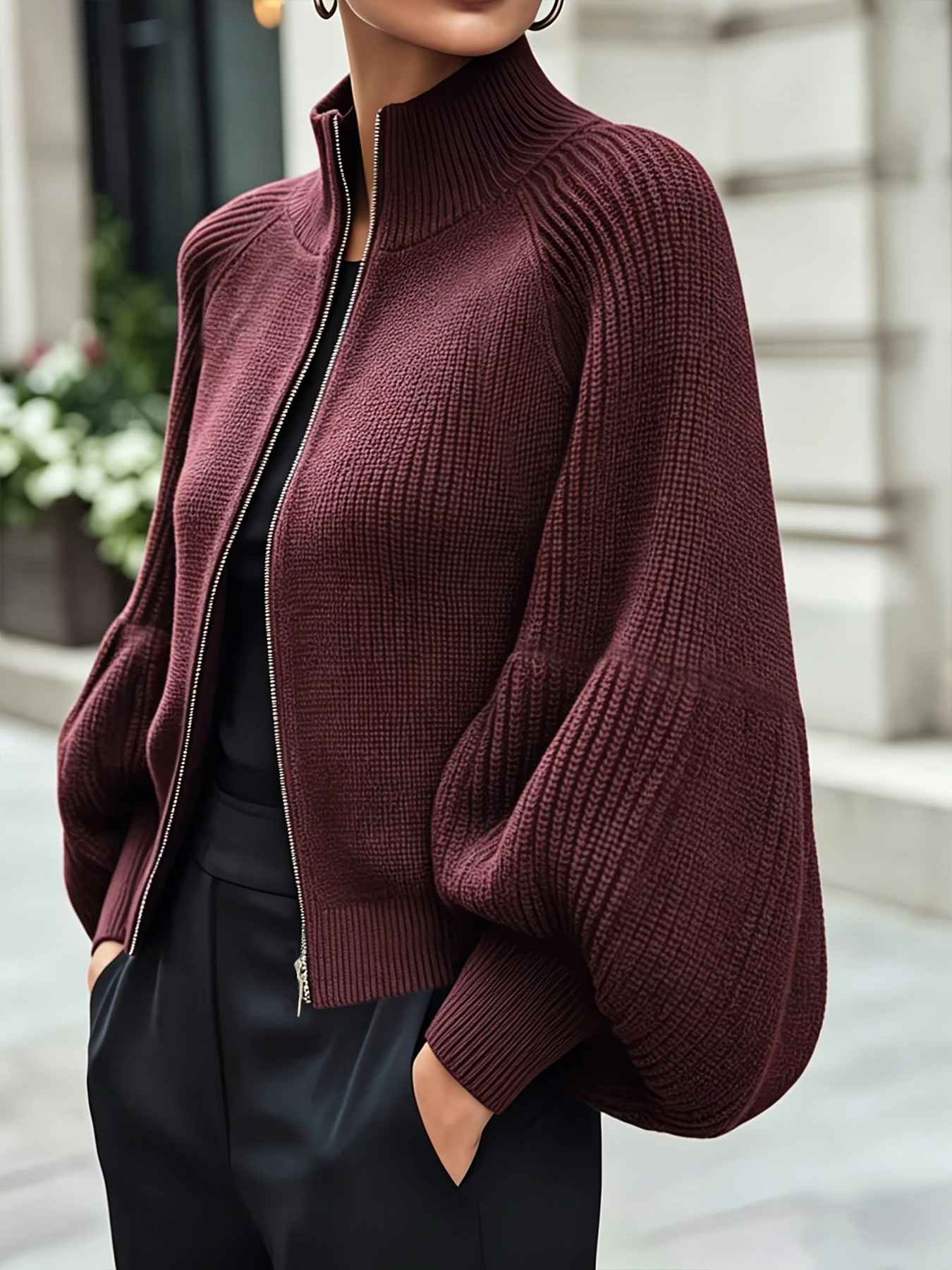
A cropped knit layer with defined sleeve volume keeps warmth concentrated above the natural waist of a dress.
Consider The Aurore V Neck Button Long Sleeve Knit Sweater as a baseline case study. Its V-neckline mirrors the natural curvature of most sweetheart and scoop necklines found in cocktail dresses, which means the dress’s neckline stays visible rather than swallowed. The button placket allows you to leave the top two buttons open, exposing just enough of the dress’s neckline to maintain the jewelry balance you planned, whether that is a delicate pendant or a statement collar necklace. Wool and wool blend knits also regulate temperature more efficiently than synthetic fleece because the fiber traps air within its crimped structure, a property well documented by the Woolmark Company’s research on natural fiber insulation. That means you get warmth without the stiff, insulated bulk that ruins a dress’s drape.
The Cardigan Solution: Soft Structure for Cocktail and Day Dresses
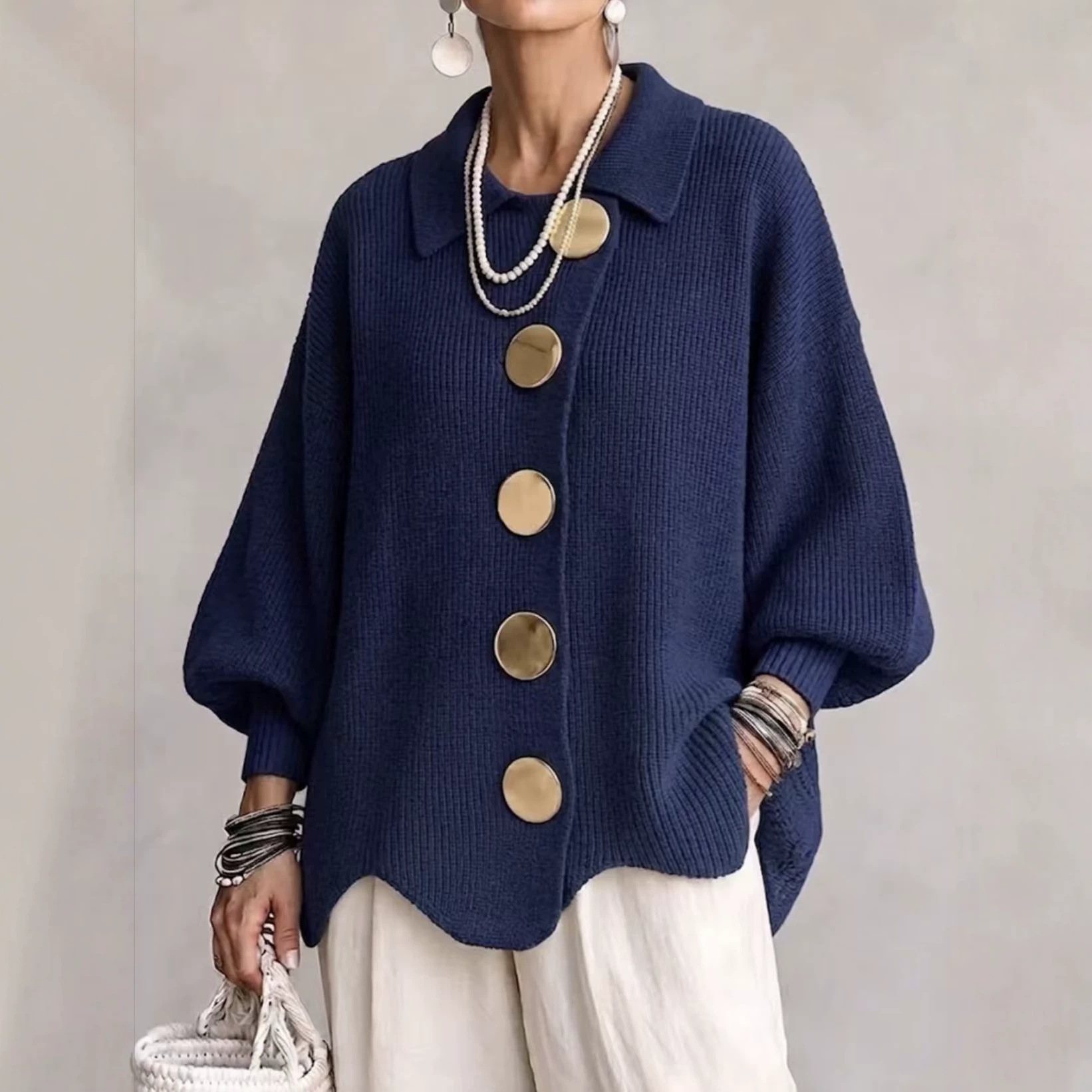
A cardigan is the most forgiving cool weather layer because it has no shoulder padding to fight and no rigid lapel to manage. But not all cardigans are built the same, and the collar height is where most women get the proportion wrong. A low, loose collar on a cardigan tends to collapse against a high necked dress, creating a doubled, bulky line at the throat. A high collar cardigan, on the other hand, creates a graduated neckline effect, almost like a cowl, that frames the face and draws the eye upward rather than widening the shoulders.
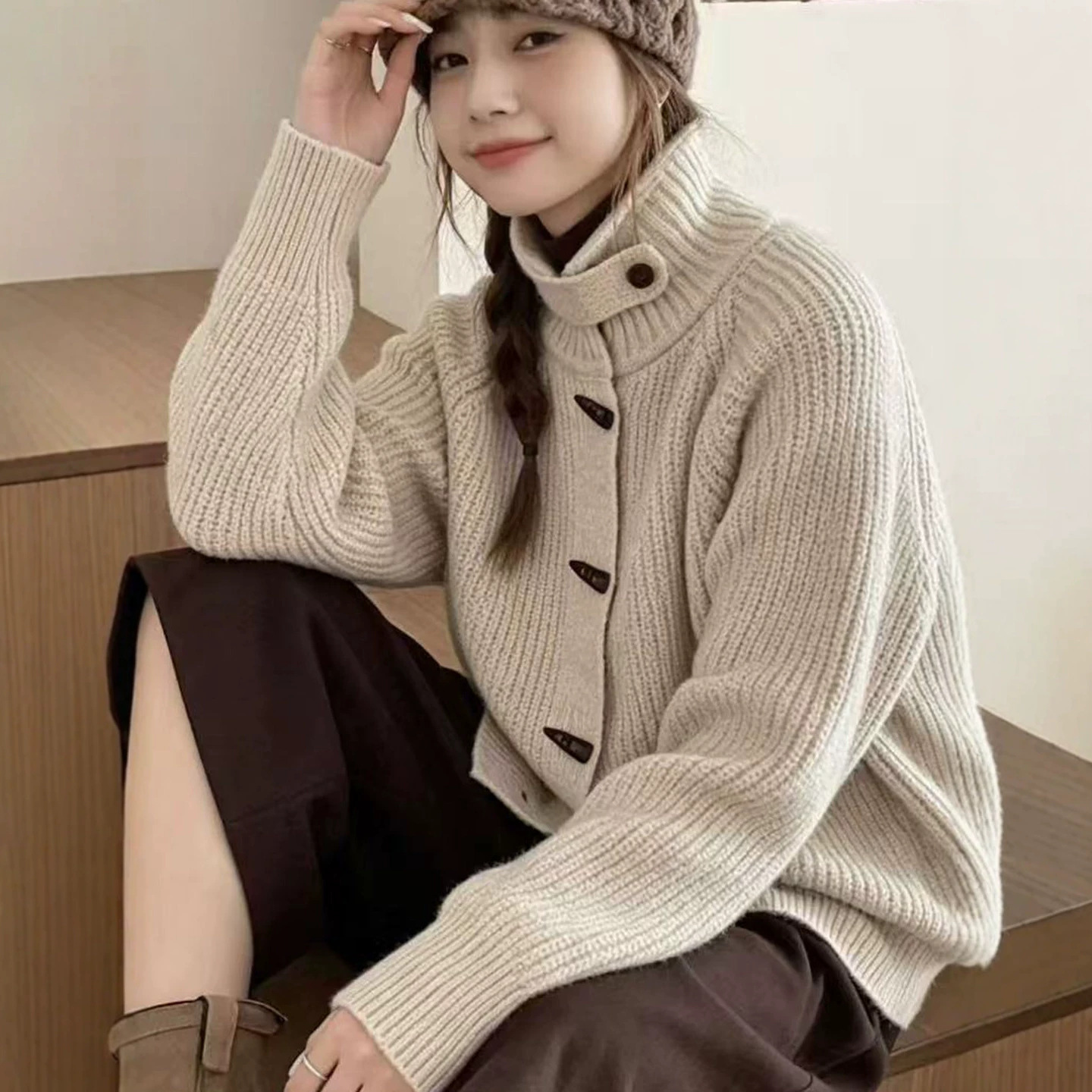
A high collar cardigan frames the face and adds warmth without crowding a fitted bodice.
The Apolline Knitted High Collar Cardigan Horn Button Thick Sweater is a strong example of this principle in practice. Its thick gauge knit provides genuine insulation for an outdoor cocktail hour or a transitional autumn afternoon, while the horn button closure lets you control exactly how much coverage you want. Button it fully for a polished, buttoned up line over a sheath dress, or leave it open and belted at the waist to maintain the waistline definition of a fit and flare silhouette.
Fitting advice matters here. If the cardigan’s shoulder seam sits even slightly wide of your own shoulder point, the whole garment will pull backward when you raise your arms, exposing the dress’s zipper or back seam in an unflattering way. Try the cardigan on over the actual dress before committing, not over a t shirt, since drape behaves differently over different base layers. If the cardigan gapes open at the bust when buttoned, a quick fix is a hidden snap closure sewn at the interior button line, a tailoring trick borrowed from couture workrooms that keeps the front panels anchored without adding a visible fastener.
Streetwear Layering: Hoodies Over Slip Dresses and Casual Silhouettes
Not every cool weather moment calls for polish. Layering a hooded sweatshirt over a slip dress or a simple knit dress has become one of the more interesting style directions in contemporary dressing, mixing the fluid drape of a bias cut dress with the structured, boxy shoulder of streetwear. The key to making this combination read as intentional rather than careless is contrast: a delicate, light fabric dress underneath a graphic or textured hoodie creates tension that reads as styled, while two casual pieces together just look like you forgot a jacket.
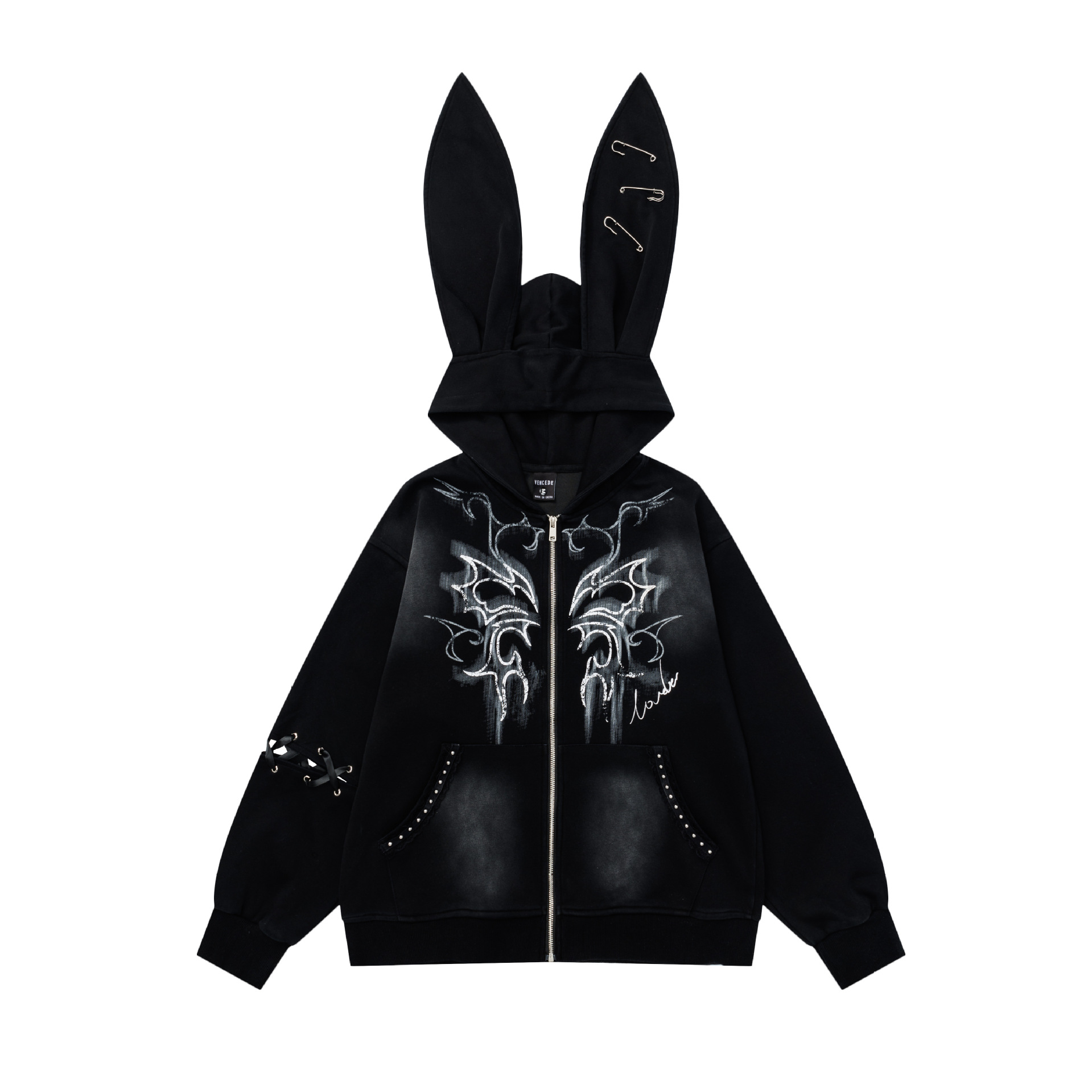
Pairing a structured hoodie with a fluid slip dress creates deliberate contrast rather than mismatched casualwear.
The Anais Y2k Pin Graffiti Rabbit Ears Hooded Sweatshirt works precisely because it leans into its own identity rather than trying to blend in. Its cropped length keeps the hemline of a midi or maxi slip dress visible, which matters: a hoodie that falls past the natural waist of a dress erases the silhouette entirely and reads as oversized loungewear rather than styled layering. Keep the hoodie cropped at or just above the hip, and let the dress’s hem do the talking below.
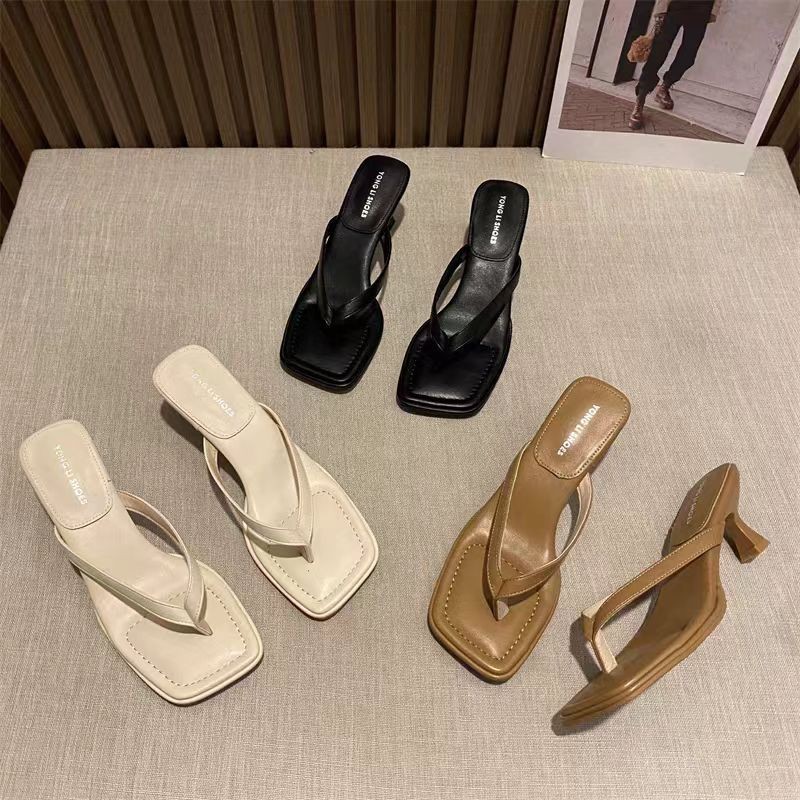
Footwear is what sells this combination. Combat boots or a chunky lug sole sneaker ground the look in streetwear territory, while a pointed ankle boot pulls it back toward something more directional and fashion forward. Avoid delicate strappy heels here; the proportions clash and the outfit stops making sense. If you want to wear this combination somewhere slightly dressier, swap the hood down and add a structured crossbody bag to signal that the casualness is a choice, not an accident.
The Technical Shell: Weatherproofing Without Sacrificing Silhouette
When the forecast involves actual wind, rain, or a genuine drop in temperature, knitwear alone will not do the job. This is where a technical outer shell earns its place, but the challenge is finding one that does not overwhelm a dress’s line. Oversized, boxy outdoor jackets are designed for function first, which means they often ignore waist definition completely. The trick is choosing a jacket with a drawstring or adjustable hem that lets you cinch the silhouette back in when needed.

A three proof outdoor jacket with an adjustable hem offers real weather protection while still allowing the waistline to show.
The Elodie Unisex Autumn Three Proof Loose Fit Outdoor Jacket is built for exactly this situation. Its wind, water, and cold resistant construction means it can be worn over a knit dress for a genuinely cold commute or an unpredictable outdoor event without soaking through or letting the chill in. Because it runs loose through the body by design, the styling move is to leave it unzipped and let the dress’s own waistline or belt show through the open front, rather than zipping the jacket fully closed and losing the shape underneath entirely.
A note on proportion: a loose, boxy shell works best over dresses with volume of their own, like a pleated midi or a fuller a-line skirt, because the jacket’s width has something substantial to sit against. Over a very slim sheath dress, the contrast can read as swallowing rather than styling. If you love this jacket but your dress is slim fitting, balance the proportions by adding a waist belt cinched over both the jacket and the dress together, visually reclaiming the waistline the jacket’s cut otherwise ignores.
The Tailored Blazer: Structured Power Dressing Over a Dress
A blazer is the most architecturally demanding layer on this list, and also the most rewarding when fitted correctly. Unlike a soft cardigan, a blazer has internal structure: shoulder padding, often a canvas interlining in the chest, and a defined lapel roll that needs to sit flat against the body rather than pucker. When you layer a blazer over a dress, the lapel’s roll line should fall close to the dress’s own neckline, creating one continuous visual frame rather than two competing necklines fighting for attention.
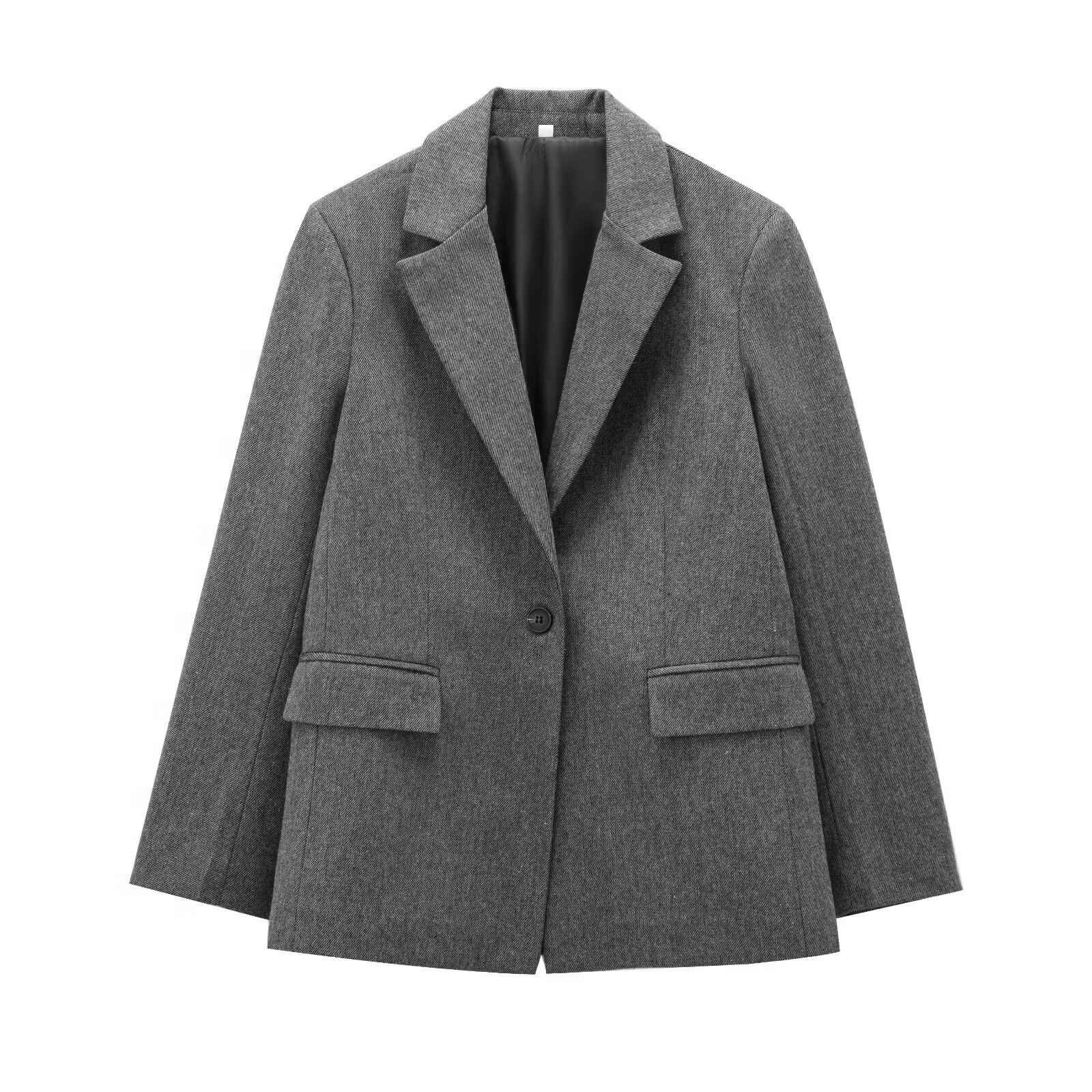
A twill lapel blazer with structured shoulders turns a soft dress into a tailored, boardroom ready silhouette.
The Valentine Wool Blend Twill Lapel Blazer Suit Jacket demonstrates how a structured shoulder changes the entire read of a dress. Worn open over a slip dress, it transforms soft eveningwear into something appropriate for a daytime meeting or a semi-formal office event. Worn buttoned, it creates a monochrome, columnar line that elongates the frame, particularly effective if your dress and blazer sit in a similar tonal family.
The twill weave construction gives this blazer enough body to hold its shape without the stiffness of a fully canvassed suit jacket, which makes it considerably easier to layer over a dress’s existing bodice without doubling up on bulk at the bust or waist. If the blazer’s shoulder seam sits even a half inch past your own shoulder point, have a tailor nip the shoulder seam back; this single adjustment does more to fix the overall line than any amount of belting or accessorizing. Footwear should lean structured here too: a block heel pump or a pointed flat keeps the tailored mood consistent from head to toe. Avoid casual sneakers with this combination unless you are deliberately working a high low contrast look, which requires careful calibration elsewhere in the outfit to avoid looking unfinished.
The Knit Jacket Hybrid: Structure Meets Softness
Between the soft cardigan and the structured blazer sits a hybrid category: the knitted jacket, which borrows silhouette cues from tailoring (a defined front closure, sometimes a collar or hood) while retaining the comfort and drape of knitwear. This category has become increasingly popular because it solves the core problem of layering over a dress: how to add visible structure and warmth without the stiffness of woven fabric fighting against a dress’s natural movement.
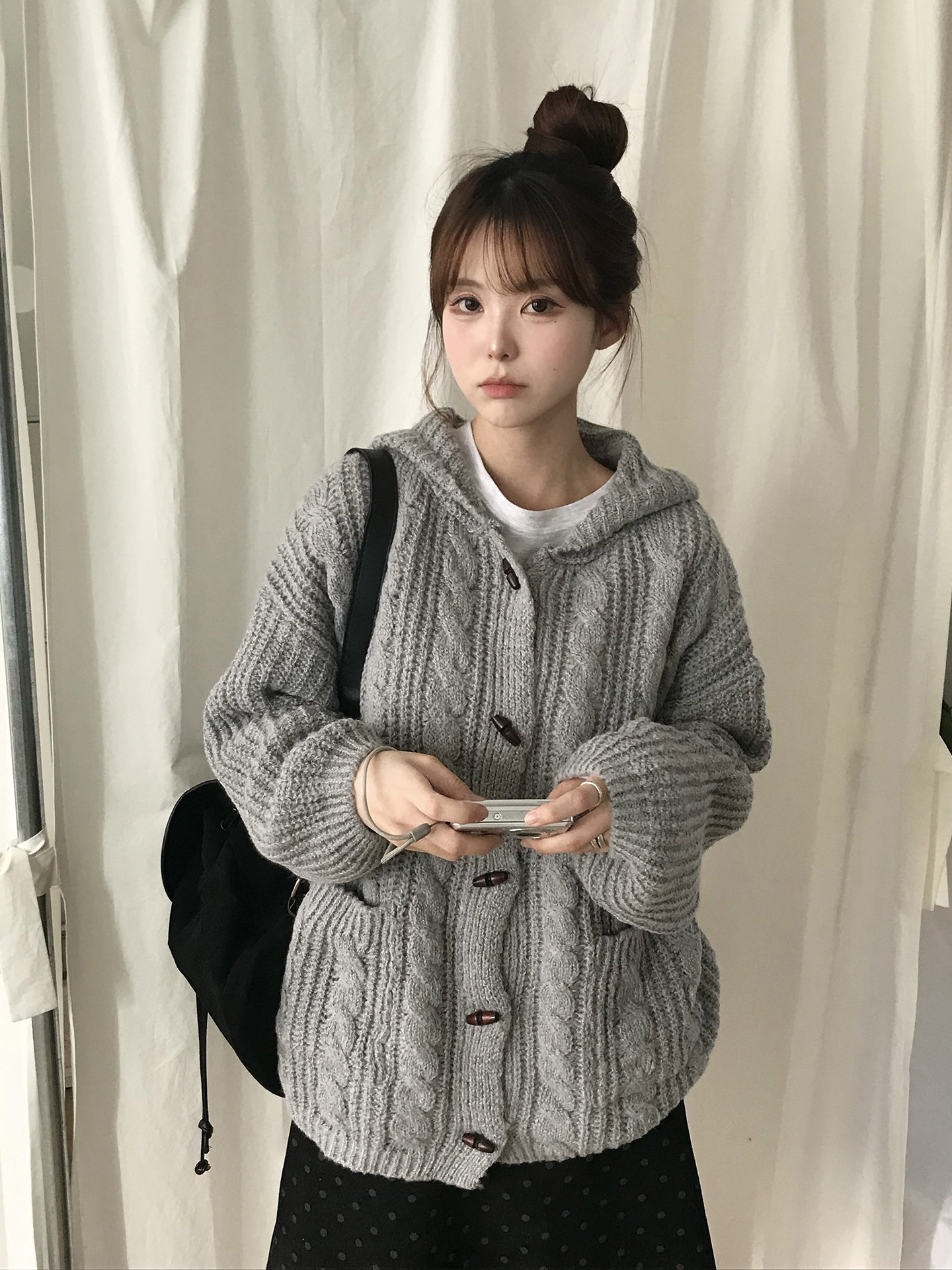
A hooded knit sweater jacket bridges casual comfort and structured outerwear without competing with the dress beneath.
The Madeleine Gray Hooded Button Knit Sweater Jacket captures this hybrid well. Its button front closure gives it the visual logic of a jacket, something you can wear open or closed depending on temperature, while the knit construction means it drapes over the hips and waist rather than standing away from the body the way a structured coat would. The hood adds a casual element that works particularly well over simple knit dresses or a relaxed midi, softening an otherwise polished outfit just enough to keep it from feeling overdressed for daytime errands or a weekend lunch.
Because this piece has more volume through the body than a fitted cardigan, it pairs best with dresses that have a defined waist seam of their own; the jacket’s looser cut needs the dress underneath to supply the waistline, since the jacket will not do it for you. A thin obi style belt worn over the jacket, cinched at the natural waist, solves this instantly and adds a third textural layer to the silhouette without extra bulk.
Fitting the Layer to the Dress: Solving Common Problems
Even the right layer fails if the fit underneath is wrong first. Bodice slipping, the most common complaint with structured dresses, usually comes down to one of two causes: insufficient silicone grip tape along the interior neckline and underarm, or a waist stay (an internal grosgrain ribbon anchor) that has not been fitted snugly to the natural waist. If your dress shifts and rotates throughout the evening, ask a tailor to add or tighten this internal ribbon before you even think about which jacket to wear over it; no outer layer can compensate for a foundation garment that has already failed structurally.
Gaping at the bust, another frequent issue, often means the cup foundation inside the dress does not match your actual shape, a problem no amount of layering disguises well since any outer garment left open will draw the eye straight to the gap. A quick fix without a full tailoring appointment is a fashion tape application at the center gore, which the Victoria and Albert Museum’s fashion archive notes has been a backstage staple since the earliest years of structured eveningwear construction, long before adhesive tapes were mass produced for consumer use. Torso length mismatches, where the dress’s waist seam sits either above or below your natural waist, are trickier and genuinely require a tailor’s intervention, either lengthening or shortening the bodice panel rather than relying on a belt to fake the correct placement.

Pairing a longline knit cardigan with a column or midi dress creates an uninterrupted vertical frame when hem proportions align.
Once the dress itself fits properly, choosing the outer layer becomes a question of proportion rather than correction. Match structured to structured (blazer with a tailored sheath), soft to soft (cardigan with a draped jersey dress), and reserve the bold streetwear or technical outdoor pairings for dresses with enough movement or volume to hold their own against a heavier or boxier silhouette on top.
The Styling Takeaway
Dressing for cool weather without abandoning the silhouette you chose is entirely possible once you understand how each layer behaves structurally against a dress’s own architecture. A knit sweater respects a neckline’s curve. A high collar cardigan frames the face and adds insulation without crowding the bodice. A hoodie, worn with intention, turns a slip dress into a styled contrast rather than an afterthought. A technical shell handles genuine weather while an adjustable hem keeps the waistline visible. A tailored blazer sharpens soft eveningwear into something boardroom ready, and a hybrid knit jacket bridges the gap between the two extremes. The right choice always comes back to matching weight, shoulder line, and proportion to the dress underneath, and fixing any foundation issues, slipping bodices, gaping cups, misplaced waist seams, before any outer layer goes on at all. Get the foundation right, choose the layer with intention, and the cold becomes nothing more than an excuse to build a better outfit.