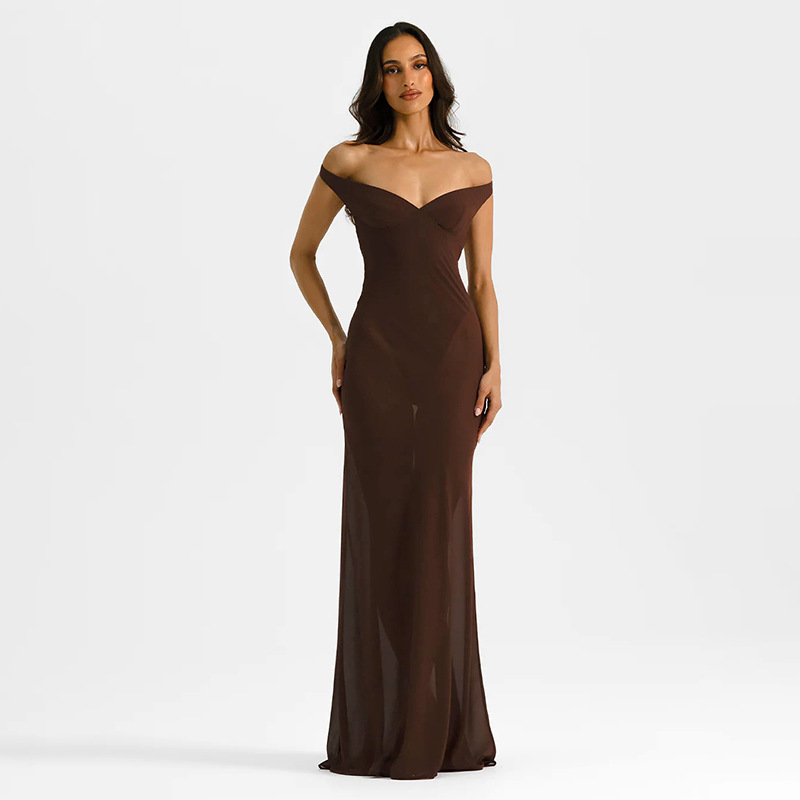
A birthday invitation sits in an unusual place in the social calendar. It is intimate enough to feel personal, yet public enough to be remembered in photographs for years. Unlike a wedding, where the dress code is often defined by the couple, or a black-tie gala, where the printed invitation dictates the terms, a birthday leaves the guest to interpret the mood on her own. That freedom is precisely what makes the choice difficult. A knowing guest reads the venue, the hour, the guest list, and the relationship to the honoree before a single garment is considered. Learning how to choose a birthday dress begins with this quiet act of reading the room, because the most flattering piece in your wardrobe will still look wrong if it belongs to a different event. A rooftop cocktail party in July calls for a different proportion, weight, and palette than a candlelit dinner in a restaurant with velvet banquettes, and a daytime garden lunch makes demands that an evening gala never would. Etiquette here is less about rigid rules and more about calibration. Overdressing for a casual backyard celebration can make the honoree feel that the occasion has been treated as a performance, while underdressing for a formal dinner signals indifference. The sensible target is the upper edge of the stated dress code: polished, considered, and a notch more finished than the most casual guest in attendance. Consider the timing as well. Afternoon events favour lighter fabrics, softer colours, and shorter hemlines, while evening events allow for weight, sheen, and structure. Consider the setting’s acoustics and lighting too. A dim interior flatters metallics and deep jewel tones, whereas a bright outdoor setting can wash out certain sequins and reveal every crease in an unlined crepe. Finally, consider the birthday itself. A milestone celebration, such as a fortieth or a sixtieth, often merits a more deliberate, celebratory choice than an annual gathering among friends. The guide that follows treats the dress as a system rather than a single object, examining proportion, cloth, construction, accessories, and fit so that you can make a choice with confidence and walk into the party feeling entirely at ease.
1. Matching Silhouette and Proportion to the Setting
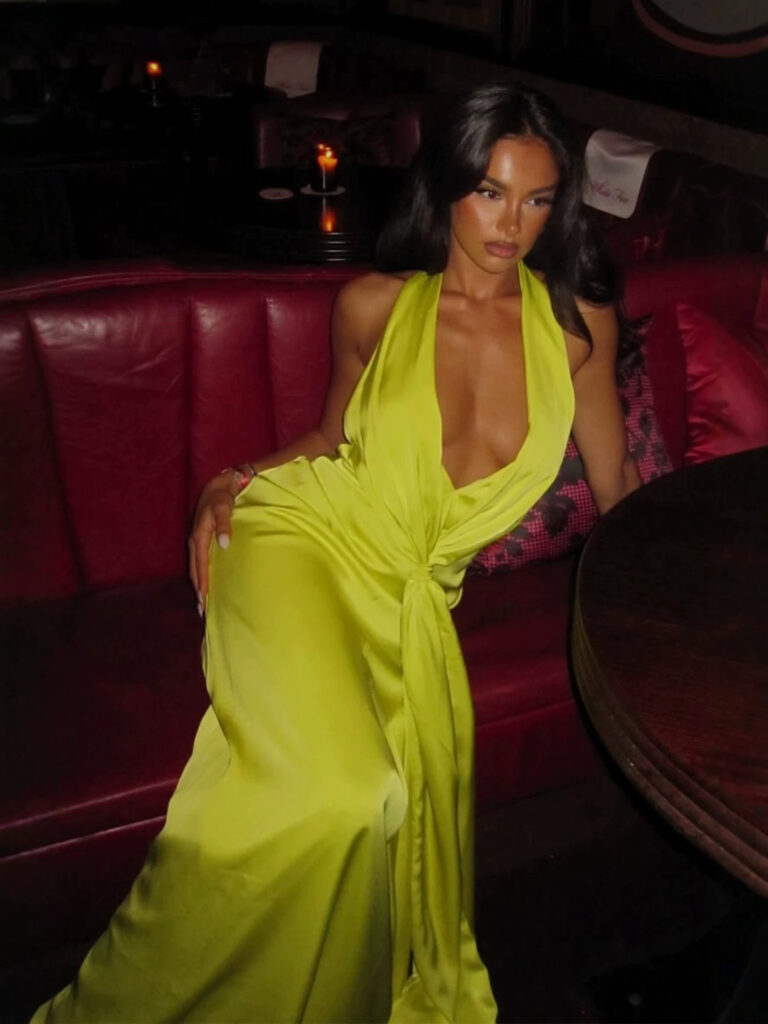
Silhouette is the first decision because it sets the tone before fabric, colour, or detail enter the conversation. A silhouette is the outline a garment creates when it is worn, and it communicates formality through its volume, length, and the relationship between shoulder, waist, and hem. A column dress with a straight skirt reads sleek and contemporary, while a full skirt supported by layered net reads festive and theatrical. For a birthday, the most reliable choices are the fit-and-flare, the A-line, and the wrap, because each balances structure with ease of movement. An A-line midi, for example, skims the shoulders and gradually widens toward the hem, which suits almost every body and every venue from a restaurant to a garden. The proportion between the bodice and skirt determines whether the outfit looks balanced. A high waist lengthens the leg and works beautifully with a tailored skirt, whereas a dropped waist suggests a more relaxed, vintage-inspired mood that suits a daytime lunch. In practical terms, examine the neckline. A V-neck elongates the torso and works in nearly any setting, while a high neck signals restraint and is well suited to a formal dinner or a cooler evening. Sleeve length also changes the register: sleeveless designs feel warm-weather and celebratory, while long sleeves offer polish for winter parties. The garment you choose should feel like an extension of the occasion rather than a costume for it. A useful test is to imagine the room at its fullest, with guests standing, moving, and photographing one another, and to ask whether your silhouette still reads as deliberate from across the room. If it does, the proportion is correct. Consider the piece below as an example of a structured neckline and a sculpted waist that together create a balanced, celebratory line for an evening dinner.
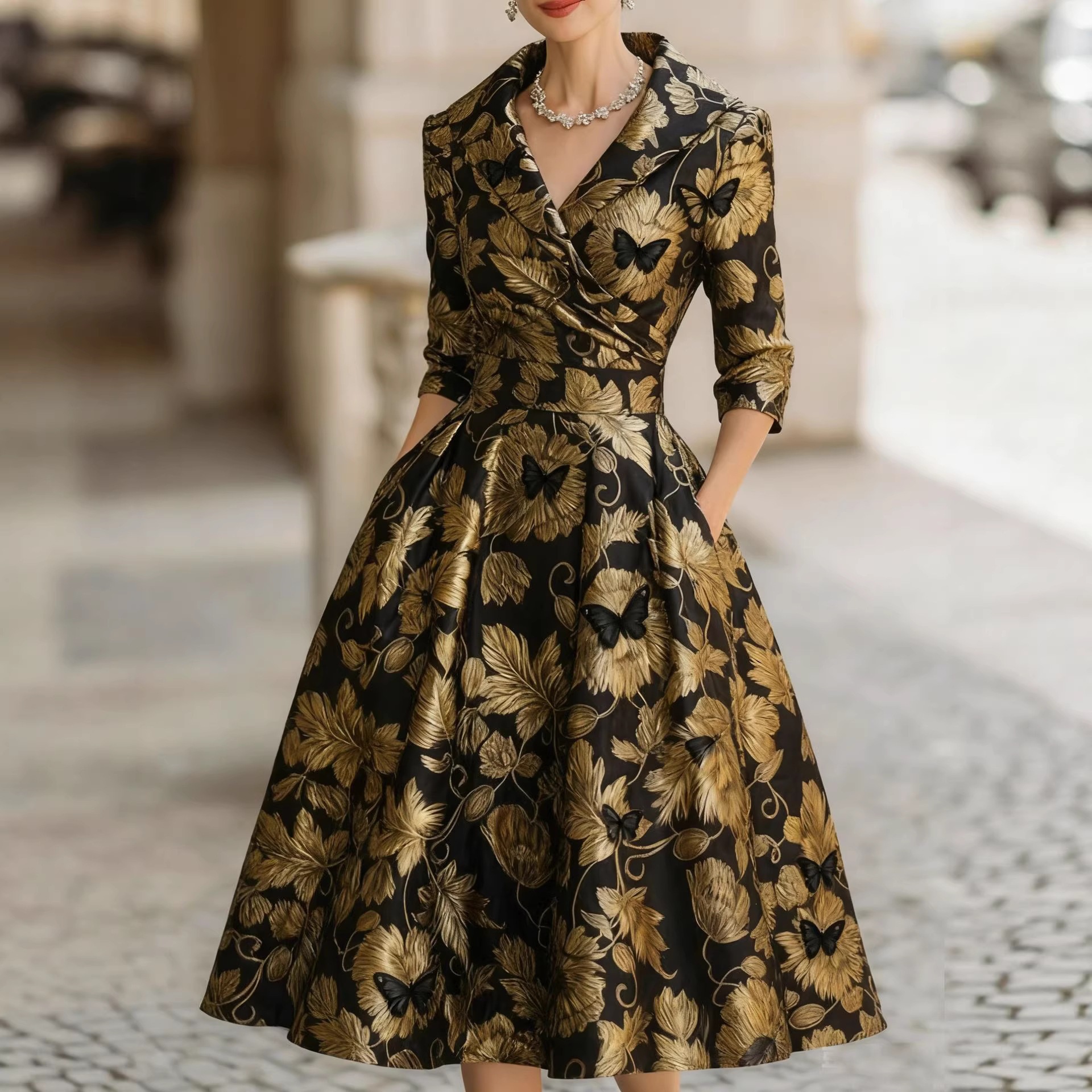
A V-neck silhouette with a defined waist balances a celebratory evening setting.
When a birthday falls in a warm climate or an outdoor venue, lengthen your thinking about proportion without sacrificing polish. A midi hemline, falling between the knee and the calf, often reads as more composed than a mini in daylight, and it allows for greater ease when sitting on low garden chairs. For a candlelit restaurant, a floor-skimming line can feel more dramatic, though it requires careful footwear planning. Whatever the silhouette, the goal is cohesion: the dress should look intentional from the neckline to the hem, and no single element should compete with the rest.
2. Textile Weight, Weave, and Drape Across Different Venues
Cloth determines how a garment behaves in motion, under light, and against the body, and it is often the difference between a dress that flatters and one that merely fits. Fabric weight is commonly expressed in grams per square metre, or GSM, and it provides a reliable shorthand for how a textile will hang. Lightweight chiffon or georgette, often under 80 GSM, floats and skims, making it ideal for garden lunches and warm summer evenings. Medium-weight crepe or jacquard, typically between 150 and 250 GSM, holds its shape while still moving with the body, which suits most restaurant and cocktail settings. Heavier knits and brocades, above 300 GSM, feel substantial and are better suited to cool-weather dinners and parties in heated interiors. Weave matters as much as weight. A plain weave such as crepe presents a smooth, matte surface that photographs cleanly, while a jacquard weave introduces a raised pattern that catches light and adds dimension. Drape depends largely on grain. A straight-grain cut keeps a fabric stable and structured, which suits a tailored A-line or a sheath, whereas a bias cut, with the fabric cut at forty-five degrees to the selvedge, allows the cloth to cling and flow, producing the fluid movement associated with slip dresses and gowns. Bias cutting is powerful but unforgiving, because it stretches over time and reveals every seam irregularity.
| Fabric | Typical Weight | Drape and Silhouette | Best Occasion Pairing |
|---|---|---|---|
| Chiffon or georgette | Under 80 GSM | Fluid, floating, best on bias or soft gathers | Garden lunch, summer daytime celebration |
| Crepe | 150 to 200 GSM | Smooth, structured, matte, forgiving | Restaurant dinner, cocktail party |
| Jacquard | 200 to 280 GSM | Holds shape, dimensional, catches light | Evening dinner, milestone birthday |
| Sequin or metallic knit | Variable, often 250 GSM and above | Clings with stretch, reflects light strongly | Dim interior, late-night party |
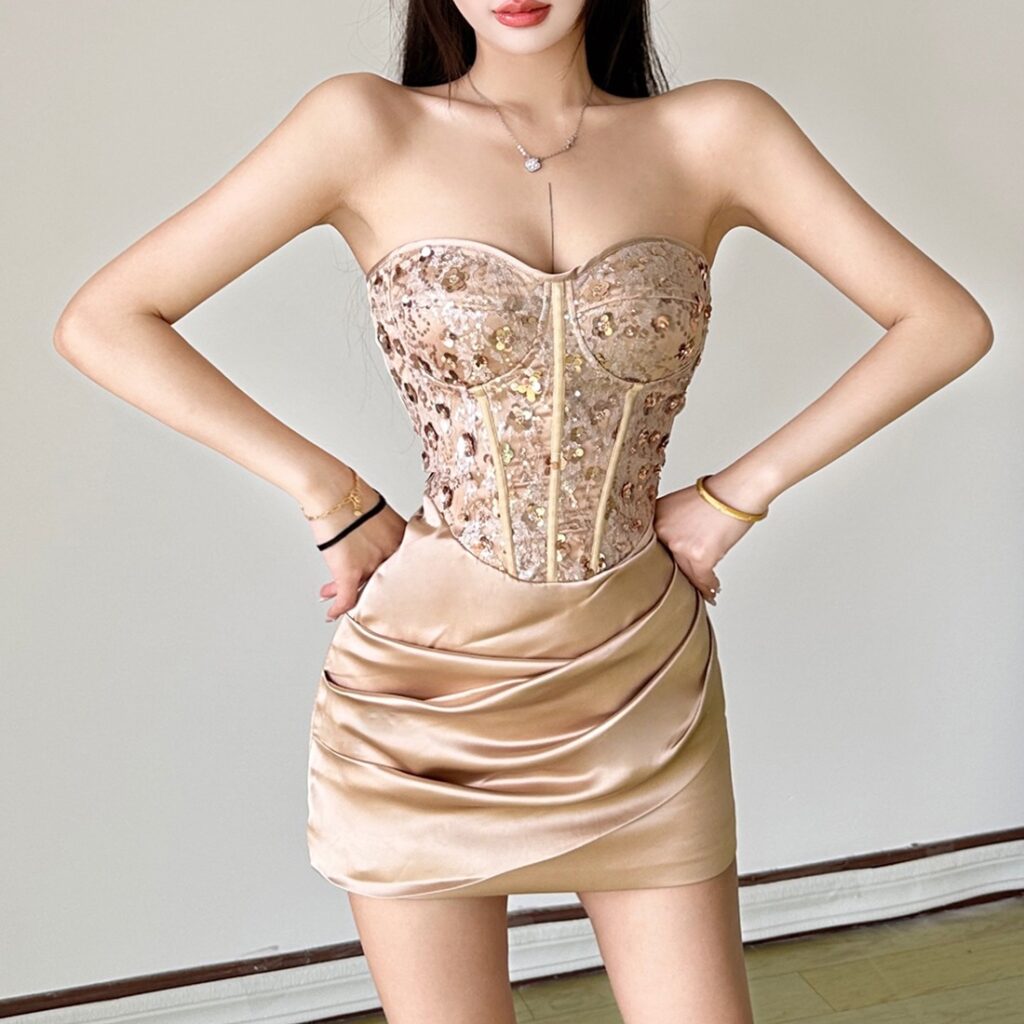
A useful rule is to match the fabric’s reflectivity to the lighting. Sequins and metallic yarns demand low ambient light to avoid appearing harsh or costume-like in a bright room, while matte crepe and wool blends remain composed under fluorescent light and in midday sun. Wrap styles deserve particular attention because they rely on the fabric’s weight to stay closed and avoid gaping. A lightweight wrap in viscose can be elegant, but it needs a lining or a secure tie to stay put during a lively evening. Consider a sequined wrap silhouette for a late evening where low light will complement its sparkle.
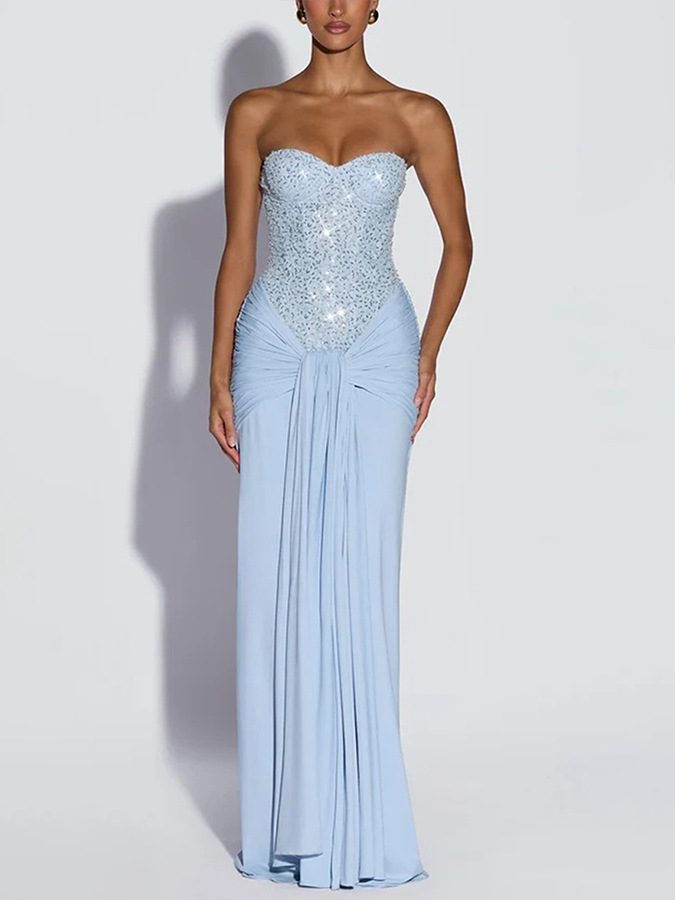
Sequins reflect light most effectively in a dimly lit evening venue.
3. Garment Construction, Lining, and Tailoring Details
Construction is the invisible architecture that separates a dress that looks expensive from one that merely looks new. Begin with the seams. French seams, where the raw edges are enclosed within a second stitched seam, are durable and produce a clean interior, which matters for sheer or lightly lined fabrics. Standard seam allowances of around one centimetre are typical in ready-to-wear, and a generous allowance, often one and a half centimetres or more, indicates a garment that can be let out or taken in later. Examine the hem as well. A narrow rolled hem suits chiffon, while a deeper hem with a stitched blind finish adds weight and stability to a crepe A-line, allowing the skirt to fall evenly. Lining is essential for opacity and for the way a dress sits against the body. A full slip lining, usually in a fine polyester or silk-blend fabric, prevents the outer layer from clinging to undergarments and maintains the line of the silhouette. Bodice construction often depends on internal support. Boning, typically flexible plastic or spring steel, runs along princess seams and side seams to hold a fitted bodice in shape without digging into the ribs. Silicone grip tape along the upper edge of the bodice or the waistband keeps a strapless or lightly structured dress in place without relying on constant adjustment. A grosgrain waist stay, a narrow ribbon stitched inside the waistband, distributes the weight of a skirt and prevents the waistband from stretching over time. These details are rarely visible from the outside, yet they determine how the garment behaves across an entire evening.
Tailoring also reveals itself in the balance of the skirt and the rise. In trousers, the rise, which is the distance from the crotch seam to the waistband, must sit comfortably without pulling, and the inseam must be proportionate to the leg so the hem breaks correctly over the shoe. Wide-leg trousers depend on a stable waistband and a precise rise; too short a rise will cause the fabric to ride up, while too long a rise will crease at the hip. Examine the interior finish of the garment before purchasing. Overlocked seams that are cleanly finished, hand-stitched hems that are almost invisible, and consistent stitch density all signal careful production. Conversely, puckering along seams, uneven hems, and loose threads suggest that the garment will require tailoring or may not last through several wears.
For a more formal evening, consider the external reference points that curators and costume historians use to evaluate construction. The Victoria and Albert Museum maintains a substantial fashion collection that demonstrates how historical garments were assembled, and the V&A fashion collection offers a valuable reference for understanding how boning, seam finishing, and lining have evolved. Learning to recognise these details will sharpen your eye when shopping and help you judge value beyond the label.
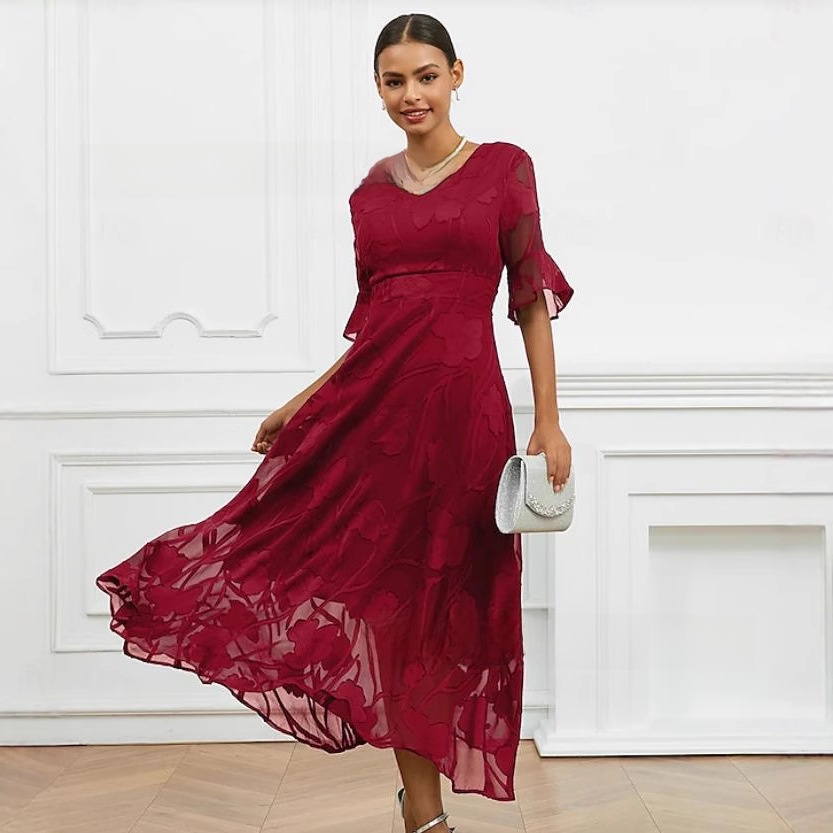
Jacquard A-line midi dresses rely on lining and stable seams to hold their shape.
4. Footwear, Outerwear, and Accessories That Complete the Look
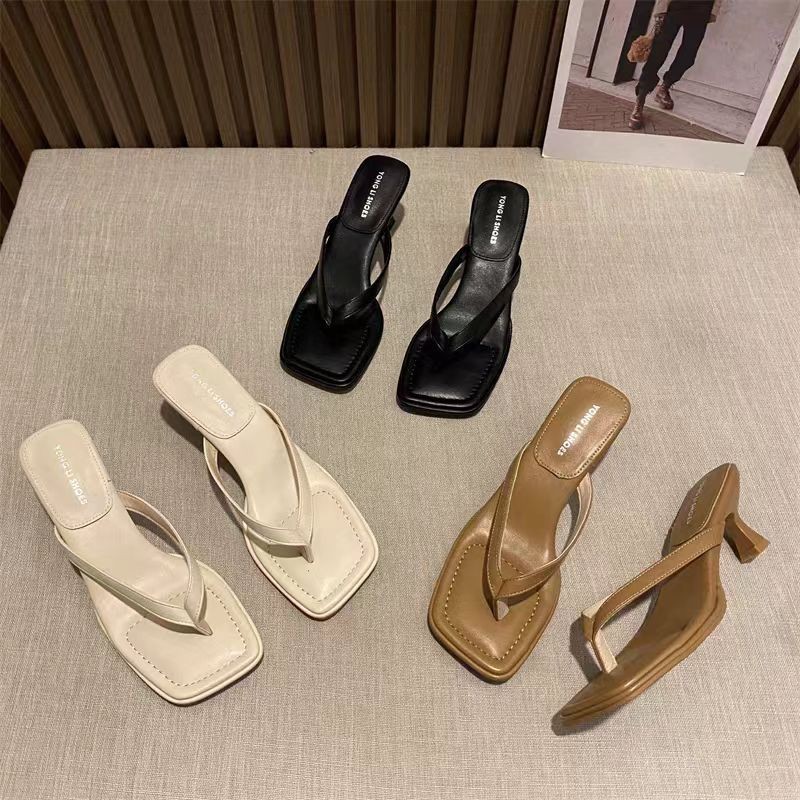
A birthday outfit is rarely complete with the dress alone, and footwear is where many otherwise successful choices falter. Heel height should be determined by the venue’s terrain and the length of the event. A stiletto of ten centimetres performs well on polished restaurant floors but becomes punishing on gravel, grass, or a long outdoor reception. For a garden party, a block heel or a low wedge provides stability and comfort without compromising height. Consider the hem as well: a floor-length gown needs enough heel to clear the ground without catching, while a midi dress benefits from a shoe that reveals a little ankle to elongate the leg. Practical comfort matters more than most guests anticipate. Break in new shoes at home before the event, and carry a secondary pair if the celebration extends into dancing. Outerwear demands the same consideration. A cropped jacket in a structured wool or faux suede can frame an A-line dress for the evening, while a longline coat in a neutral camel or charcoal works well over a bodycon silhouette in cooler weather. Choose outerwear whose hem and shoulder line complement the dress rather than hiding it, so that the overall proportion remains intact when you remove the layer indoors.
Jewellery should be considered as part of the proportion rather than as an afterthought. Minimalist hoops, for example, lend polish without competing with a patterned bodice or a sequined surface, and they suit nearly every venue from daytime to evening. Scale is the governing principle: a bold statement necklace suits a plain neckline, while a simple earring is better paired with a detailed dress. Restraint is almost always more elegant, particularly when the garment itself carries texture or print. Bags should be small enough to carry through a crowded room yet large enough for essentials, and metallic clutches are most effective under low light.
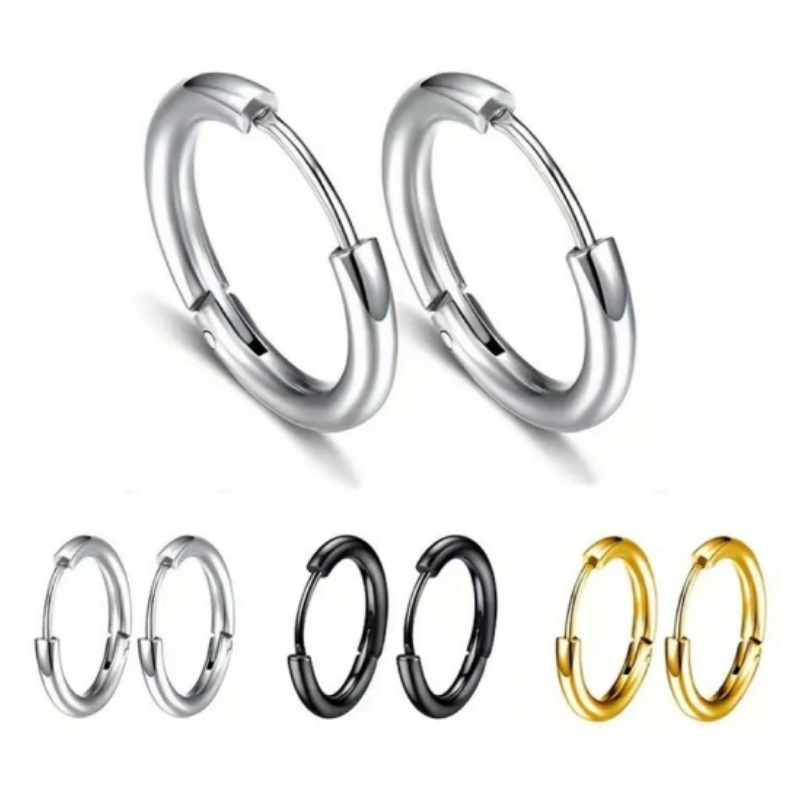
Minimalist hoops add polish without competing with a detailed dress.
For a cooler indoor event, warmth is an accessory in its own right. A knitted skirt in a mid-length silhouette, paired with a fitted top and ankle boots, produces a textured, layered look appropriate for a winter birthday dinner. The woolen knitted mid-length skirt illustrates how a textured knit can create warmth and structure simultaneously, and it works well alongside a tailored blouse or a fine-gauge sweater. Those who prefer trousers for comfort can pair loose-fitting wide-leg pants with a sculpted top for an evening that prioritises ease over tradition, while a heated pair of indoor slippers is a practical reminder that comfort can also be a considered choice for hosts and guests who expect a long, relaxed afternoon at home.
5. Fit Troubleshooting and Real-World Adjustments
Even the most carefully chosen dress can disappoint if the fit is wrong, and most fit problems are predictable and correctable. Begin with the shoulders, which are the hardest area to alter. If the seam sits beyond the shoulder point, the garment will look oversized regardless of how it fits elsewhere; if the seam sits inside the shoulder, the fabric will pull across the back and create tension lines. Shoulder fit should be assessed before any other measurement, because adjusting it usually requires reconstruction rather than simple tailoring. Next, examine the bust and bodice. Gaping at the neckline often indicates that the bodice is too wide at the upper chest or that the darts are placed too low, and a tailor can often correct this by taking in the side seams or adjusting the dart. Wrinkles radiating from the bust point suggest that the garment is too tight, and letting out the seams is usually the remedy if the seam allowance permits. Waist fit is equally revealing. A waistband that rides up or rolls over indicates that the rise or the waistband height is wrong for your torso, and a grosgrain waist stay or a hidden clasp can help secure it. Excessive pulling across the hips suggests that the garment is cut too narrowly for your proportions, and this is a case where selecting a larger size and tailoring the waist is often wiser than forcing a smaller size to close.
Length adjustments are among the most frequently requested alterations and among the simplest to perform. A hem can usually be shortened by several centimetres without affecting the silhouette, but lengthening a hem is often impossible if the original fabric has no spare allowance. This is one reason to buy a garment with a generous hem allowance when possible. Sleeve length, similarly, should break at a point that complements the wrist or sits just above it; a sleeve that falls past the knuckle reads as oversized, while one that ends abruptly at the forearm can look truncated. Consider also how the garment behaves when you sit, lift your arms, and move. A dress that looks flawless standing may pull at the hips or ride up when seated, so test the garment by sitting in a chair and reaching forward before committing.
Where fit proves stubborn, consider the underlying architecture of the garment. Shapewear, a slip, or a built-in bra can dramatically change how a dress sits, but these should be chosen to complement the silhouette rather than to force it. A seamless brief or a control panel under a sheath keeps lines smooth without adding bulk, while a fitted slip with a silicone grip at the bust keeps a strapless or lightly structured bodice secure through an entire evening. Finally, a rehearsal fitting is worth the effort for any important celebration. Wear the complete outfit, including the shoes and undergarments, for at least thirty minutes, sit and stand repeatedly, and photograph yourself from the side and back. Small problems become obvious on camera long before they become obvious in the mirror, and resolving them in advance transforms the birthday from a source of anxiety into a memorable and comfortable occasion.
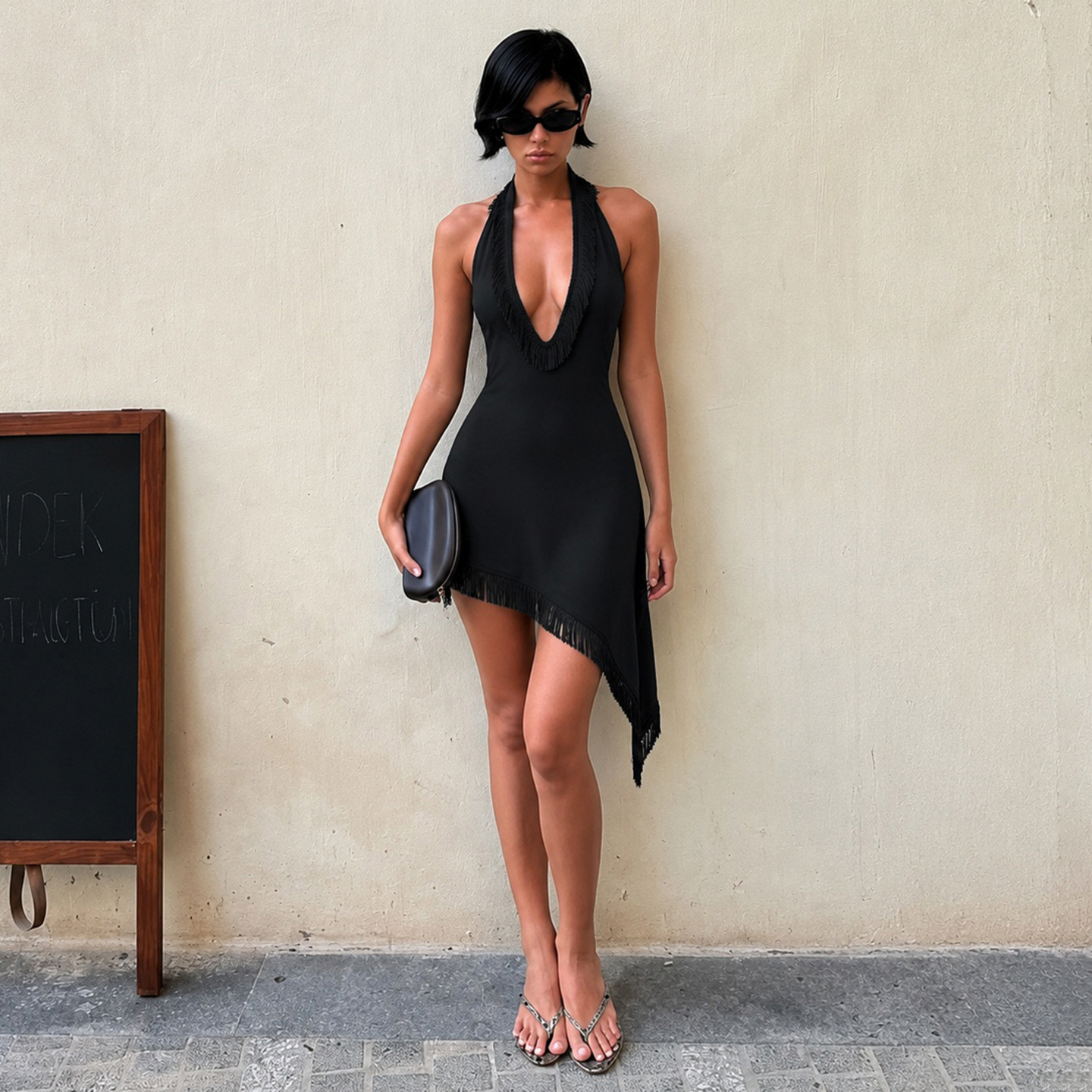
Checking neckline security and bodice fit while seated ensures an evening birthday dress stays comfortable from dinner through late-night toasts.
The Styling Takeaway
Choosing a birthday dress is ultimately an exercise in calibrated judgment. The venue, the hour, the season, and the relationship to the honoree all shape the answer, but the principles that guide the choice remain constant. Begin with silhouette and proportion, selecting a line that suits the setting and balances your frame. Move to cloth, weighing the fabric’s GSM, weave, and drape against the lighting and temperature of the room. Examine construction with a critical eye, looking for secure seams, appropriate lining, and the internal support that keeps a garment composed over several hours. Then complete the look with footwear, outerwear, and jewellery that respect the proportion of the dress rather than competing with it. Finally, test the fit honestly, addressing shoulders, bust, waist, and length before the day arrives, because the most beautiful garment will only feel right when it fits the body that wears it.
A well-chosen birthday dress should allow you to forget about it. When the fit is secure, the fabric moves with you, and the proportions feel considered, you are free to focus on the people in the room, the conversation, and the celebration itself. That quiet confidence is the real measure of a successful choice, and it is achieved not through trend-chasing or excess but through attention to detail and an honest understanding of the occasion. Plan carefully, rehearse the look, and trust the decisions you have made. The honoree will remember the warmth of the evening, and you will be able to enjoy it fully, dressed exactly as the occasion deserved.