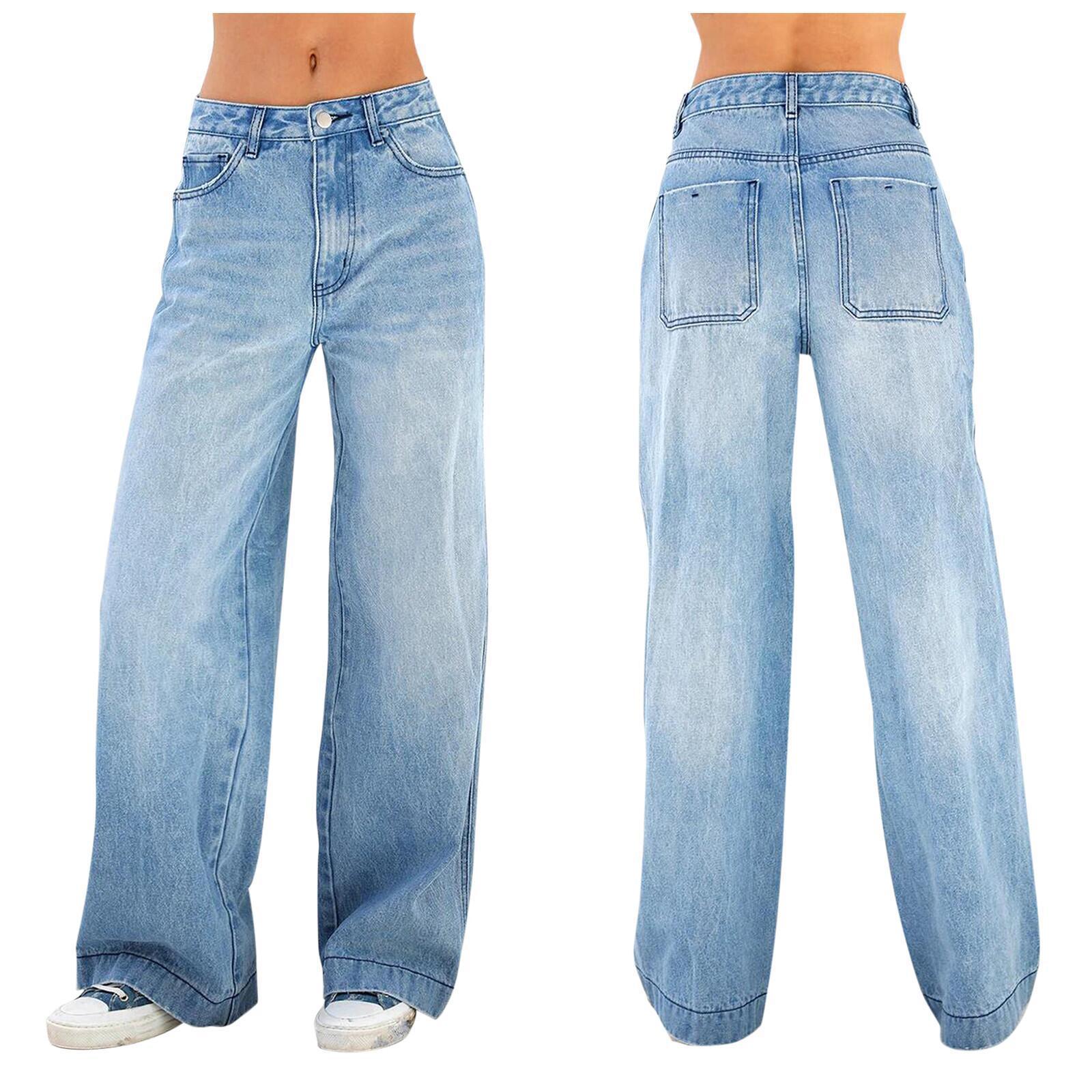
Wide-leg jeans have earned their place in the contemporary wardrobe because they do something few other silhouettes manage: they lengthen the leg, anchor the waist, and move with a graceful, almost architectural sweep. Yet the same generous volume that makes them so appealing can quickly overwhelm an outfit. Stylists who work with these pieces tend to share a common observation. The garment itself is rarely the problem. The problem is that the wearer treats the wide leg as an isolated statement rather than one component in a balanced composition. When the top, the shoes, and the outerwear fail to respond to the trouser’s proportions, the result reads as costume instead of couture.
Good styling begins with an understanding of etiquette, which in fashion means the unwritten conventions that govern how pieces relate to one another. A wide leg asks for a clear waistline, a deliberate hemline, and a silhouette that resolves somewhere above or below the knee. It rewards restraint at the shoulder and honesty in the fabric. It does not forgive a sloppy tuck, an ill-considered sneaker, or a jacket that stops at the widest part of the hip. These principles are not restrictive. They are the grammar that lets the trouser speak clearly.
This guide approaches wide-leg denim and trousers the way a tailor would: through structure, weight, and fit. We will examine how proportion works from the waist down, why textile weight determines whether a leg falls cleanly or collapses into shapelessness, and what construction details separate a garment that keeps its line from one that sags by mid-afternoon. We will then move to footwear, outerwear, and accessories, and finally to the practical adjustments that rescue a pair that almost works. Each section offers specific, usable guidance rather than general inspiration, because the goal is to help you dress with intention. Wide-leg jeans are generous by nature, and with the right choices they remain elegant, deliberate, and entirely your own.
1. Mastering Silhouette and Proportion From the Waist Down
Every successful wide-leg outfit depends on a single decision: where the eye should land. The silhouette of a wide trouser is strongly vertical in its leg line but horizontal in its volume, so the styling task is to establish a clear point of visual balance. Most stylists achieve this by defining the waist. A high rise, a visible waistband, or a tucked top turns the trouser into a column that flows downward, rather than a shape that pools around the hips. When the waist disappears, the wide leg reads as heavy, and the figure seems to shorten.
Consider the proportion of the upper body in relation to the trouser. A fitted or semi-fitted top paired with a generous wide leg creates contrast, which is generally flattering because it reveals the body’s line while letting the trouser provide movement. A voluminous top paired with the same trouser can work, but only if the overall shape is intentional: the top should be cropped, structured, or cinched so that the outfit reads as a deliberate V or hourglass rather than an undifferentiated tent. The most common error is matching volume to volume at every point, which flattens the figure and eliminates any sense of direction.
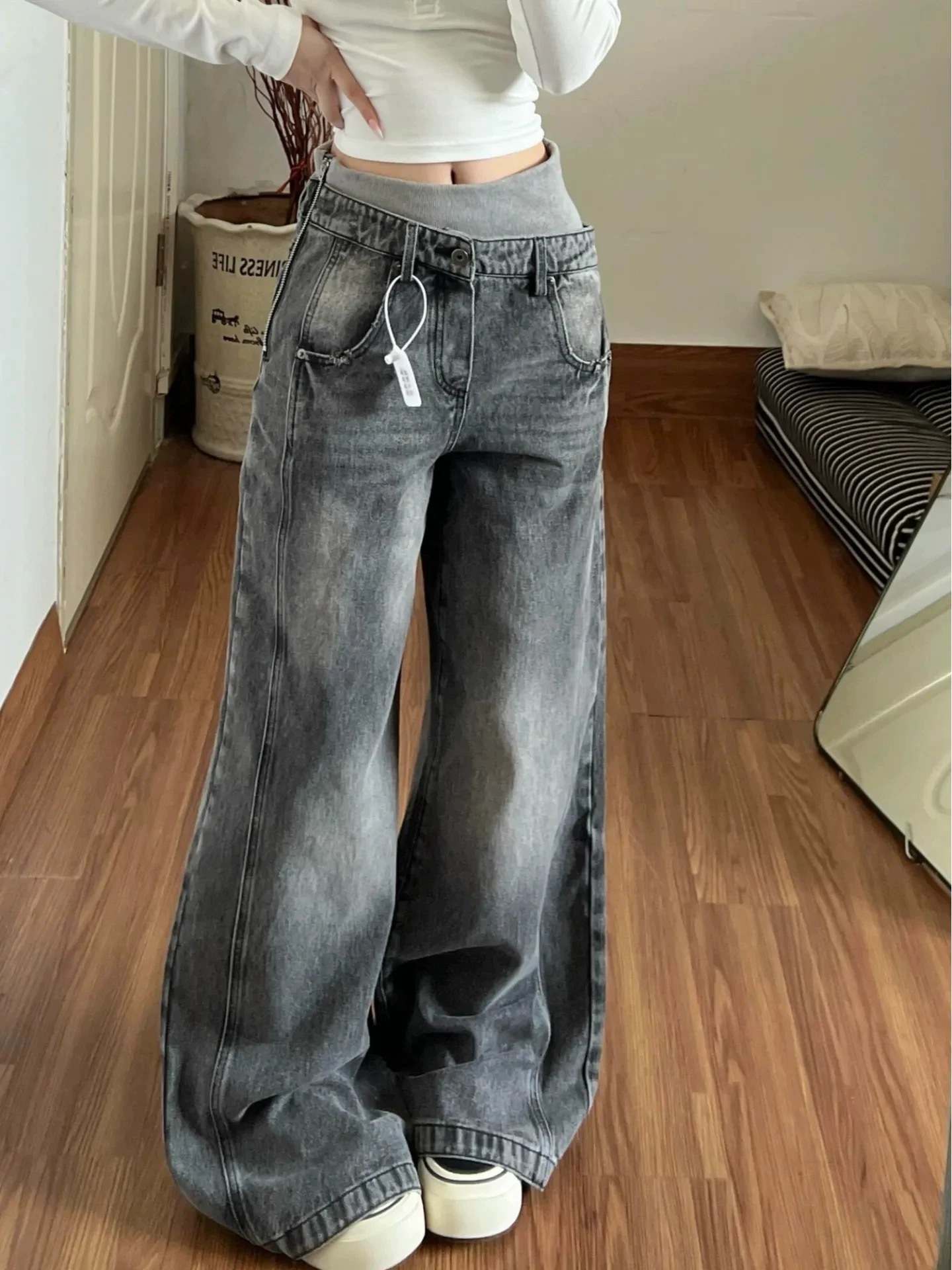
Length is the second lever. A wide leg typically looks most resolved when the hem just grazes the floor or sits a fraction above the ankle with a clean break. Too long, and the fabric pools unpredictably; too short, and the trouser appears to have been bought for someone with longer legs. The Noemie Vintage Washed Double Waistband Wide Leg Jeans demonstrate how a double waistband can sharpen the upper line while allowing the leg to fall freely, a detail worth considering when you want a defined waist without a rigid silhouette. For a softer, more fluid look, the Romane Casual Irregular Wide Leg Pants offer an asymmetric hem that adds movement without disrupting the vertical line.
A defined waistline and a fitted upper half keep the volume of the leg in clear proportion.
Finally, consider the rise. A high-rise wide leg elongates the torso and signals a relaxed confidence, while a mid-rise version suits longer tops and everyday movement. The balance between rise and inseam determines whether the trouser sits where you intend it. If the rise is too low for your torso, the waistband will fall and drag the silhouette down; if the rise is too high, the waistband can cut across the ribcage and interrupt the line of the top. Always assess the trouser while seated and walking, since these are the positions in which proportion most often fails.
2. Textile Weight, Weave, and the Question of Drape
Fabric is the silent author of every wide-leg silhouette. Two trousers cut from identical patterns will fall completely differently depending on weight, weave, and finish. Textile weight is typically measured in grams per square meter (GSM), and for denim the range runs from lightweight fabrics near 280 GSM to heavy, structured cloths above 400 GSM. Lighter denim drapes and flows; it moves with the body and creates soft, fluid folds. Heavier denim holds its shape and produces crisp, geometric lines that stand away from the leg. Neither is inherently superior, but each dictates the styling strategy.
Grain direction matters as much as weight. A straight-grain trouser, cut with the warp threads running vertically along the leg, holds its line and resists twisting. This is ideal for structured wide legs that need to keep their column shape. Bias-cut or partially bias-cut trousers, where the fabric is oriented at a forty-five-degree angle, drape with a liquid quality and cling more readily at the hip before releasing into a softer flare. The distinction becomes critical when you pair wide legs with fitted tops or knitwear, because a bias-cut trouser will mould to the body differently than a straight-grain one.
Weave also changes the visual outcome. A twill weave produces a diagonal texture that catches light and reads as richer, while a plain weave appears flatter and more matte. Washed and vintage finishes soften the handle of the fabric, lowering its stiffness and encouraging a relaxed drape, whereas dark rinses and rigid twills retain structure. The comparison below summarizes how these textile characteristics translate into styling outcomes.
| Fabric Profile | Typical Weight | Drape and Silhouette | Best Occasion Pairing |
|---|---|---|---|
| Lightweight washed denim | Approx. 280 to 320 GSM | Soft, fluid, movement-led flare | Daytime errands, weekend brunch |
| Structured rigid denim | Approx. 340 to 400 GSM | Crisp column, holds sharp lines | Creative workplace, city dinners |
| Crepe or tailored wool blend | Mid-weight, fine handle | Smooth, bias-influenced drape | Evening, office, refined tailoring |
When choosing between these profiles, consider your daily activity as much as aesthetics. A lightweight drape looks effortless but can cling and wrinkle during long wear. A structured fabric demands more deliberate pairing but reliably keeps its shape. The Veronique High Waist Wide Leg Trousers, tailored from a substantial yet fluid fabric, illustrate how a mid-weight cloth can offer both polish and movement. Assess the fabric in natural light and in motion, because weight and drape reveal themselves only once the garment leaves the hanger.
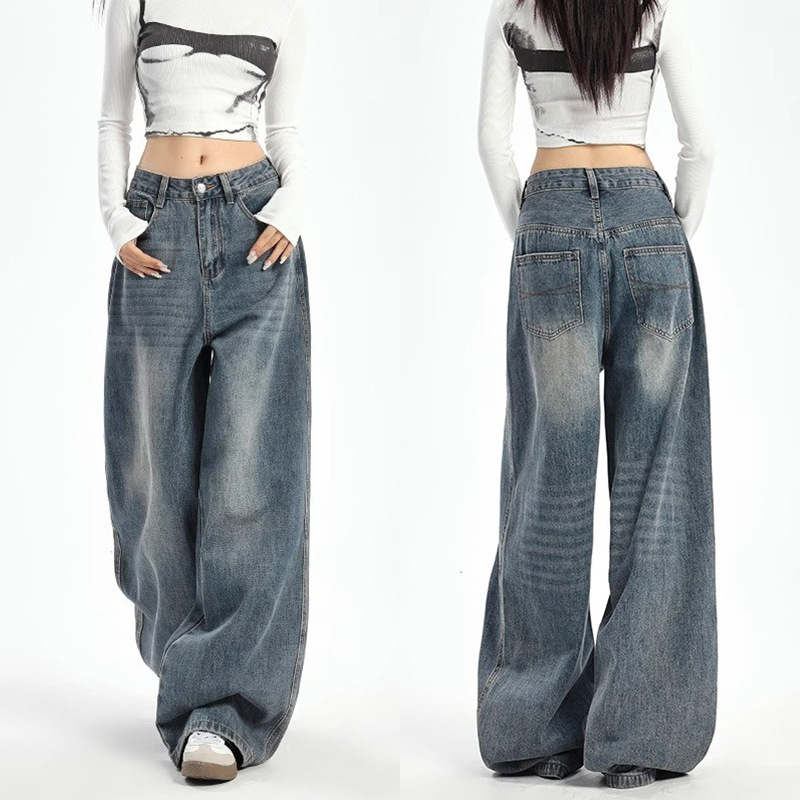
Vintage blue denim with a mid-weight handle gives the leg a relaxed, structured fall.
3. Garment Construction, Seam Allowance, and Tailoring Detail
Beneath every confident wide leg lies a set of construction decisions that most shoppers never see. The first is the internal architecture of the waistband. A grosgrain waist stay, a narrow ribbon sewn inside the waistband, prevents stretching and keeps the top edge crisp across the day. Garments without a waist stay often roll or gape at the back, which breaks the waistline the outfit depends on. Look for a stable waistband that sits flat against the body when fastened, with the button or closure aligned to the centre front seam.
Seam allowance and seam placement determine how the leg hangs. In a well-made wide trouser, the inseam and outseam are balanced so that the leg falls straight rather than twisting toward one side. Generous seam allowances, typically around one centimetre or more on structured garments, allow for future alteration and prevent fraying. Side seams that run perfectly vertical from hip to hem signal careful cutting. Twisted seams, by contrast, cause the hem to swing and the trouser to look as though it has been assembled from misaligned pieces. Examine the hem for even stitching and a consistent turn, because the bottom edge reveals the quality of the entire pattern.
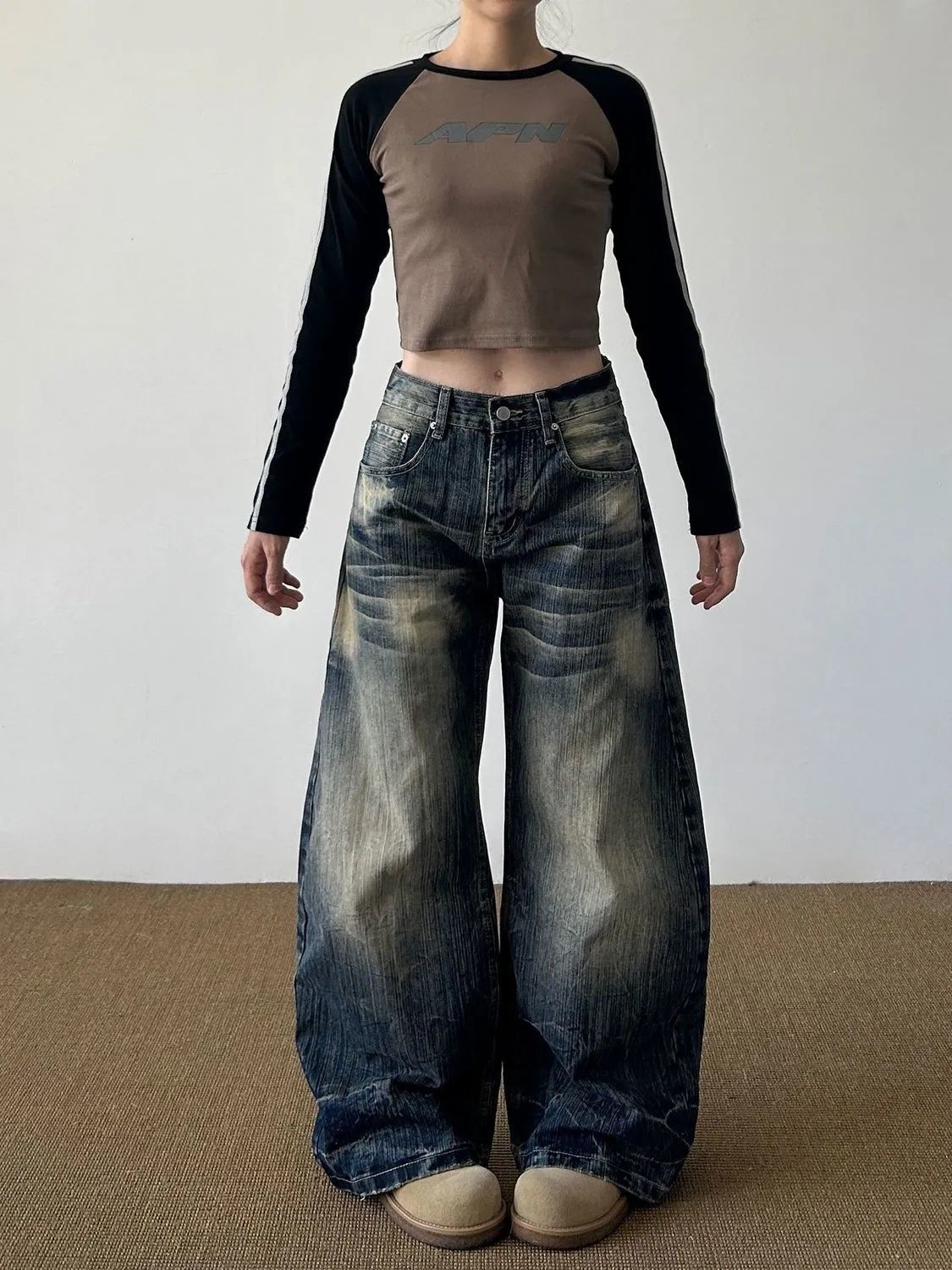
A structured high waistband and straight side-seam fall keep wide-leg denim anchored cleanly through the hip.
Interior finishing matters for comfort and for longevity. Quality denim often uses a flat-felled or double-stitched seam at the inseam to resist wear, while higher-end trousers may include a lining in the seat or a fabric-covered button placket that avoids irritation. Where a silicone grip tape is used, typically along the inside of a waistband or on the back of a fitted yoke, it keeps a top from riding up, a practical detail that becomes important when you tuck a shirt or knit into a high-rise wide leg. These details rarely appear in product photography, so inspect them when you can, or consult the fabric and construction notes before purchase.
Museum and textile collections offer a useful reference point for understanding how historic cuts achieved volume and stability. The Victoria and Albert Museum maintains an extensive fashion collection at https://www.vam.ac.uk/collections/fashion, where trousers and skirts from different eras reveal how earlier tailors managed weight, grain, and support without modern elastic or synthetic blends. Studying these examples helps clarify why traditional tailoring relies on structure rather than stretch, and why a well-cut wide leg depends on correct grain alignment rather than fabric alone. The Costume Society at https://costumesociety.org.uk/ similarly documents historic garment construction and conservation practice, a valuable resource for anyone wishing to understand the mechanics behind a trouser that holds its line.
Tailoring can also transform a good garment into a superb one. A simple adjustment to the hem, to the taper of the leg, or to the depth of the waistband can resolve most proportion problems. When evaluating a potential purchase, note whether the trouser offers room for alteration: a hem with enough fabric to lower, seams wide enough to release, and a waistband that can be adjusted. Garments built with these allowances reward patience and last considerably longer.
4. Footwear, Outerwear, and the Finishing Accessories
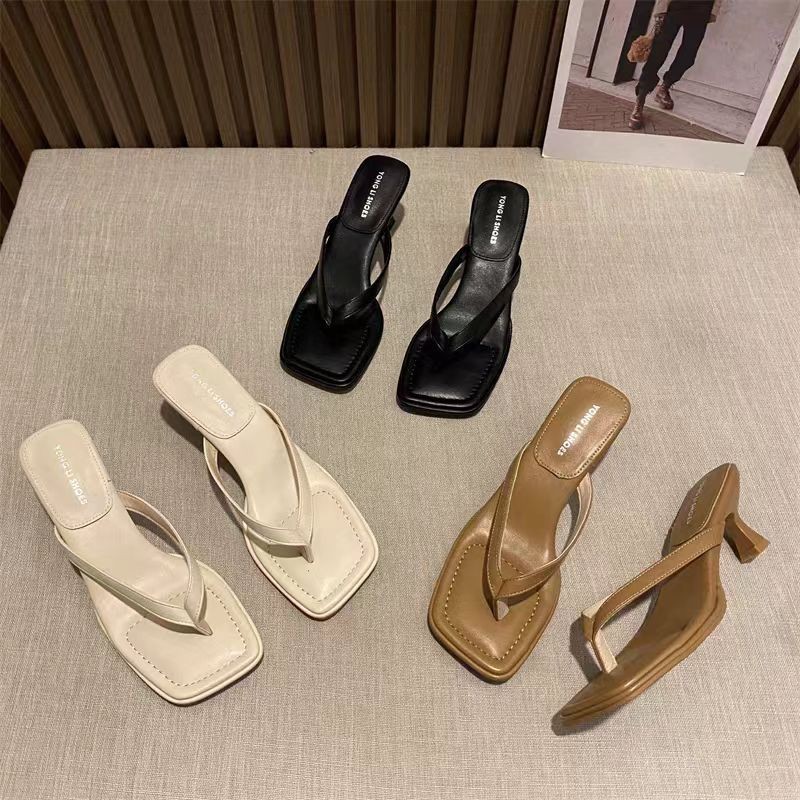
Footwear determines how a wide leg meets the ground, and therefore how the entire silhouette is grounded. The hem’s relationship to the shoe is one of the most consequential styling choices. A wide leg that stops just above a flat shoe creates a clean, elongated line, while a hem that covers the shoe completely produces a column that reads as sleek and intentional. Platform sandals, block heels, and sculpted loafers all work well because they add visual weight at the base, balancing the volume above. Slim, pointed stilettos can feel disconnected from a very wide trouser, unless the hem is cut to skim the shoe closely.
Outerwear requires careful attention to length and structure. A cropped jacket that ends at the waist or just below it reinforces the high-rise line and keeps the upper body proportionate to the trouser. A longer coat, such as a tailored overcoat or a belted trench, works beautifully over wide legs when it skims the knee or falls to mid-calf, because the vertical lines of the coat echo the column of the trouser. Avoid outerwear that ends at the widest point of the leg, since the overlap creates a dense horizontal band that shortens the figure.
Accessories provide the final punctuation. A structured belt defines the waist even further and draws the eye upward, while a slim leather strap or chain can add a touch of contrast without competing with the trouser’s volume. Handbags with a clean, structured silhouette suit wide legs better than oversized slouchy totes, which can compound the sense of bulk. Jewellery in fine, restrained pieces maintains the balance; large statement earrings or layered necklaces are most effective when the top half of the outfit is fitted and minimal. Think of accessories as the editor’s pen, correcting and refining rather than adding noise.
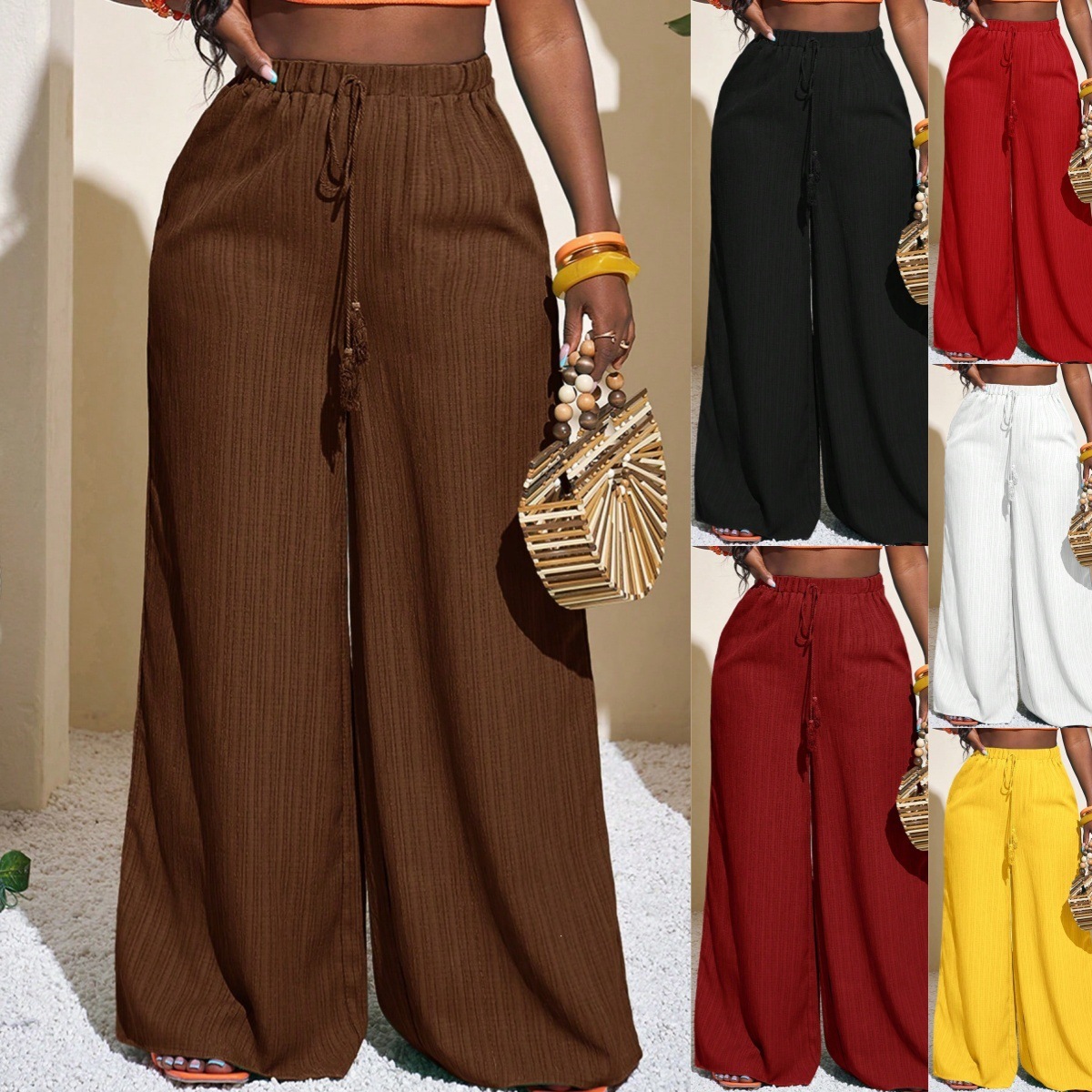
A tailored jacket that ends at the waist keeps the upper half proportionate to the wide leg.
For a refined daytime look, pair the Mathilde American Retro Light Blue Flared Jeans with a fitted knit tucked at the waist, a pointed-toe flat, and a neat leather bag. The flare of the trouser lengthens the leg while the tuck maintains the waistline. For evening, the Valerie Stylish High Waisted Asymmetrical Buckle Wide Leg Pants gain sophistication with a sleek bodysuit, a metallic block heel, and a cropped tailored blazer. In both cases, the outfit succeeds because every element responds to the trouser’s proportions rather than fighting them.
5. Fit Troubleshooting and Real-World Adjustments
Even a carefully chosen pair can disappoint in practice, and most fit problems fall into a few predictable categories. The first is gaping at the back of the waist. This usually indicates that the waistband is too large or that the rise is too short for your torso. A tailor can take in the centre back seam or shorten the yoke, and in many cases a waist stay or a discreet internal tab resolves the issue without alteration. If the gap persists, the rise may simply be too low, and a different cut will serve you better.
The second common problem is excess fabric at the hip and thigh. Wide legs are designed to skim the hip before flaring, so a trouser that bags or pulls across the seat suggests that the seat block is too generous for your build. Check whether the fabric pulls horizontally across the front or creases diagonally from the hip. Horizontal pulling often means the trouser is too tight through the thigh, while diagonal creasing indicates excess room. Both can often be addressed by a skilled tailor adjusting the side seams, though significant mismatch in seat size is usually better resolved by choosing a different size.
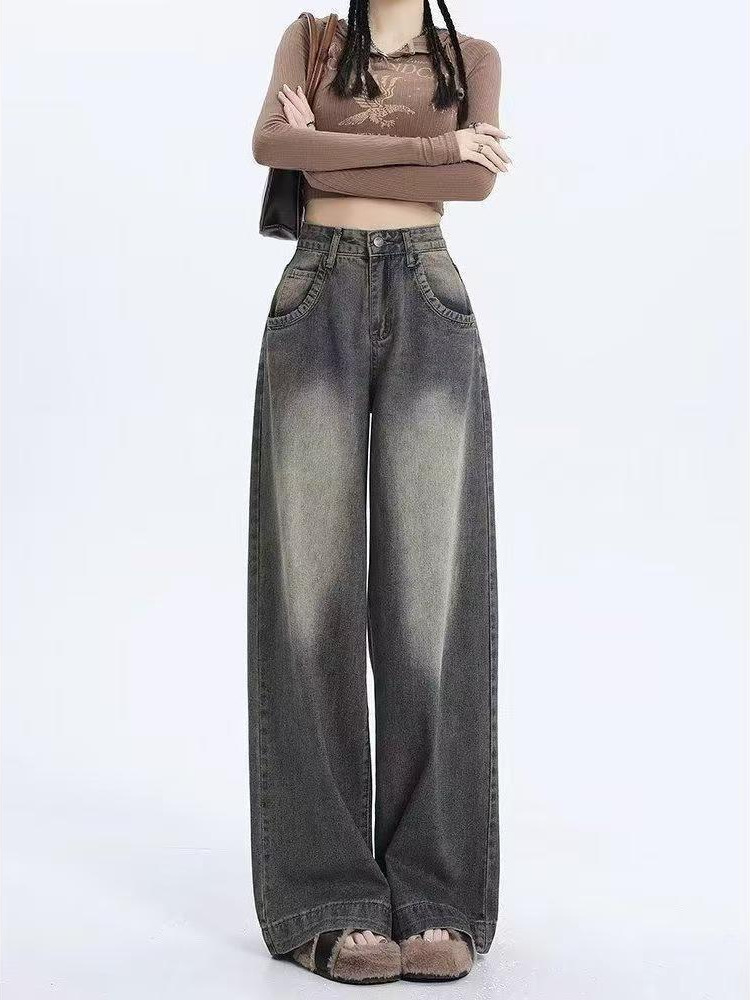
Hemming wide-leg denim to skim just above the ground with your most-worn shoes prevents heavy pooling at the ankle.
Length problems are more forgiving. If the hem pools excessively, have it shortened by a clean turn that preserves the original hem allowance. If the trouser sits too high on the ankle, a tailor can add length only if sufficient fabric remains in the hem, so ask before purchasing whether the piece can be lengthened. Pay attention to how the hem breaks over the shoe: a slight break creates a relaxed line, while a pronounced puddle can look careless. Test the length in the footwear you intend to wear, because a trouser hemmed for flats will behave differently with a heel.
Finally, consider comfort in motion. Sit, walk, climb stairs, and lift your arms while wearing the trouser. Watch for pulling across the thigh, excessive rubbing at the inseam, or waistband digging into the stomach. These sensations rarely improve with time, and a trouser that restricts movement will eventually appear ill-fitting regardless of how it looks in the mirror. The most successful wide-leg wardrobes are built on pieces that fit the body precisely where it matters, allowing the volume of the leg to become a source of ease rather than a source of compromise. With attention to proportion, fabric, construction, and fit, wide-leg denim and trousers remain one of the most expressive and enduring choices a contemporary wardrobe can offer.
The Styling Takeaway
Wide-leg jeans and trousers succeed when the wearer treats volume as a deliberate design element rather than an accident of cut. Every decision, from the rise and the waistline to the textile weight and the hem length, shapes whether the outfit reads as considered or cumbersome. By defining the waist, choosing fabrics whose drape suits the occasion, and respecting the construction details that keep a leg falling cleanly, you give the silhouette a clear structure. Footwear, outerwear, and accessories then complete the composition by grounding the leg, lengthening the line, and echoing the proportions you have established. The result is a look that feels intentional from the first step to the final accessory.
The principles in this guide are not rules to be followed rigidly but a vocabulary for making better choices. A tailor’s eye, a fabric’s weight, and a stylist’s sense of balance all point toward the same goal: a silhouette that moves with you rather than against you. When fit problems arise, they are usually solvable through alteration or through a more suitable cut, and when the fabric and construction are sound, a wide leg will repay your investment for years. Approach each piece with curiosity about how it hangs, how it moves, and how it meets the rest of your wardrobe, and wide-leg denim will reward you with an elegance that is generous, confident, and unmistakably yours.