A jacket is the most architectural decision in any outfit. It frames the shoulder line, dictates where the eye lands, and determines whether a look reads as deliberate or accidental. For women building a wardrobe that moves easily between a slip dress at dinner and a pair of straight-leg denim on a Saturday errand, the right layer does more work than almost any other single piece. The challenge is that the qualities that make a jacket versatile are rarely obvious on a hanger. A garment that looks sharp beside a midi dress can feel bulky over denim, and a piece cut for jeans can look underdressed the moment a hemline lengthens past the knee. Understanding why these pairings succeed or fail is the difference between a jacket that earns its place in the closet and one that lives at the back of the rail.
Etiquette matters here too, though it is less rigid than it once was. The traditional rule that outerwear should complement rather than compete with the garment beneath still holds. A dress with a strong print or intricate beading generally calls for a jacket with a quieter surface, while a minimal knit dress can carry a textured or visually bold layer. Denim, by contrast, is already informal, so a jacket worn over it can either reinforce that ease or lift the look toward something more polished. The question to ask is not simply whether the pieces match, but what mood each element contributes. A structured wool blazer over a bias-cut dress suggests a considered evening; the same blazer over a faded pair of jeans suggests a confident daytime edit. Both are valid, and the jacket is often the piece that determines which story you are telling.
Fabric, cut, and proportion work together to make this possible. A jacket that adapts well typically has a neutral or tonal palette, a length that sits comfortably over both hip-skimming and longer hemlines, and a shoulder structure that flatters without overwhelming. In the sections that follow, we examine the mechanics behind these qualities: how silhouette shapes proportion, how textile weight determines drape, how construction affects longevity, how footwear and accessories complete the line, and how to correct fit when a piece is nearly right. Each consideration builds toward a single goal: a jacket you can reach for on any day without second-guessing the result.
1. Reading Silhouette and Proportion Across Dresses and Denim
Silhouette is the first thing a viewer registers and the last thing most shoppers examine. Yet the outline of a jacket determines almost everything about how it will pair with a dress or a pair of jeans. The critical measurement is the hem length relative to the wearer’s hip and the hem of the garment beneath. A jacket that ends at the high hip creates a defined waist and a longer leg line when worn with trousers or denim, which is why cropped and mid-length styles remain the most flexible choices for denim-based outfits. Over a dress, that same short length can cut the dress in two, so a mid-thigh or longer hem tends to bridge both worlds more gracefully.
Shoulder construction is equally consequential. A jacket with a clean, natural shoulder sits where the body’s own shoulder falls, allowing the garment to follow the figure without padding that announces itself. A structured shoulder, with a subtle pad and a slightly squared outline, adds authority and works beautifully with fluid dresses, because it creates a deliberate contrast between sharp top and soft skirt. The mistake many shoppers make is choosing a shoulder that is too wide, which can overwhelm a delicate frame and make denim look heavier than intended. Proportion is relational: the volume of the jacket should be balanced by the volume of what sits beneath it. Oversized silhouettes require a streamlined base, while a fitted jacket can accommodate fuller skirts or wider-leg denim without losing its shape.
For a versatile option, consider a relaxed silhouette with a defined waist or a gently tapered body that reads as intentional rather than shapeless. The Delphine Plaid Hooded Fleece Dress demonstrates how a textured, casual layer can carry a mid-length line that transitions easily between styled and everyday contexts, and its proportions show how a garment can hold a dress-like volume while remaining relaxed enough for denim.
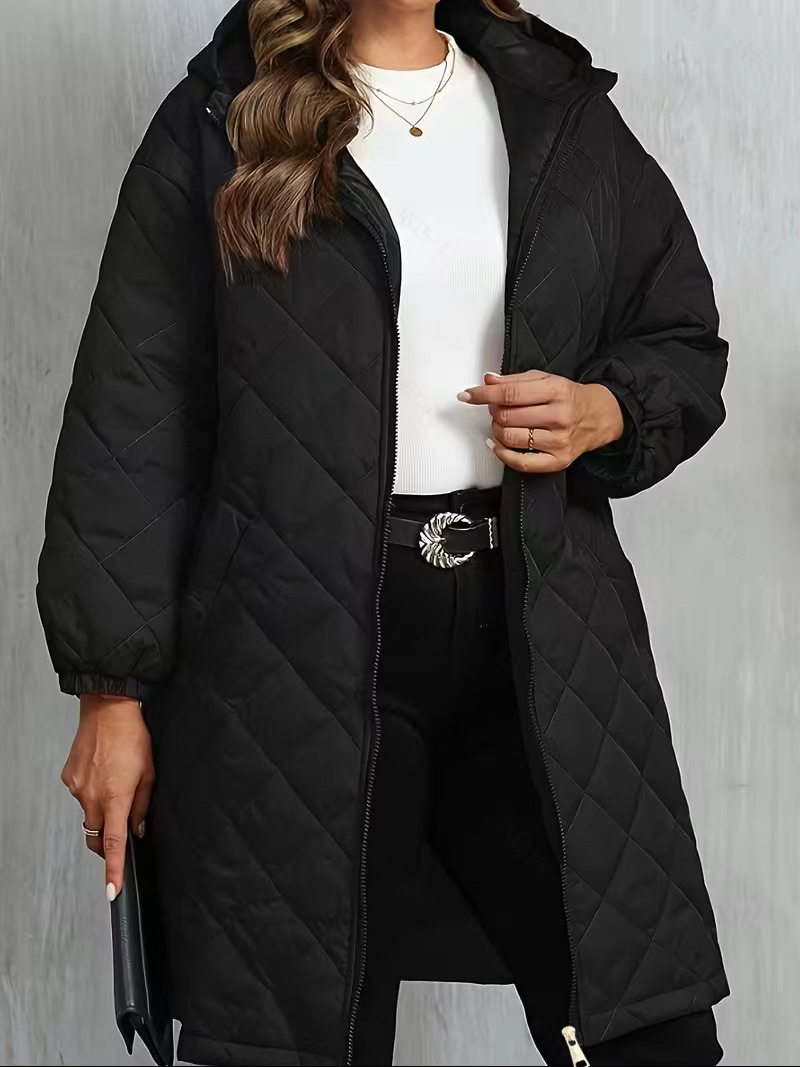
A mid-length plaid silhouette bridging dress and casual layering.
When evaluating a jacket in person, stand in front of a mirror with the garment you plan to wear most often. Check whether the hem clears the widest part of your hip, whether the sleeve ends at the wrist bone without bunching, and whether the front closure lies flat when you cross your arms. These three checks reveal more about versatility than any product description. A jacket that passes them will almost always adapt across your wardrobe, because its proportions are defined by your body rather than by a single trend.
2. Textile Weight, Weave, and Drape
Fabric determines how a jacket behaves in motion, how it holds its line, and how it responds to the garments beneath it. Weight is typically measured in grams per square metre (GSM), and it is one of the most reliable indicators of performance. Lightweight wovens in the range of 120 to 180 GSM drape softly and suit transitional weather, but they can look flimsy over heavy denim. Mid-weight knits and fleeces, often between 250 and 350 GSM, provide structure and warmth while still moving with the body. Heavier suitings and coated fabrics above 400 GSM hold a crisp outline but can feel rigid under a fluid dress.
Grain direction also shapes drape. Fabric cut on the straight grain, meaning parallel to the selvedge, holds its shape and resists stretch, which suits tailored jackets with defined lapels and structured fronts. Bias-cut fabric, angled at forty-five degrees, drapes more fluidly and conforms to curves, which is why bias cuts appear in softer evening pieces. For a jacket intended to pair with both dresses and denim, a straight-grain construction in a mid-weight fabric usually offers the best balance: it skims rather than clings, it closes cleanly, and it does not collapse when layered over a dress with a structured bodice.
The table below summarises how common fabric families perform across the pairings most shoppers encounter.
| Fabric Family | Typical Weight | Best Dress Pairing | Best Denim Pairing |
|---|---|---|---|
| Fine wool suiting | 280 to 340 GSM | Midi and column dresses | Straight and slim denim |
| Rib or cable knit | 250 to 320 GSM | Knit and jersey dresses | Wide-leg and relaxed denim |
| Brushed fleece | 260 to 340 GSM | Casual shift and plaid dresses | Any cut, especially mid-rise |
| Cotton twill or canvas | 300 to 380 GSM | Slip and wrap dresses (contrast) | Denim and workwear pairings |
| Simulated suede | 350 to 420 GSM | Structured knee-length dresses | Straight-leg denim |
Texture adds another layer of decision-making. A subtle surface such as a fine twill or a smooth wool reads as refined and pairs with nearly anything. A pronounced texture, such as a heavy cable knit or a dimensional suede, introduces a tactile focal point that works best when the garments beneath are simple. The Garance Simulated Suede Fabric Symmetrical Large Pocket Simple Coat illustrates how a dense, slightly structured surface can hold a clean outline over both dresses and jeans, provided the proportions are kept balanced.
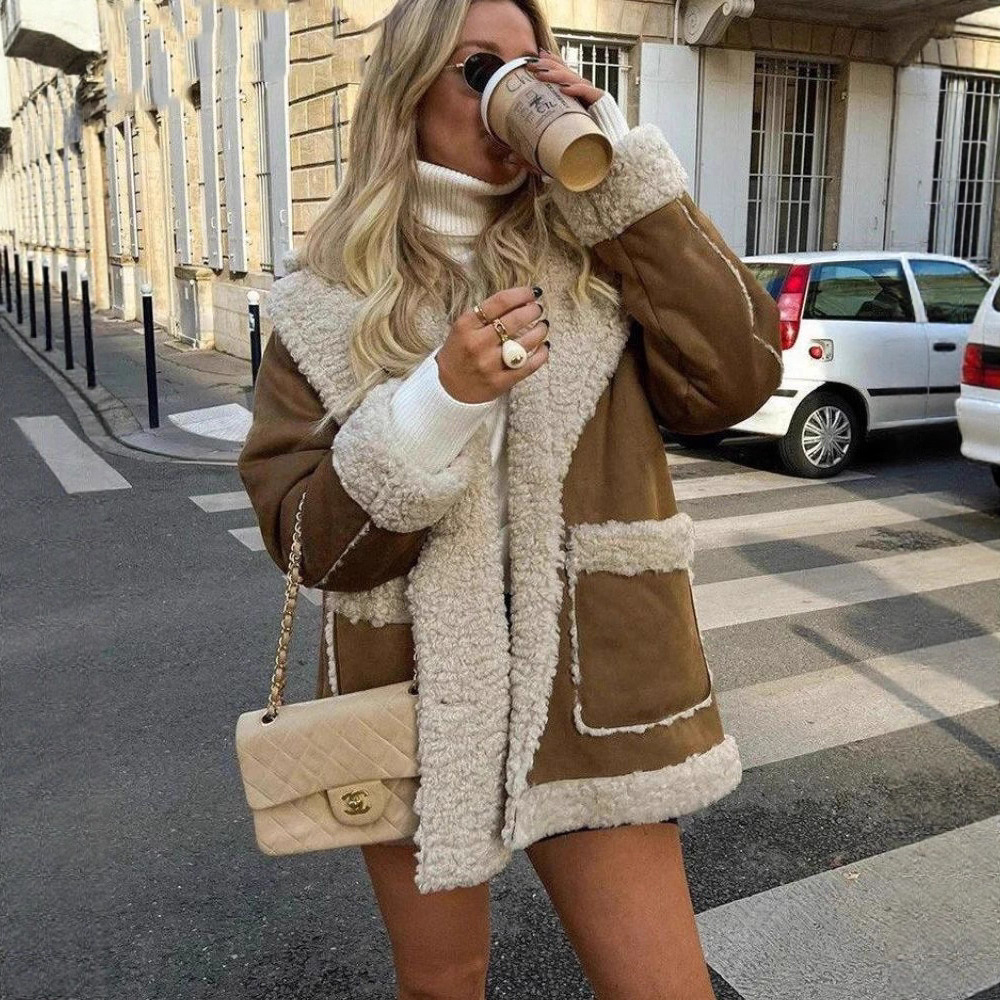
Simulated suede holds a crisp outline across dress and denim layering.
Test drape by gathering the fabric in your hand. If it springs back quickly, the weave has structure and will hold a shoulder line. If it falls loosely through your fingers, it will move with the body but may need a lining or a more structured garment underneath to avoid looking shapeless.
3. Garment Construction and Tailoring Essentials
Construction is where versatility is either built or quietly compromised. A jacket that looks elegant on the rail can reveal its limitations after a few wears if its internal architecture is weak. The most important elements are the seam allowances, the interfacing, the lining, and the closure system. Seam allowances of at least 1.5 centimetres at stress points such as armholes and shoulder seams allow for future alteration and prevent fraying. Generous allowances also indicate that the maker anticipated the garment would need adjustment, a practical signal of quality.
Interfacing, the fused or sewn layer that stabilises collars, lapels, and front edges, determines whether a jacket keeps its shape. Fusible interfacings can be efficient, but lower-grade versions may bubble or separate after laundering. Sew-in canvas interfacing, while more labour-intensive, moulds to the body over time and produces a lapel that lies flat rather than curling. Look at the inside of the front panels if the garment is unlined or partially lined; you should see a clean, even layer rather than loose stitching or visible glue.
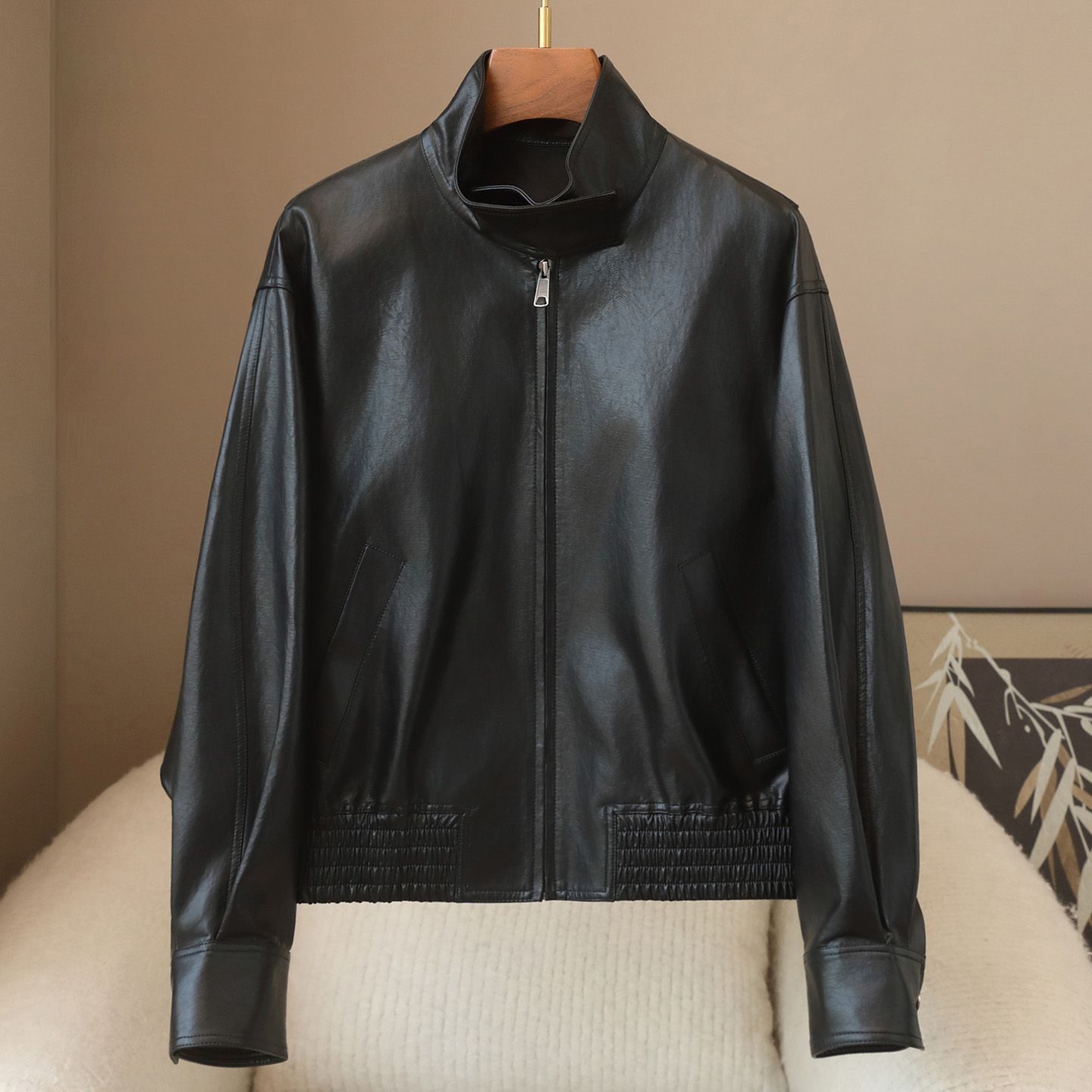
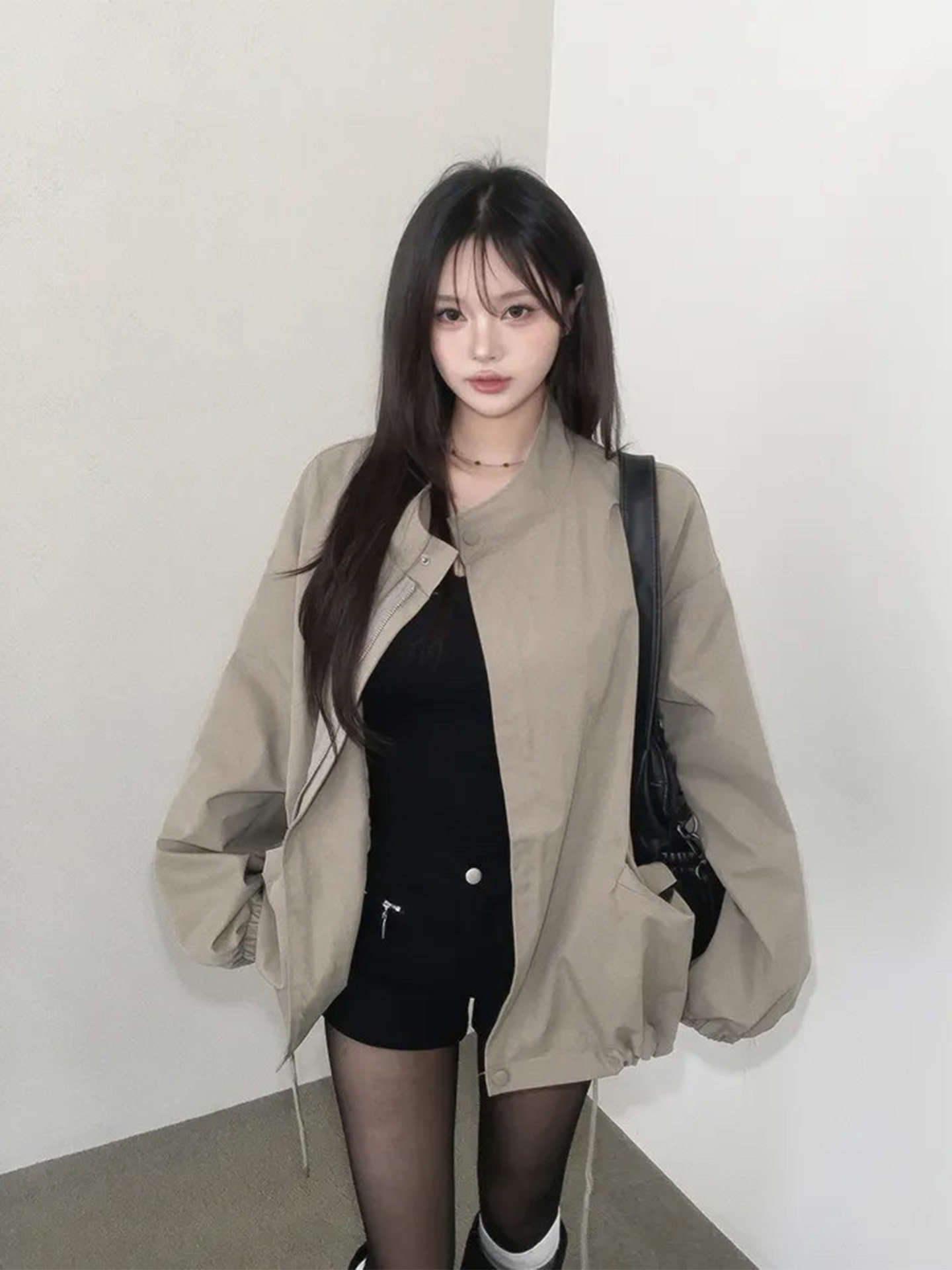
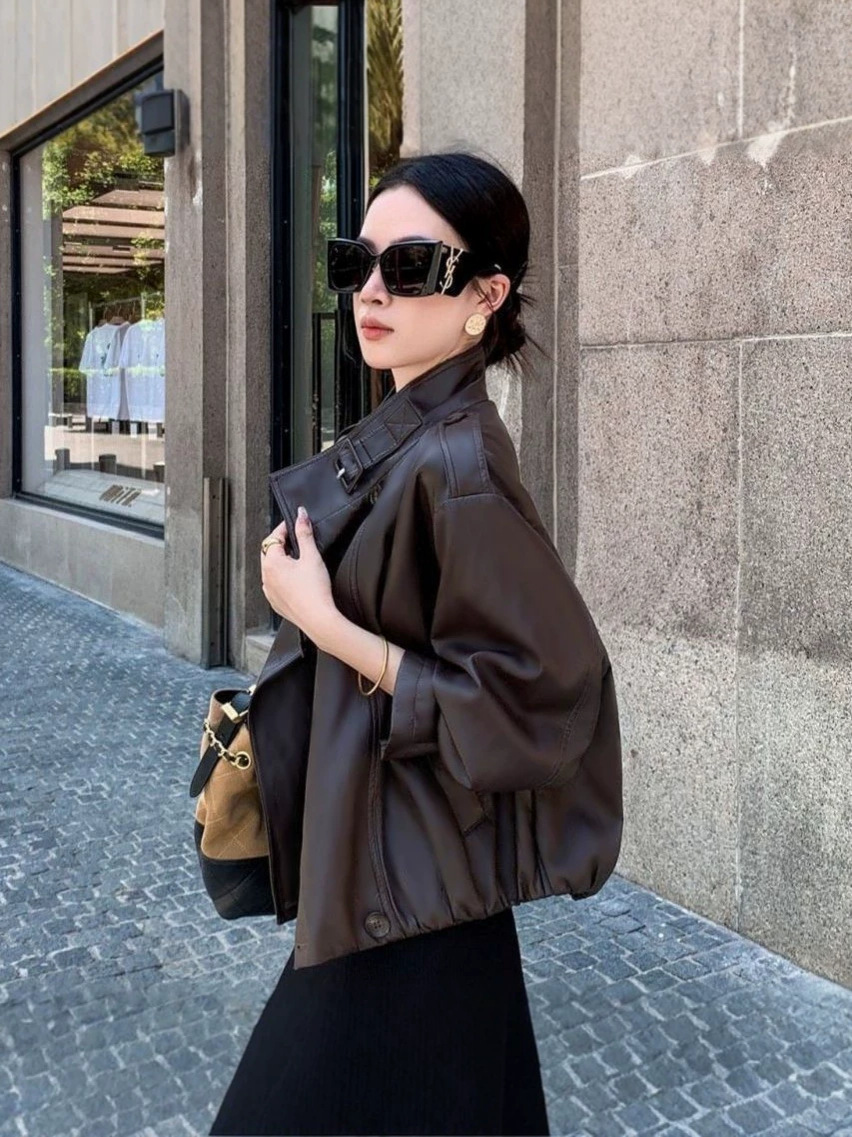
Clean stand-collar tailoring and structured shoulder seams help a short jacket hold its line over both fluid dresses and denim.
The lining deserves equal scrutiny. A full lining allows the outer fabric to glide over a dress without snagging, and it protects the jacket’s shape when layered over knits or fleece. Bemberg or viscose linings tend to breathe better than polyester, while silk linings are luxurious but more delicate. For authoritative guidance on historical and contemporary garment construction, the Victoria and Albert Museum’s fashion collection offers useful reference material on how tailored outerwear has been built across eras at https://www.vam.ac.uk/collections/fashion.
Closures influence how a jacket sits when worn open or closed. A hidden placket or a concealed button stance keeps the front line uninterrupted, which suits layering over dresses with detailed bodices. Exposed buttons add rhythm and a more casual signal, which pairs naturally with denim. The grain of the buttonholes should run parallel to the front edge, and buttons should be sewn with a shank to allow the fabric to sit flat when fastened. A jacket that gapes across the bust or pulls at the button is usually a construction issue rather than a sizing one.
Finally, examine the hem and sleeve finishing. A hem that is turned and stitched by hand or with a blind stitch will last longer and adjust more easily than one that is simply serged. Sleeve hems should sit at the wrist bone so that cuffs do not ride up when the arms are bent. These details signal whether a garment was built for repeated wear across different outfits, which is the defining requirement of a versatile jacket.
4. Footwear, Outerwear Layering, and Accessories
Once the jacket is chosen, the shoes and accessories complete the proportion. Footwear is the most influential choice because it sets the visual weight at the base of the outfit. Ankle boots with a clean heel suit both dresses and denim, and they align well with mid-length jackets because they extend the leg line without competing with the hem. Loafers and low-profile sneakers work with straight denim and cropped jackets, creating a relaxed daytime balance. For dresses, a pointed or square toe can echo the jacket’s lapel or shoulder line, creating a quiet visual conversation between layers.
Layering requires attention to what sits between the jacket and the body. A fine knit or a fitted bodysuit prevents the jacket from catching on dress fabrics and keeps the silhouette smooth. For a structured coat or heavier jacket over a dress, a lightweight slip or a thin sweater underneath will help maintain movement. When pairing a jacket over denim, a tucked-in top defines the waist and prevents the layers from merging into a single shapeless block. The goal is contrast in texture and clarity in outline, so that each piece is legible.
Accessories should be chosen to reinforce the jacket’s character rather than add noise. A structured bag with a clean hardware finish suits tailored jackets, while a soft leather or woven tote complements casual layers. Belts are particularly useful: a slim belt cinched at the waist of a jacket worn over a dress creates shape, and a wider belt can anchor an oversized silhouette over jeans. Jewellery should be scaled to the neckline and the jacket’s closure; a jacket with a high collar or a closed front rarely needs more than a single statement earring or a fine chain.
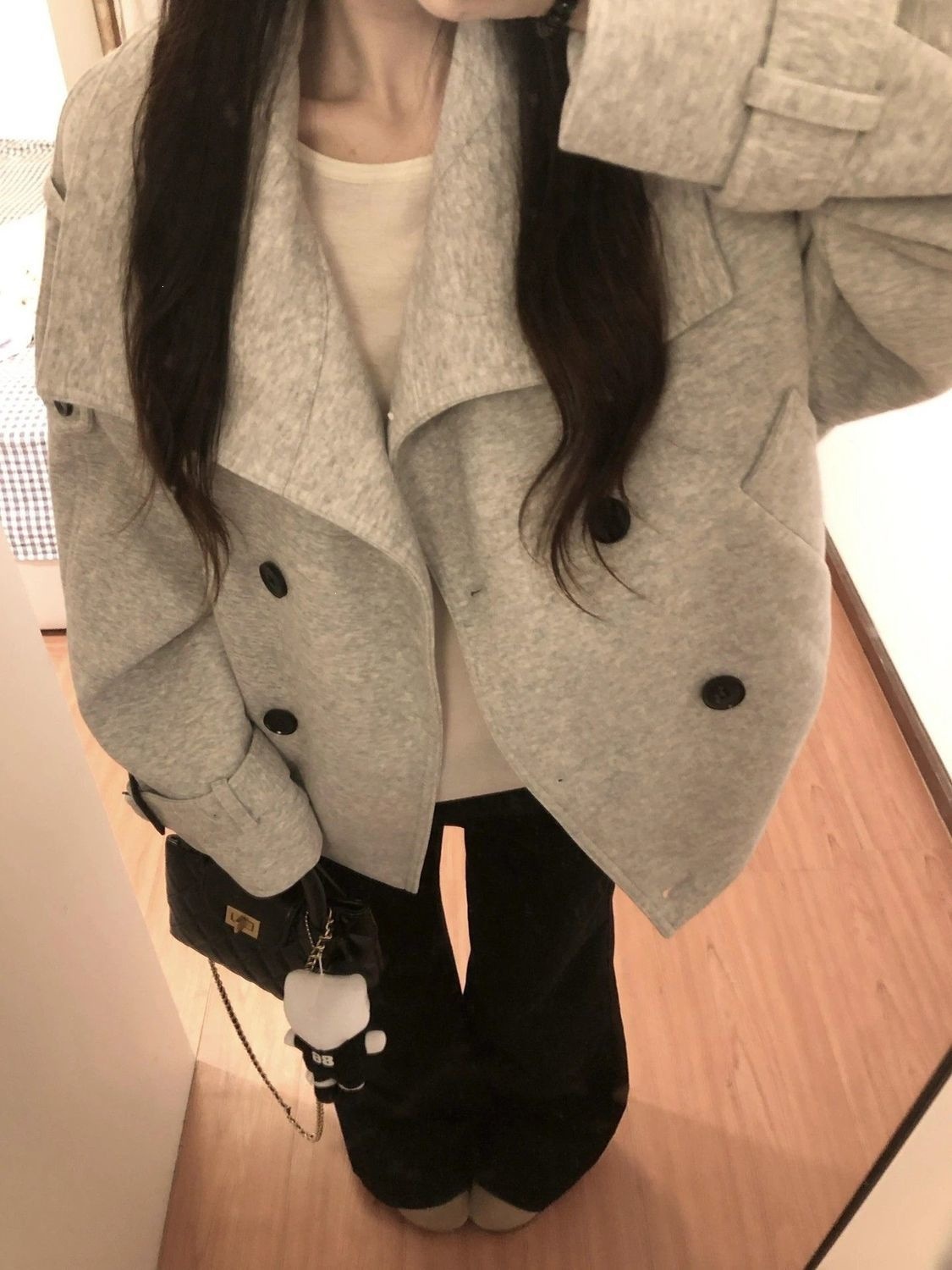
A ribbed knit jacket adds texture and structure over a simple dress.
For cooler months, consider how a knit layer such as the Jeanne Autumn Winter Double Breasted Vintage Ribbed Knit Cardigan Jacket can provide warmth without bulk, particularly when paired with boots and a slim belt. A ribbed texture also reads well against both smooth dress fabrics and washed denim, making it a practical bridge between the two. Weather should inform the final layering decision: a jacket that is too heavy for indoor settings becomes a burden, so plan for transitions between street, office, and dinner venues.
5. Fit Troubleshooting and Real-World Adjustments
Even a well-chosen jacket can disappoint if it fits imperfectly. The most common issue is shoulder placement. If the shoulder seam sits beyond the natural edge of your shoulder, the jacket will appear oversized and may slide when you move. This is difficult to correct, so it should be the first check when trying on. If the seam sits inside the shoulder, the garment will pull across the back and create horizontal wrinkles, which often indicates it is too small through the upper body.
Sleeve length is the second critical measurement. The sleeve should end at the wrist bone when the arm hangs naturally, and it should not shift when you reach forward. A sleeve that is too long can be shortened by an experienced tailor, but the shoulder cannot be altered without significant work. For this reason, prioritise shoulder fit and treat sleeve length as an adjustable element.
Generous armhole room and a relaxed double-breasted front let knitwear sit smoothly underneath without pulling across the back.
Bust and waist fit affect how the front closes. If the buttons strain or the front gapes, the jacket may be cut for a smaller bust or a more defined waist. Some garments can be let out at the side seams if allowances permit, but this depends on how much fabric was included during construction. Ask the retailer about measurements or check whether the seams have room to release. For a relaxed, layerable fit, however, a slight gape at the bust is sometimes acceptable if the silhouette remains balanced.
Practical adjustments can extend a jacket’s range. A tailor can take in the side seams of a boxy jacket to create a defined waist, or shorten the hem to shift the proportion for denim. Replacing buttons with a slightly larger or more substantial style can improve how the closure sits. Adding a small amount of shoulder padding or removing an overly stiff pad can change the silhouette significantly. Always bring the garment you plan to wear with the jacket to the fitting, because the same piece can read differently over a fitted dress than over relaxed denim.
Finally, consider how the jacket will behave after washing and wear. Knits and fleece may relax slightly over time, while structured wool and suede require careful cleaning to preserve their outline. Following the care label and allowing garments to dry flat protects the shape and extends the life of the piece. A jacket that is fitted, cared for, and paired thoughtfully will return the investment many times over.
The Styling Takeaway
A versatile jacket is less a single garment than a set of decisions: about silhouette, fabric, construction, and fit, each made with the outfits it will join in mind. The strongest choices share a few qualities. They have a length that bridges the hip and the hemline, a shoulder that follows the natural line of the body, a textile weight suited to the seasons you live in, and a construction that anticipates repeated wear. When a jacket meets these standards, it becomes the connective tissue of a wardrobe, linking a dress for dinner to a pair of denim for the weekend without requiring a separate layer for each occasion.
Begin by auditing what you already own. Identify the dresses and denim you wear most often, note their colours, textures, and hemlines, and look for the jacket that complements rather than duplicates them. Test every piece in front of a mirror, checking shoulder placement, sleeve length, and how the front closes. Consider the fabric not only for its appearance but for how it will hold its shape over a season of use. A jacket that earns your trust in the fitting room is likely to earn it again in the morning, when you reach for a layer without thinking and find the outfit already complete.