A well cut dress is an argument about the body it was built for: where the waist sits, how the hip curves, where the eye should land first. The moment you throw a cardigan or a coat over it without thinking, you erase that argument entirely. Layering a dress is not about adding fabric until you feel warm or finished. It is a structural negotiation between two garments, one of which usually has boning, darts, or a bias cut doing very specific work. Get the negotiation wrong and you end up looking shapeless, bulky, or like you forgot to take your coat off for the photo. Get it right and the outer layer becomes an extension of the dress’s own architecture rather than a cover-up for it.
Why Layering Usually Erases the Silhouette You Paid For
Most layering mistakes come down to one oversight: treating the dress as a neutral base instead of a finished garment with its own seam lines, waist definition, and drape behavior. A fitted sheath dress has already done the work of nipping the waist and skimming the hip. When you throw an oversized cardigan or a boxy coat over it, you are not adding warmth, you are canceling the silhouette the dress was engineered to create.
Take a dress like The Marine Dress with a Fitted Skirt and a Middle. Its structure depends on a fitted skirt panel that controls the hip line and a middle seam that creates visual length through the torso. Layer it under a loose, unstructured jacket and that seam work disappears under fabric volume. Layer it under a cropped, waist-grazing blazer instead, and the two garments reinforce each other: the blazer’s hem stops exactly where the dress’s waist definition begins, so the eye reads one continuous line rather than two competing shapes.
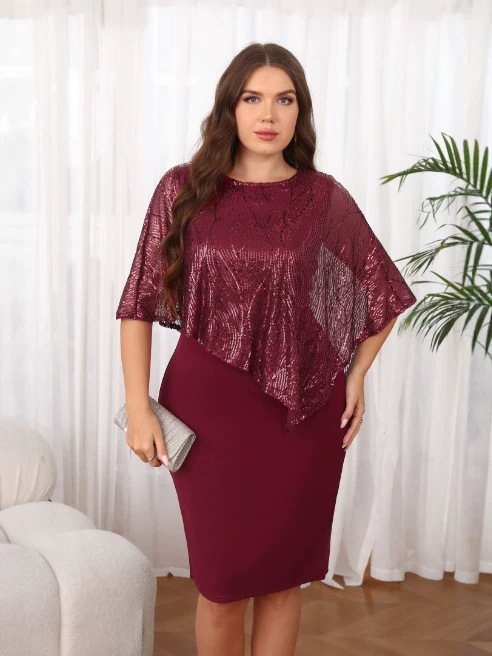
The fitted skirt and middle seam on this silhouette depend on a layer that stops at the waist, not one that smothers it.
The fix starts with a simple rule: any layer you add should either match the dress’s waist point or sit well above or below it. Garments that land mid-hip, where most dresses carry their fullest curve, are the ones that flatten silhouette fastest.
Read the Garment’s Architecture Before You Add Anything
Before reaching for a coat or wrap, spend thirty seconds reading what the dress is actually doing structurally. Is there internal boning in the bodice, the kind you find in corseted eveningwear that holds the ribcage in place without a separate shapewear layer? Is there a grosgrain waist stay sewn into the inner seam, designed to anchor the dress at the natural waist so it does not ride up when you sit or walk? Is the bodice cut on the bias, meaning it relies on the drape of the fabric itself rather than internal structure to hold shape?
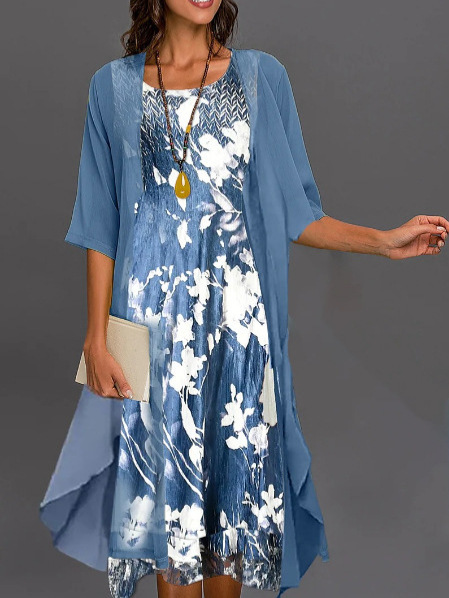
Chiffon dresses, for instance, behave completely differently from structured bandage dresses. The Isaline Fashionable and Elegant Chiffon Dress relies on fluid, lightweight drape rather than rigid boning. A heavy wool coat layered over chiffon crushes that drape and makes the dress look flat and lifeless underneath. The better companion is something with its own softness: a silk-lined trench left open, or a lightweight duster coat that moves with the chiffon instead of fighting it.
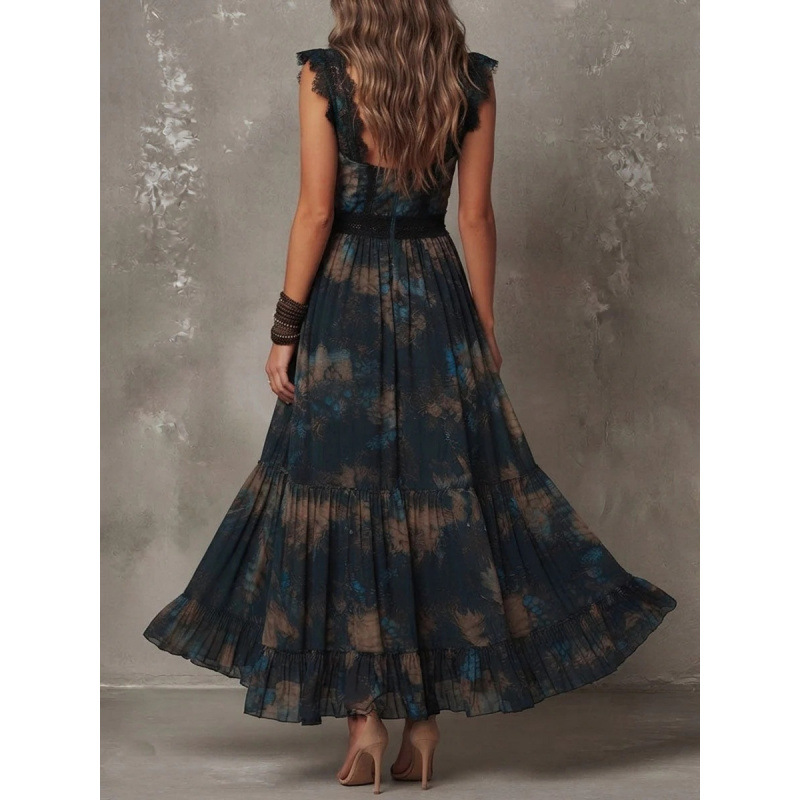
Reading where the waist seam and sleeve volume sit tells you immediately whether a dress calls for a cropped jacket or a fluid wrap.
Structured dresses with internal boning, by contrast, can handle a stiffer outer layer because the bodice is already doing its own work independently of what sits on top. The Victoria and Albert Museum’s costume archive has documented how corsetry and internal structure evolved precisely to let outer garments move freely without disturbing the foundation beneath, a principle that still holds for modern boned bodices (source: V&A Fashion Collection). If your dress has that internal support, you have more license to layer boldly. If it relies purely on drape, layer gently.
The Blazer Equation: Structured Over Structured
A blazer is the single most versatile layering tool for a dress, but only when the proportions are matched correctly. The general rule in couture styling is that structured outerwear pairs best with dresses that already carry some architecture of their own, fitted bodices, defined waists, or tailored seaming. Pairing a sharp blazer with a dress that has nothing to meet it structurally usually results in the blazer visually overpowering the dress entirely.
The Anais Fashionable and Elegant Chiffon Dress works well under a cropped blazer specifically because the dress has a defined waist seam that the blazer’s hem can echo. Keep the blazer unbuttoned, or button only the top closure, so the V created at the neckline draws a clean line down toward the dress’s own waistline rather than creating a second, competing waist higher up the torso.
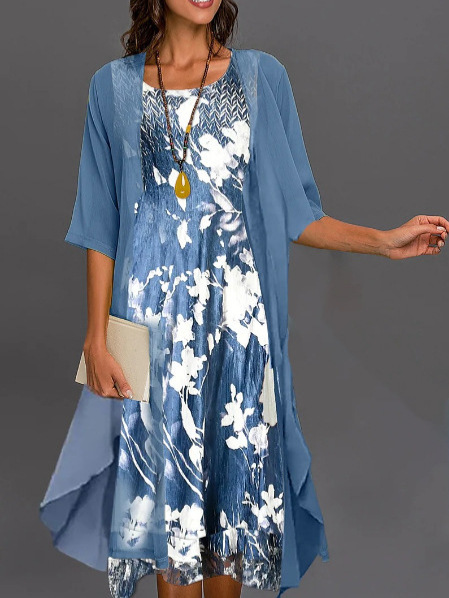
A cropped blazer left unbuttoned at the waist keeps this dress’s own waistline as the focal point rather than introducing a second one.
Sleeve length matters more than most women account for. If the dress has elbow length or three-quarter sleeves, a blazer with full length sleeves bunched at the wrist will look sloppy. Push blazer sleeves up slightly to three-quarter length, or choose a blazer in a shorter sleeve cut, so the two sleeve lines do not fight for the same real estate on the forearm.
Soft Layering: Shawls, Wraps, and the Case Against Bulk
Not every occasion calls for tailoring. Evening events, cocktail hours, and cooler outdoor receptions often call for a softer layer: a cashmere shawl, a silk wrap, or a light knit thrown over the shoulders rather than pulled through the arms. The trick with soft layering is weight distribution. A heavy shawl bunched at one shoulder will pull the entire garment off center and distort how the dress’s neckline sits against the collarbone.
For dresses with open backs or delicate strap details, like statement eveningwear, a wrap should be draped symmetrically across both shoulders and allowed to fall straight down the back rather than knotted at the front, which creates unwanted bulk exactly where a fitted bodice needs to stay smooth. If the dress has a plush or textured fabric of its own, as in outerwear-adjacent pieces like The Ariane Casual Denim Jacket Cardigan, the garment itself often provides enough visual warmth that an additional heavy layer becomes redundant. In those cases, a thin silk scarf at the neck does more for the look than a full shawl, adding color and texture without adding bulk to a piece that already reads as a complete, cohesive silhouette.
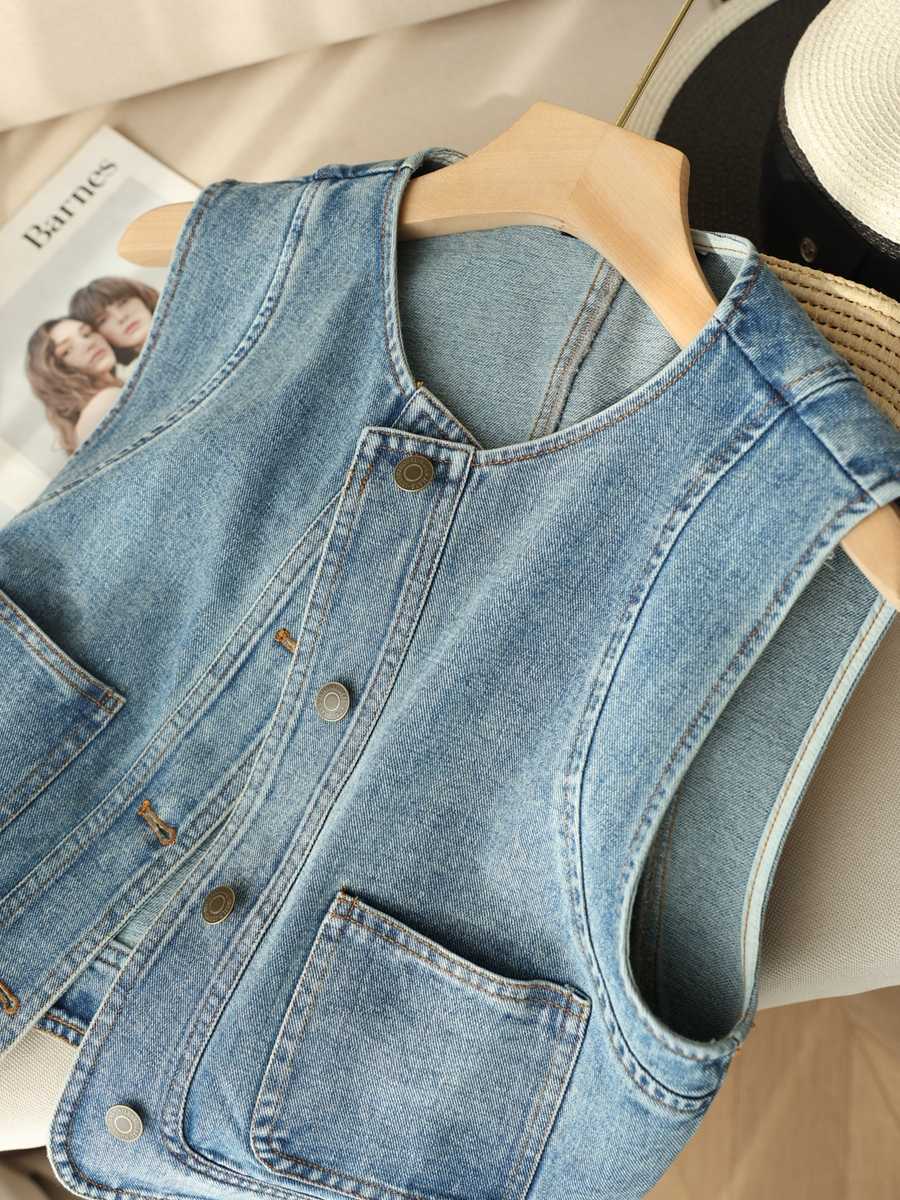
Medium-weight cardigan jackets add tactile warmth over lighter dresses without burying the waist seam beneath heavy padding.
Coats and Outerwear: Doing the Proportion Math
Coats are where most layering mistakes become permanent rather than fixable with a quick adjustment. The length of the coat relative to the dress is the single biggest variable. A coat that stops a few inches above a dress’s hemline creates an awkward horizontal break that shortens the leg visually and interrupts the dress’s line at its least flattering point. The safer choices are a coat that stops well above the knee, letting a good portion of skirt show, or one that falls past the dress entirely, creating one long unbroken line from shoulder to ankle.
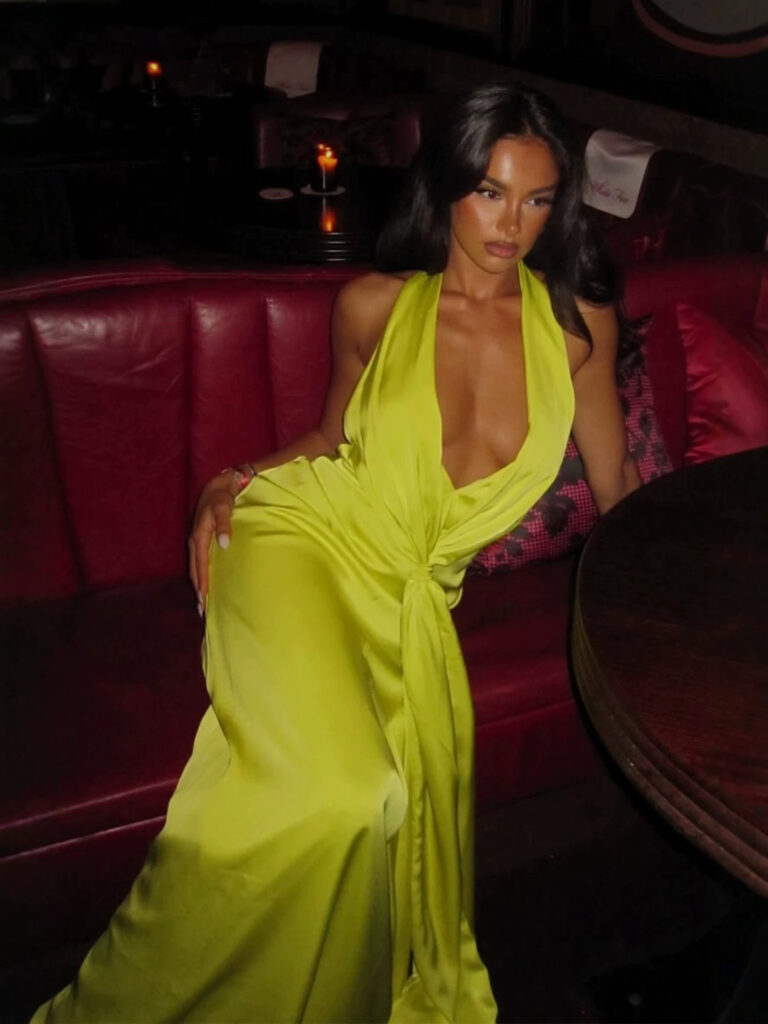
Backless and strappy dresses present a particular challenge because so much of their design intention lives in what is exposed. The Roxane Party Hollow Out Backless Long Bandage Dress is built around negative space at the back and sides; a coat worn fully closed defeats the entire design. The solution is to wear the coat open and loose across the shoulders when arriving and departing, removing it entirely once indoors so the architecture of the dress gets its moment. If a closed coat is unavoidable for weather reasons, choose one with a back vent or an open cape silhouette that does not fully conceal the exposed panels.
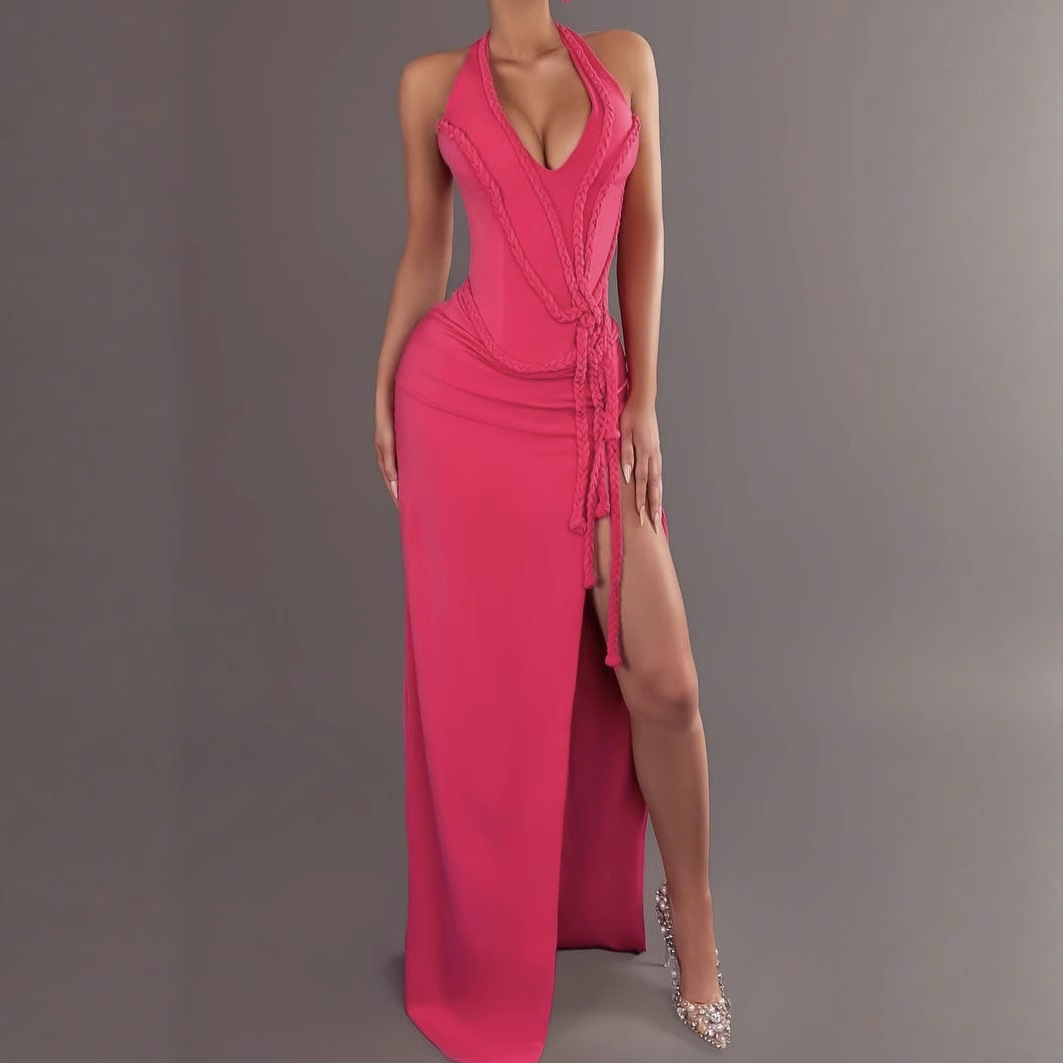
Backless and hollow out designs lose their intent under a fully closed coat; wear outerwear open until you reach your destination.
Sleeve volume in a coat also matters against a fitted dress. A voluminous balloon sleeve coat over a slim sheath dress creates a silhouette that reads top-heavy and unbalanced. Match proportions deliberately: fuller coat sleeves pair best with slimmer dress skirts, and fitted coat sleeves pair better with dresses that already carry some volume in the skirt, so neither half of the outfit visually overwhelms the other.
Matching Layers to Different Dress Silhouettes
Different silhouettes demand genuinely different layering strategies rather than one universal rule. The table below breaks down common dress shapes and the outerwear approach that preserves rather than hides them.
| Dress Silhouette | Best Layer Type | Avoid |
|---|---|---|
| Fitted sheath with waist seam | Cropped blazer, waist length jacket | Mid-thigh length coats, boxy cardigans |
| Flowing chiffon or bias cut | Lightweight duster, open silk kimono | Stiff wool, heavy structured tailoring |
| Backless or strappy bandage | Open cape, loose open coat (removed indoors) | Fully buttoned coats, structured back panels |
| Lace or textured print | Solid toned blazer or trench in a single neutral | Competing prints, busy layered textures |
Lace and print dresses deserve special mention here. The Odette Sleeveless Leopard Print Lace Dress already carries visual texture and pattern through its lace overlay and print. Layering it under another patterned piece creates visual noise that competes for attention. The better approach is a solid, neutral toned blazer or coat that acts as a frame, letting the lace and print do the talking while the outer layer simply provides structure and warmth.
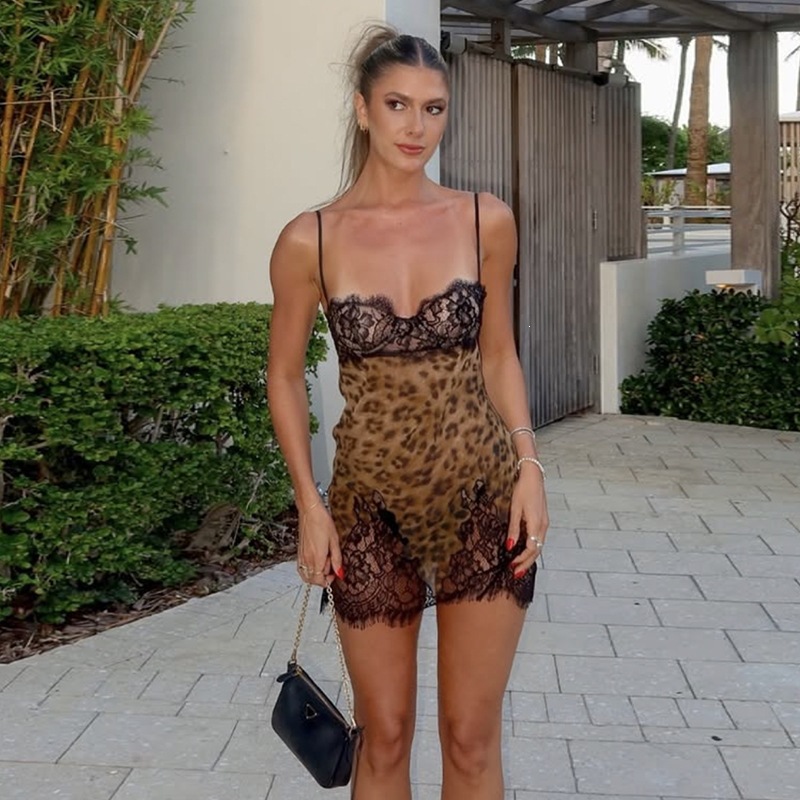
Let a printed or textured dress carry the visual interest; keep any added layer solid and quiet by comparison.
Fixing the Fit Problems Layering Creates
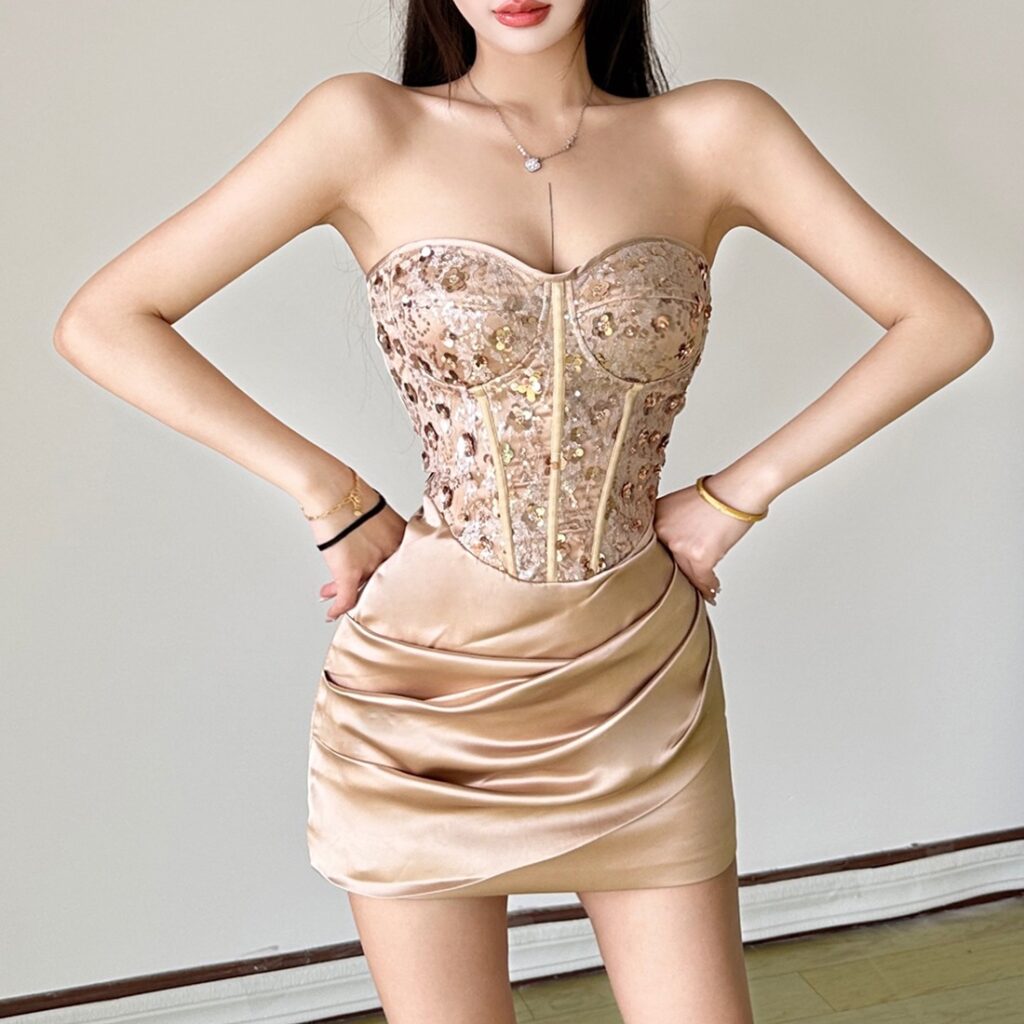
Layering introduces its own set of fitting issues beyond silhouette, and most are solvable without a trip to the tailor. The most common complaint is bodice slipping once an outer layer is added, particularly with strapless or off shoulder dresses. This usually happens because an added layer pulls slightly at the shoulder line as you move, loosening what was previously a snug fit. Silicone grip tape applied along the inside of the neckline or bodice edge solves this quickly, creating friction against the skin that keeps the dress anchored even as you shrug a jacket on and off throughout an event.
Improper torso length is another frequent issue, especially for women who are petite or long waisted wearing a dress designed on a standard torso block. A waist stay, a ribbon anchored at the interior waist seam and hooked to sit snugly against the body, prevents the bodice from migrating upward or the skirt from dropping as you layer and move. If your dress did not come with one, a tailor can add a simple grosgrain stay in under twenty minutes, and it makes a measurable difference in how secure the garment feels under a blazer or coat all evening.

A contoured waist and smooth lining let a tailored blazer sit cleanly over a dress without bunching fabric at the hip.
Gaping at the bust when a jacket is added is usually a sign that the jacket’s shoulder width does not match the dress’s own shoulder seam. Rather than sizing down the jacket, which often creates pulling across the back, have the jacket’s shoulder seam taken in slightly at a tailor, a minor and inexpensive adjustment that resolves gaping without compromising how the jacket moves elsewhere. The Council of Fashion Designers of America and most couture workrooms treat shoulder seam placement as the anchor point for the entire garment’s fit, which is why even a quarter inch of correction there changes how an entire layered outfit sits.
Footwear and Accessories as the Final Layering Decision
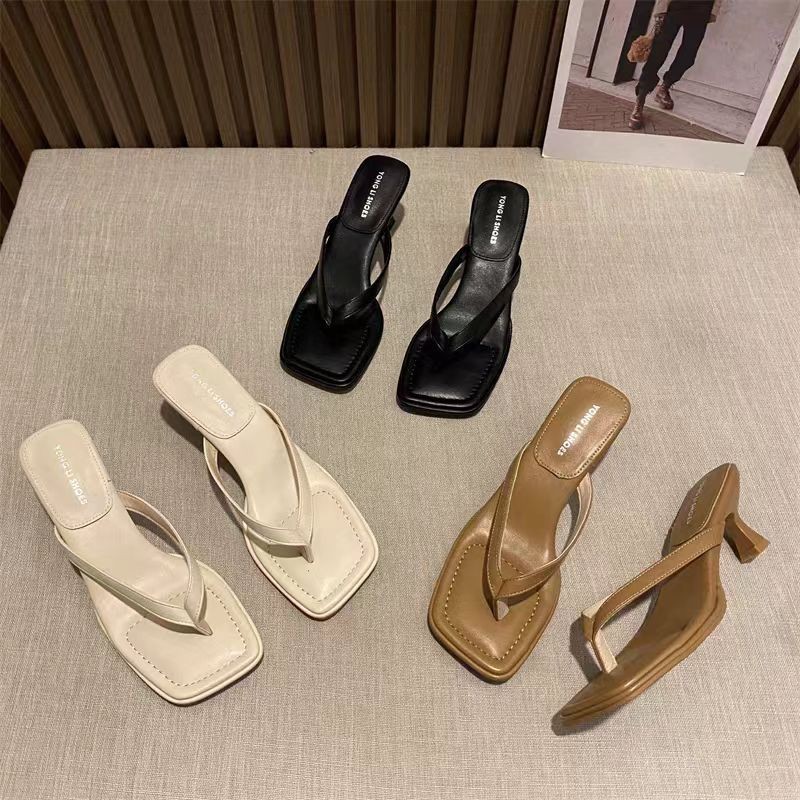
Footwear is often the last thing women think about when layering, but it functions as a structural decision too. A heavy coat or thick knit layer visually weighs down the top half of an outfit, which means the shoe needs to carry enough presence at the bottom to balance it. A delicate strappy sandal under a substantial wool coat looks unbalanced; a pointed toe pump or a sleek ankle boot restores the proportion. Jewelry works the same way: a layered outfit with a blazer and a high neckline needs smaller, closer set earrings rather than long statement pieces that get lost or tangled under fabric.
The goal across every layering decision, fabric, cut, length, and accessory, is the same: the outer layer should read as a considered extension of the dress’s own design logic, not an obstacle placed in front of it.
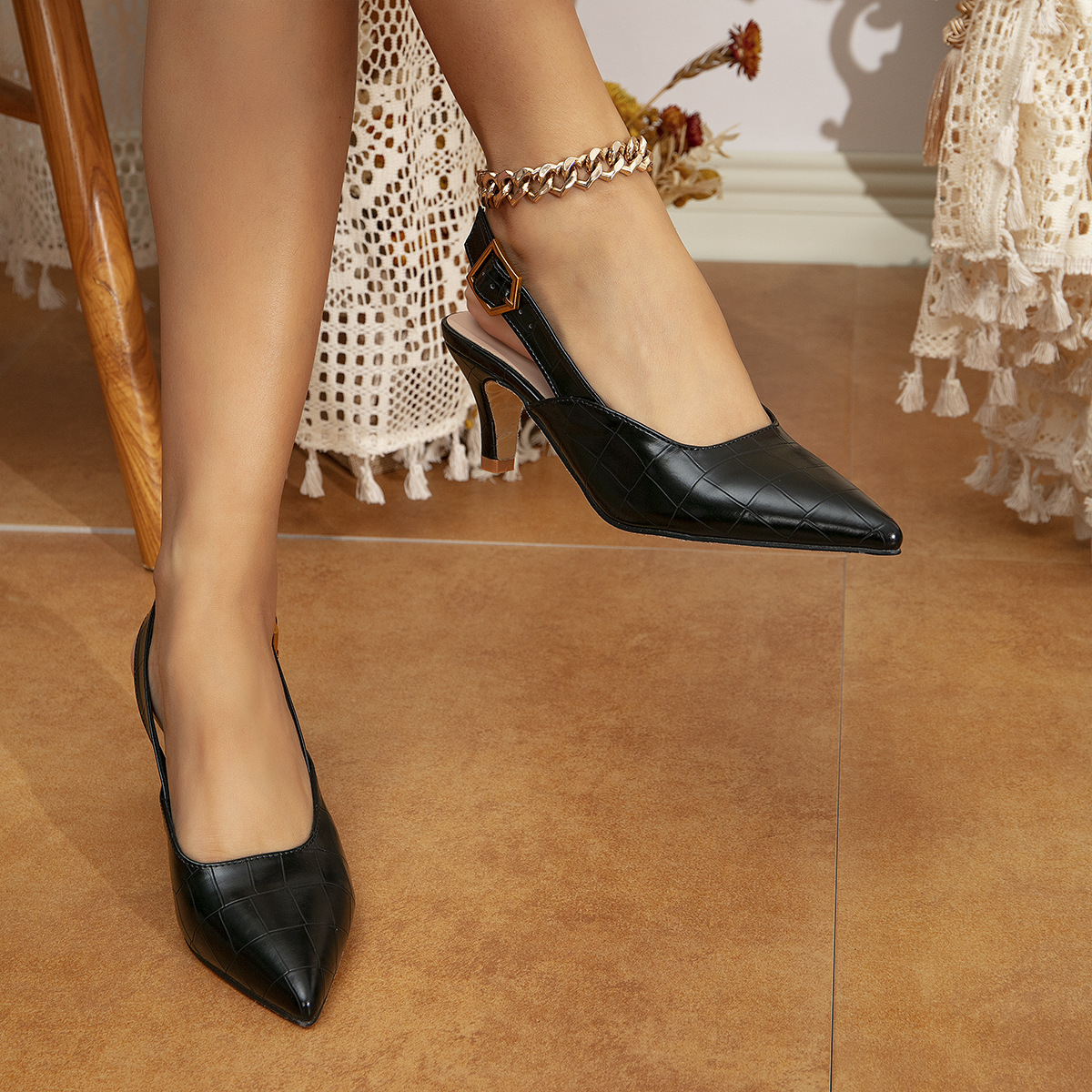
Open-instep heeled sandals lighten the lower half of a layered dress outfit so heavier outerwear never feels top-heavy.
The Styling Takeaway
Layering a dress well is less about adding pieces and more about subtraction, removing anything that competes with the silhouette the dress was built to create. Read the garment’s own architecture first: where the waist sits, whether it relies on internal boning or pure drape, where the seams want the eye to travel. Match structure to structure and softness to softness, keep hemlines and sleeve lengths working together rather than against each other, and use proportion as your compass rather than instinct alone. When the outer layer and the dress beneath it are both doing their own structural job without stepping on the other’s, the result is not a dress hidden under winter armor. It is a complete outfit where every layer earns its place.