A dinner date asks for a particular kind of dressing: more considered than a Saturday errand, less ceremonial than a gala. The evening is intimate by design. A table for two sits close to the eye line, the lighting tends to be warm and low, and the conversation invites a second look from across the room. The question of what to wear to a dinner date dress is therefore less about trends and more about proportion, honesty to your own frame, and garments that behave well over three hours of sitting, leaning, laughing, and reaching for a wine glass. Etiquette here is quietly rigorous. Restaurants with white tablecloths and considered wine lists expect a level of care that signals respect for the room, the chef, and the person opposite you. A polished look is one that reads as chosen rather than assembled in a rush, and it rarely announces itself. The most convincing dinner dressing tends to feel effortless precisely because every decision underneath, from the neckline to the hem length to the weight of the fabric, has been made with the setting in mind. Forced looks usually fail in one of three ways: they are too literal, too loud, or too uncomfortable to inhabit. A slightly oversized sequin reads as costume. A bodycon mini that demands constant adjustment creates a tense posture across the table. A pale maxi that picks up every drop of sauce undermines the whole evening. The alternative is a dress built around balance, one where the cut, the cloth, and the finishing details cooperate. This guide walks through the decisions that matter most, from the architecture of the silhouette to the small corrections that save an evening. The aim is to help you arrive at dinner looking composed, feeling like yourself, and able to forget your clothes entirely once the first course arrives.
1. Silhouette and Proportion: Building a Line That Flatters the Table
Silhouette is the first thing a dinner companion registers, and it is governed by proportion more than by any single trend. The principle is simple to state and harder to execute: the dress should define a clear waist or intentionally skip it, and the hem should land at a length that suits your height and the formality of the room. For most dinner dates, a waist-defining midi or a knee-length column reads as balanced, because it creates a readable shape without requiring the wearer to manage excess fabric at the table. A wrap or empire seam can shift the visual center upward, which often elongates the torso, while a seam placed at the natural waist tends to anchor a fuller skirt and keep the upper half from appearing heavy.
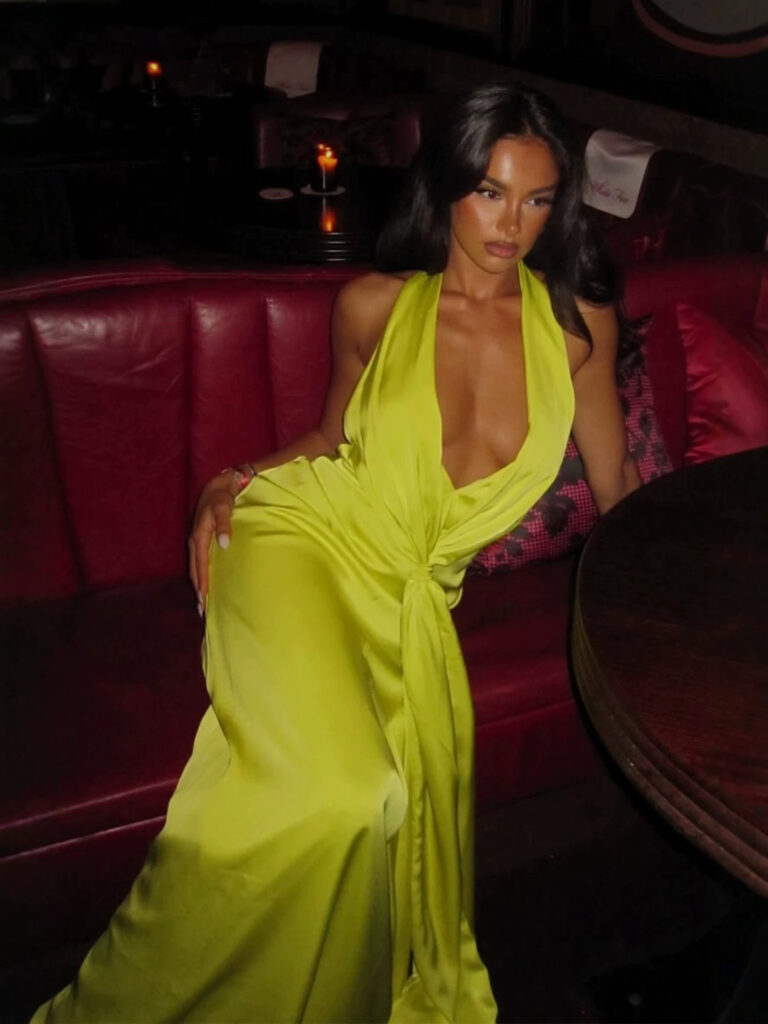
Consider the neckline as a frame for the face and collarbone. A V neckline lengthens the line of the neck and is forgiving across most body types, which explains why it remains a mainstay of evening dressing. The Victoire V Neck Long Slit Shirt Dress demonstrates this principle well: the open neckline draws the eye vertically, and the long slit introduces movement without exposing the wearer to the awkwardness of a short hem while seated. A slit should be placed where it reveals a sliver of leg when walking, never when perched on a chair, and the most considered versions include a lining that prevents the fabric from fanning open unexpectedly.
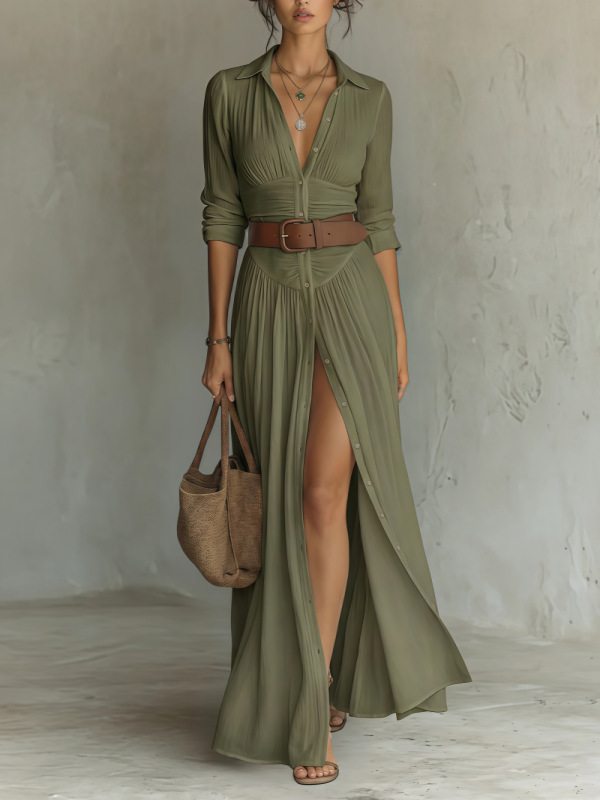
A V neckline paired with a long slit creates vertical lift and quiet movement at the table.
Proportion also depends on the relationship between the shoulder line and the hem. A dress with a substantial shoulder, such as a structured puff or a defined yoke, should generally pair with a more streamlined skirt, while a softly draped bodice can accommodate volume below the waist. Mixing these instincts without restraint is where forced looks begin. When you are uncertain, reduce the number of competing shapes. One interesting sleeve or one dramatic hem is usually enough. Dinner is a seated, close-range event, so the silhouette should read clearly from a chair and from a meter away, not only from a full-length mirror.
2. Textile Weight, Weave, and Drape: Choosing Fabric That Behaves at Dinner
Fabric determines how a dress moves, how it photographs under restaurant lighting, and how it survives a long evening. Weight is typically discussed in grams per square metre (GSM), and for dinner dressing the sweet spot often sits in the middle range. A lightweight crepe at roughly 90 to 120 GSM will skim and drape but may cling in warm rooms, while a heavier crepe or a jacquard in the 180 to 250 GSM range holds its architecture and resists wrinkling after sitting. Weave matters just as much as weight. A satin weave produces a lustrous face and a fluid drape, but it reveals every slip and crease. A crepe weave, with its tightly twisted yarns, has a matte surface, recovers from compression well, and hides minor imperfections. Jersey offers ease and comfort but can lose shape over a long evening if the knit is loose.
Grain direction governs drape. A straight-grain panel, cut parallel to the selvedge, hangs with stability and minimal stretch, which suits structured bodices and A-line skirts. A bias-cut panel, cut at forty-five degrees to the grain, stretches and clings, producing the liquid, body-following line associated with mid-century evening wear. Bias cutting is generous to the figure but demands precise seam finishing, because the fabric will distort if the seams are not allowed to settle. When assessing a dress for dinner, drape the fabric over your forearm and observe whether it falls in soft, even folds or pulls into diagonal tension lines. The former indicates a balanced grain; the latter may signal a cut that will shift as you move.
| Fabric and Weave | Typical Weight | Drape and Silhouette | Best Dinner Occasion |
|---|---|---|---|
| Crepe (matte, tightly twisted yarn) | Medium, 120 to 200 GSM | Structured, holds pleats and shape | Intimate bistro or formal restaurant |
| Satin (lustrous face, floating yarns) | Light to medium, 90 to 150 GSM | Fluid, bias-friendly, clings gently | Evening cocktail-adjacent dinner |
| Floral cotton or viscose lawn | Light, 80 to 110 GSM | Airy, gathered, soft movement | Daytime-to-evening or garden restaurant |
| Jersey knit (stretch, recovering) | Medium, 180 to 240 GSM | Close, comfortable, body-skimming | Relaxed, casual-elegant dinner |
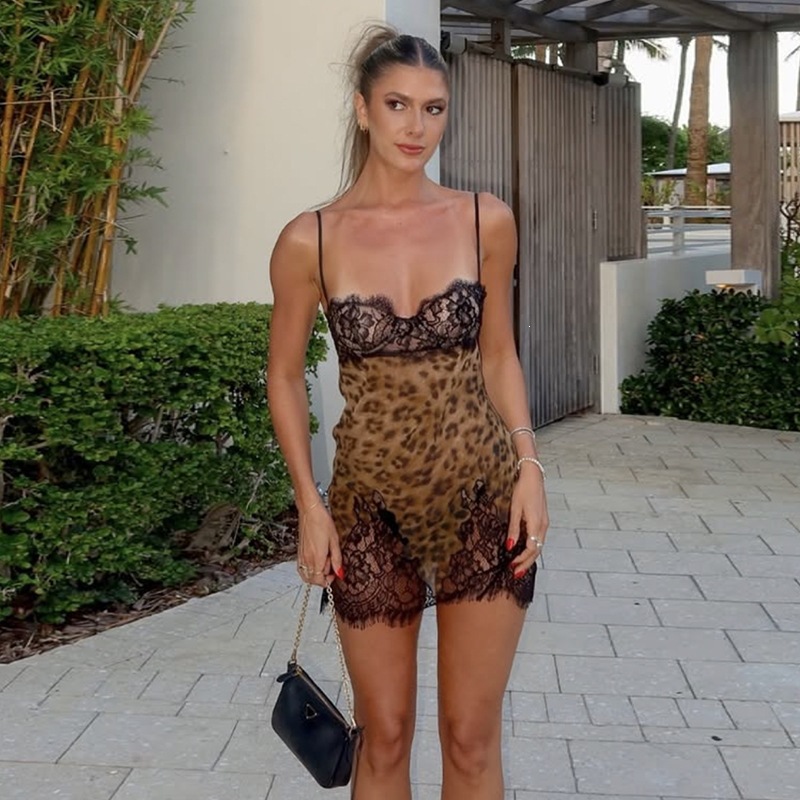
Print and pattern deserve attention as well. A small-scale floral or geometric print reads as composed under warm light, while a dense, high-contrast print can overwhelm a table setting. The Celine Parisian Floral Halter Neck Dress illustrates how a delicate print on a fluid base creates interest without shouting. The halter construction keeps the neckline clean, and the print’s scale stays legible at conversational distance.
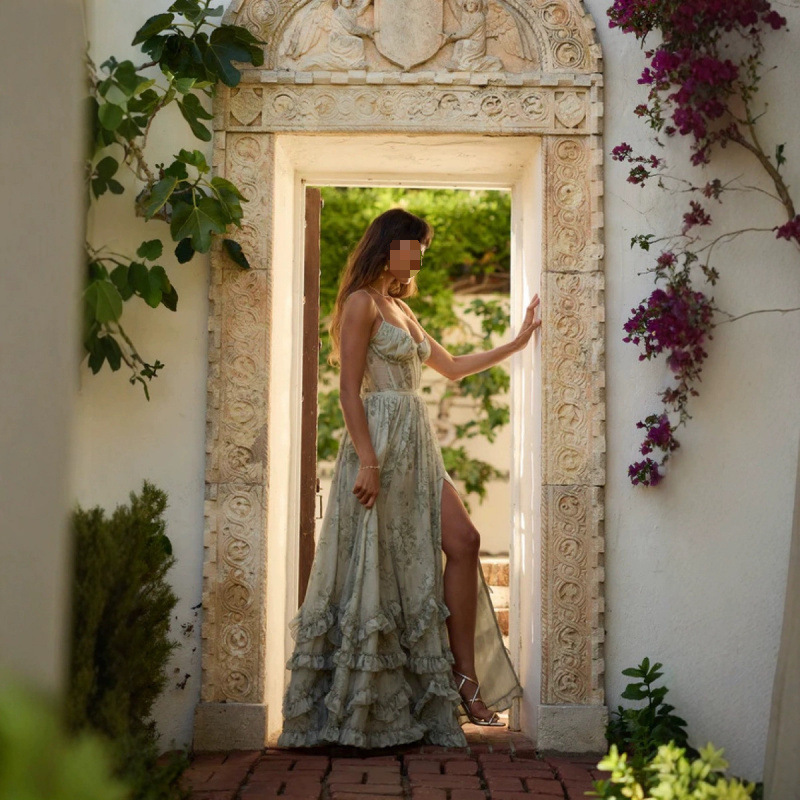
A small-scale print on a fluid base keeps a halter silhouette composed and conversational.
3. Garment Construction and Tailoring: The Invisible Architecture of Polish
Polish is rarely visible from across a room, yet it is what separates a dress that holds its line from one that gradually slumps. Construction begins with the seam allowance, the margin of fabric beyond the stitching line that permits alteration and provides strength. Generous seam allowances, typically 1.5 to 2 centimetres in couture and fine tailoring, allow a garment to be let out or taken in, and they prevent fraying under tension. Inspect the armhole, the side seams, and the zipper placement. A concealed invisible zipper should sit flush with no puckering, and the seam beneath it should be pressed flat rather than stitched through the fashion fabric.
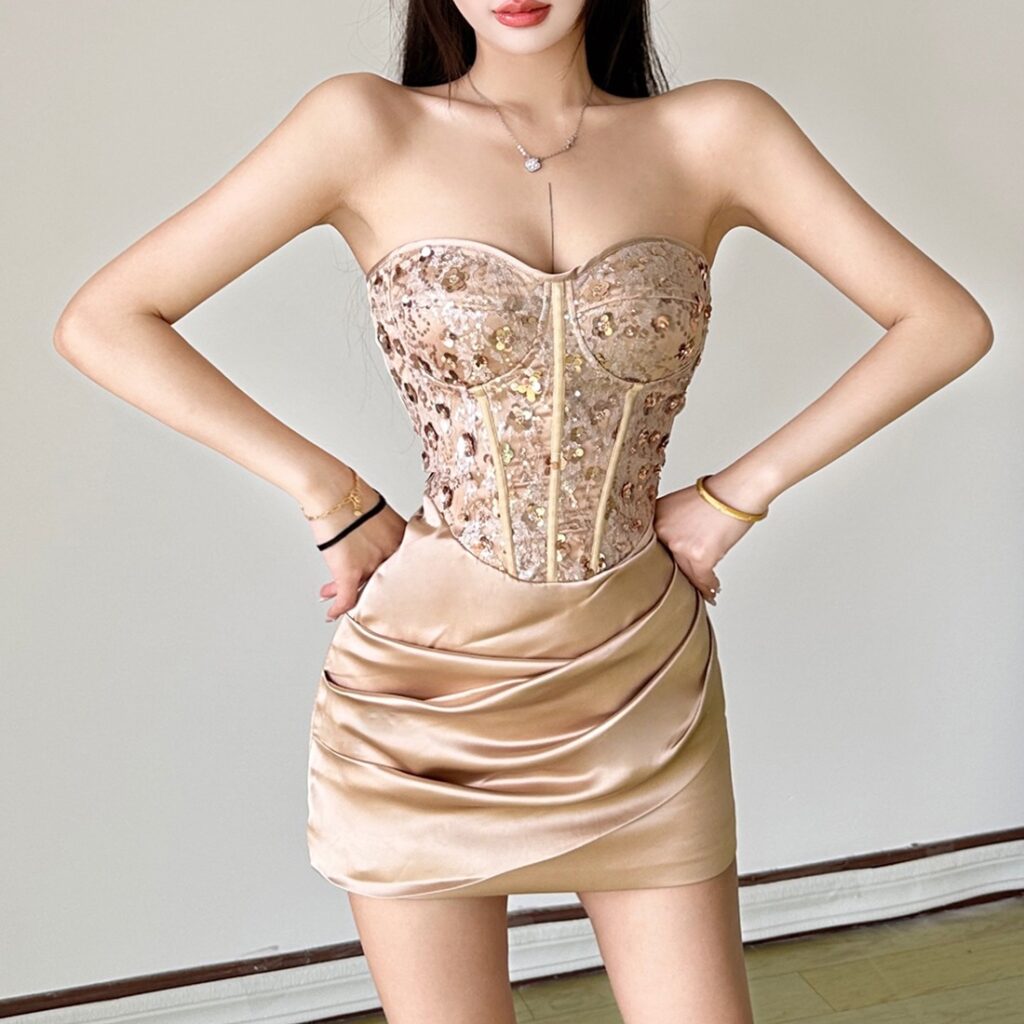
Internal support does much of the quiet work. Boning, historically whalebone and now most often spiral steel or flexible plastic, is inserted into channels in the bodice to hold the neckline in place and to prevent the centre front from rising during a long sit. A grosgrain waist stay, a narrow ribbon sewn into the waistline seam, stabilises the waist against stretch and gives the zipper or closure something firm to rest against. Silicone grip tape along the inside of a neckline or strap keeps a dress from migrating, a detail that becomes critical with satin or slippery crepe. Where a dress relies on an internal bodice lining, the lining should be cut on a slightly different grain from the outer shell so that the two fabrics do not pull against each other when the wearer bends forward.
The museum and conservation community offers useful reference points for these details. The Victoria and Albert Museum’s fashion collections document how construction methods evolved to suit changing wardrobes, and the Costume Society provides scholarship on historic and contemporary garment making. Studying these resources clarifies why a sound internal structure matters more than surface ornament.
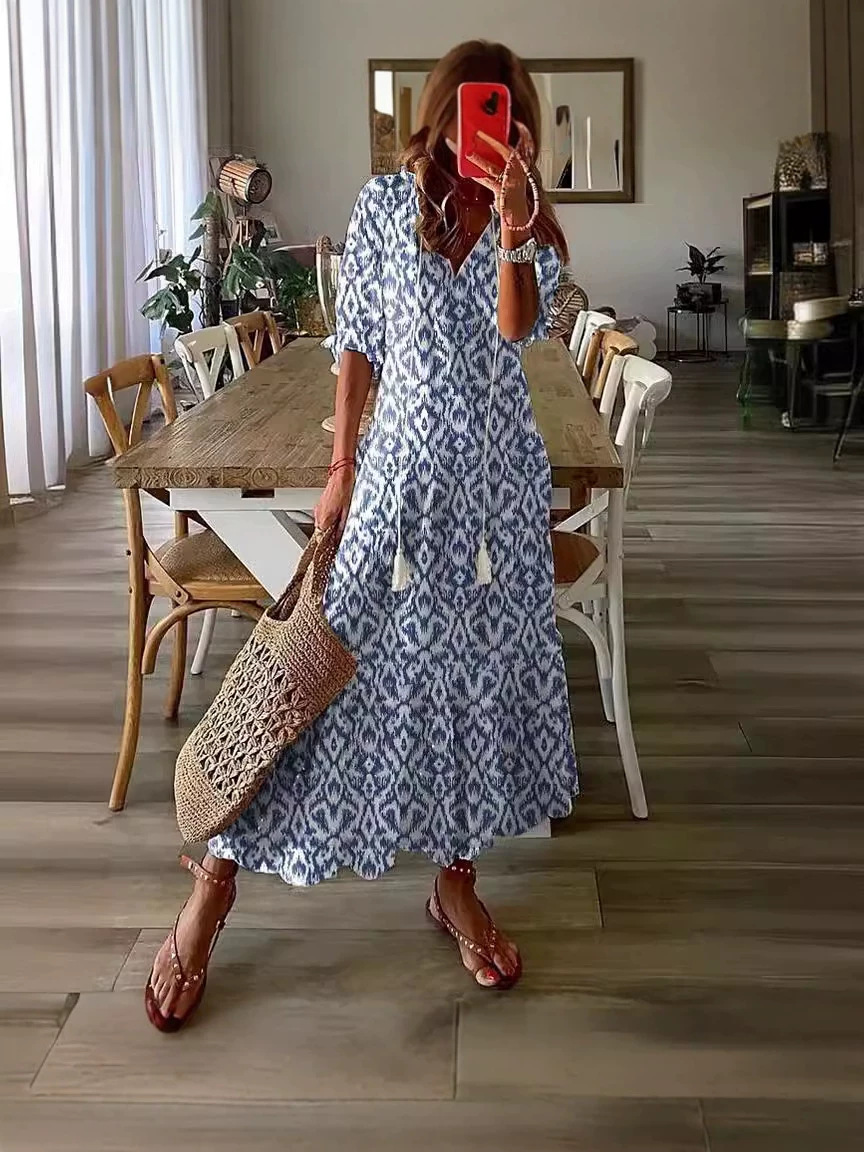
Bell sleeves and fringe add movement, which is only flattering when the bodice construction holds its shape.
The Alix V Neck Printed Fringe Bell Sleeve Loose Maxi Dress shows how a relaxed silhouette still depends on disciplined construction. Loose garments hide fit issues, which makes it tempting to assume they require no tailoring. In practice, the bell sleeve needs a properly finished hem to hang without twisting, and the fringe requires secure anchoring at the seam to avoid unravelling after a single evening. When evaluating any dress, pull gently at the seams and check the stitch density. Small, even stitches with no skipped sections indicate a well-made garment.
4. Footwear, Outerwear, and Accessories: Finishing the Look Without Overdressing
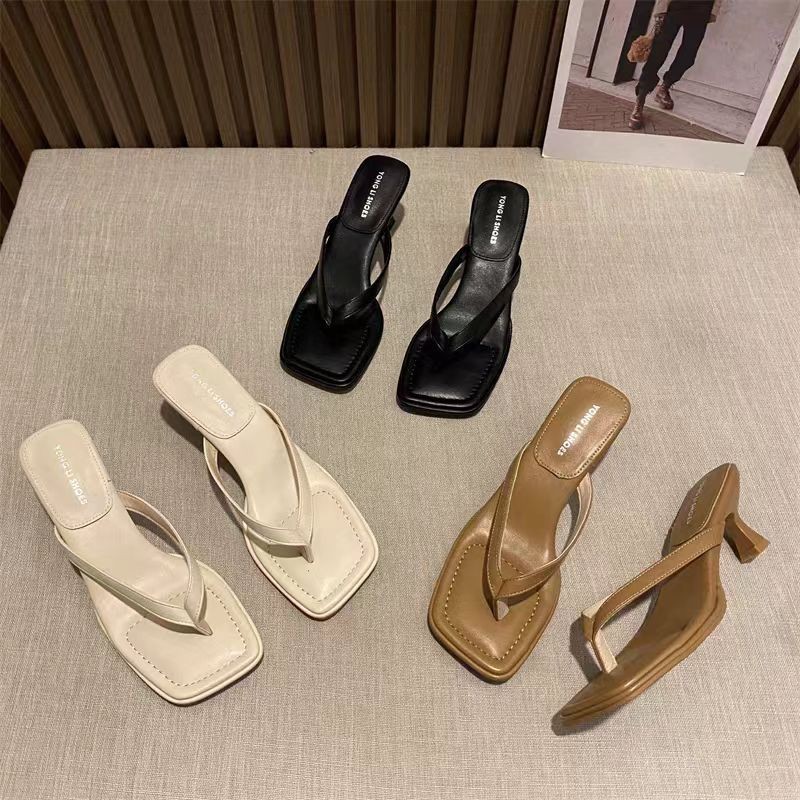
Footwear sets the register of the entire outfit. A block heel or a pointed kitten heel of moderate height suits most dinner dates because it provides stability on restaurant floors and cobblestone pavements alike, and it keeps the posture upright without the strain of a stiletto held for hours. Match the shoe’s formality to the dress: a crepe midi calls for a refined leather or suede pump, while a printed maxi can carry a flat strappy sandal or a low mule. Leather finish matters too. Matte leather reads as understated, while patent or metallic finishes introduce a second level of shine that works best when the dress itself is restrained.
Outerwear should be chosen for the transition between the car, the entrance, and the table. A tailored wool coat, a cropped leather jacket, or a lightweight trench in a neutral tone creates continuity without competing with the dress. Avoid anything bulky that must be removed and handed over at the door unless the restaurant’s coat check is reliable. A coat’s lining deserves attention too, since a silk or viscose lining slides easily over the dress and keeps the outer garment from catching on delicate fabric.
For the Solene 3D Printed V Neck Patchwork Long Dress, a dress with graphic structure and considered panelling, accessories work best in restraint. A single pendant at the sternum, a slim cuff, or a structured clutch in a tonal shade preserves the garment’s own composition. The rule is to let one element lead. If the dress carries strong pattern and dimension, the jewellery should be minimal, and if the dress is plain, a more expressive earring or hair accessory can carry the evening’s personality.
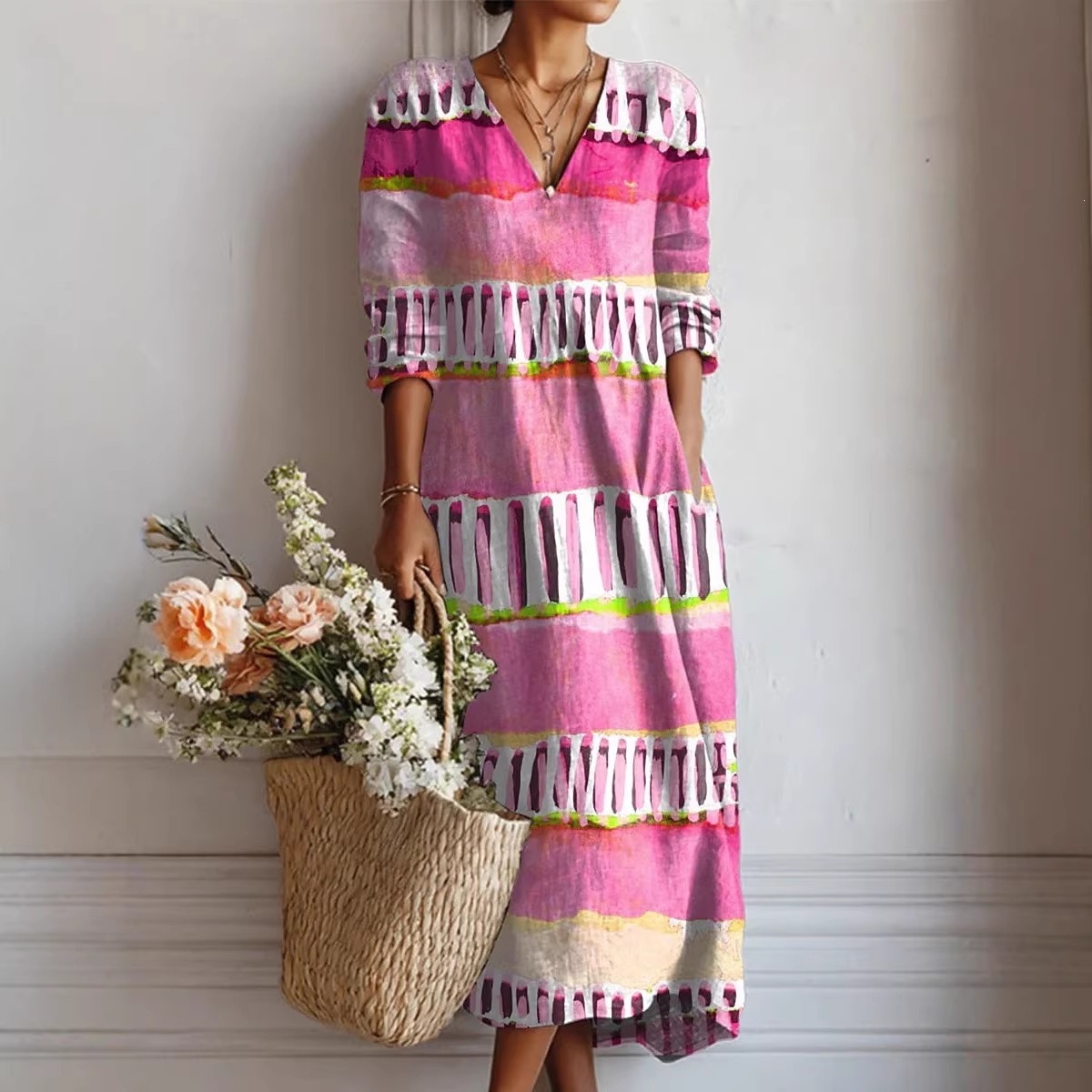
A dress with strong panelling works best with restrained accessories that let its structure speak.
Bags for dinner should be small enough to sit on the table or the chair beside you without occupying space meant for glassware. A chain strap allows the bag to rest on the shoulder during the meal and frees the hands. Handle the bag’s contents with discipline: a compact mirror, a lipstick, and a card case are sufficient. Overloaded clutches bulge at the seams and distort the clean line of an evening look.
5. Fit Troubleshooting and Real-World Adjustments
Even a well-chosen dress can betray its wearer if the fit is off by a few millimetres. The most common dinner-date problem is gaping at the bust or neckline when seated, which usually indicates that the bodice is cut for a standing posture. A discreet fix is a set of hidden bust tape or a fashion tape placed along the upper edge of the bodice, which holds the fabric against the skin without visible adhesive. For a neckline that shifts, a row of tiny hand stitches between the lining and the outer fabric, placed at the centre front and at each side, will keep the line stable through the evening.
Strap slippage and waist migration respond to foundation garments. A strapless bra with a low-profile back and firm cups provides support where the dress has none, while a convertible bra allows the straps to adapt to a halter or cross-back line. Shapewear should be chosen for the specific dress: a thin, high-waisted brief under a fluid satin will prevent visible lines, while a heavier control garment may be necessary under a structured crepe with a fitted bodice. Test the foundation while seated and bending, since that is the position most likely to reveal a problem.
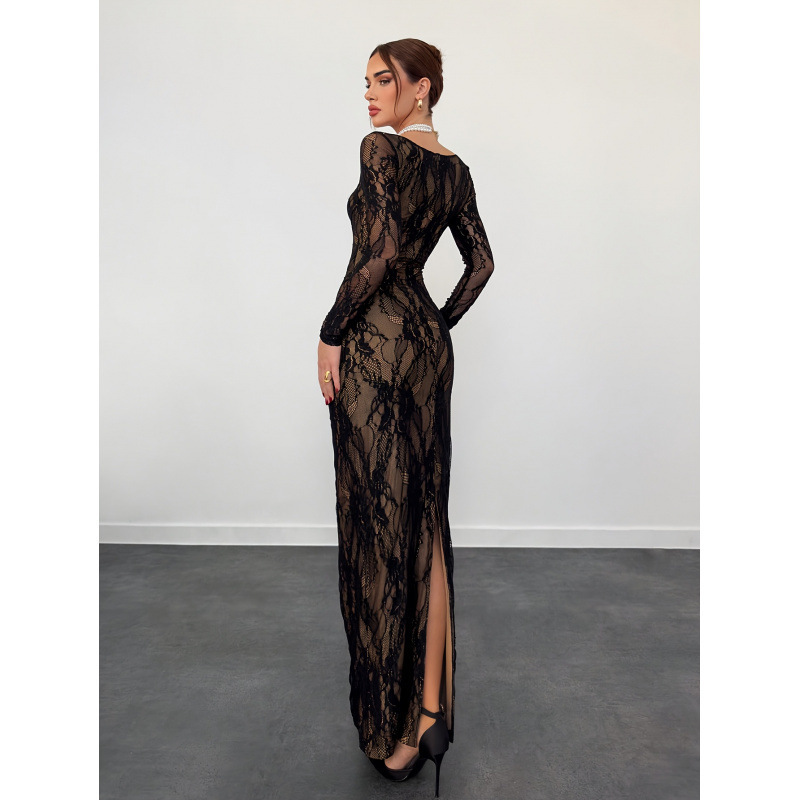
A square neckline with long lace sleeves frames the collarbone gracefully across a dinner table while staying secure when seated.
Length and hem issues are addressed with a simple checklist. If a midi hem brushes the floor when wearing the shoes you plan to use, the dress is too long for you and should be shortened before the evening. If a slit gapes or sits too high, a discreet bar tack at the top of the opening can stabilise it. Check the hem height against the chair: when seated, a dress should not ride up uncomfortably or pool beneath the knees. A useful test is to sit down and cross your legs in the mirror, then stand and walk. If the dress shifts, tighten the waist stay or adjust the side seams.
Finally, plan for the unexpected. Carry a small kit that includes safety pins, a travel stain pen, a lint roller, and a spare pair of earrings or a hair tie. Keep fabric care in mind as well: silk and satin should be spot-cleaned rather than laundered, and crepe should be hung on a padded hanger to preserve its drape. A dress that has been prepared for the evening, fitted precisely and maintained carefully, will allow you to focus on the conversation rather than your clothing.
The Styling Takeaway
Choosing what to wear to a dinner date dress comes down to a few reliable principles: a silhouette that defines or deliberately releases the waist, a fabric whose weight and weave suit the temperature and the setting, construction that holds its shape through a seated evening, and footwear and accessories that finish the look without competing with it. The garments discussed here, from the V neck slit dress to the floral halter and the patchwork maxi, each illustrate how a single well-judged decision can shape the whole impression. Polished dressing is rarely about adding more. It is about editing, selecting the one strong line, the one considered texture, or the one thoughtful detail, and letting the rest recede.
Before you leave, perform a final check that mirrors the evening itself. Sit down, lean forward, reach for an imagined glass, and turn your head toward a companion. Notice where the fabric pulls, where the neckline shifts, and where the hem settles. If the dress moves with you rather than against you, you have chosen well. The most memorable dinner looks are the ones that leave the wearer comfortable enough to be fully present, and the best outfit is the one that makes the evening feel like it belongs to you.