You can tell whether a dress will fit before you buy it online by doing three things: measuring your own body accurately, comparing those numbers against the specific size chart for that dress, and reading the fabric and construction details to judge how much room or give the garment really has. None of this requires guesswork or luck. It requires a tape measure, ten minutes, and a willingness to read product pages more carefully than most of us do.
The frustration of a dress that looks perfect on screen and wrong on the body is rarely about the dress being “bad.” Most of the time it is a gap between three things: the number on the label, the measurements behind that number, and the way a particular silhouette is supposed to sit. Close that gap before you click “add to bag” and returns become the exception rather than the routine.
Start With Your Own Numbers, Not Your Usual Size
Your “usual size” is a habit, not a measurement. Sizing varies between brands, between collections within the same brand, and even between a stretch jersey and a structured woven. Treat the size you normally buy as a rough starting point only, and let your measurements make the decision.
Gather a soft tape measure and wear thin, close-fitting clothing or underwear. Stand naturally, breathe normally, and keep the tape snug but not tight, parallel to the floor. Take these measurements:
- Bust: around the fullest part of the chest, with the tape passing across the shoulder blades at the back.
- Waist: around the narrowest part of the torso, usually just above the navel. If you cannot find a clear narrowest point, bend sideways and note where the crease forms.
- Hips: around the fullest part of the hips and seat, typically seven to nine inches below the waist.
- Height: measured barefoot against a wall, which matters for hemline and waist placement.
Write the numbers down and keep them in your phone. Two further measurements are worth taking if you shop for fitted or structured styles often: the distance from your shoulder point to your natural waist (a guide to where a waist seam will fall) and the distance from your waist to your knee or the floor (a guide to how a skirt will land).
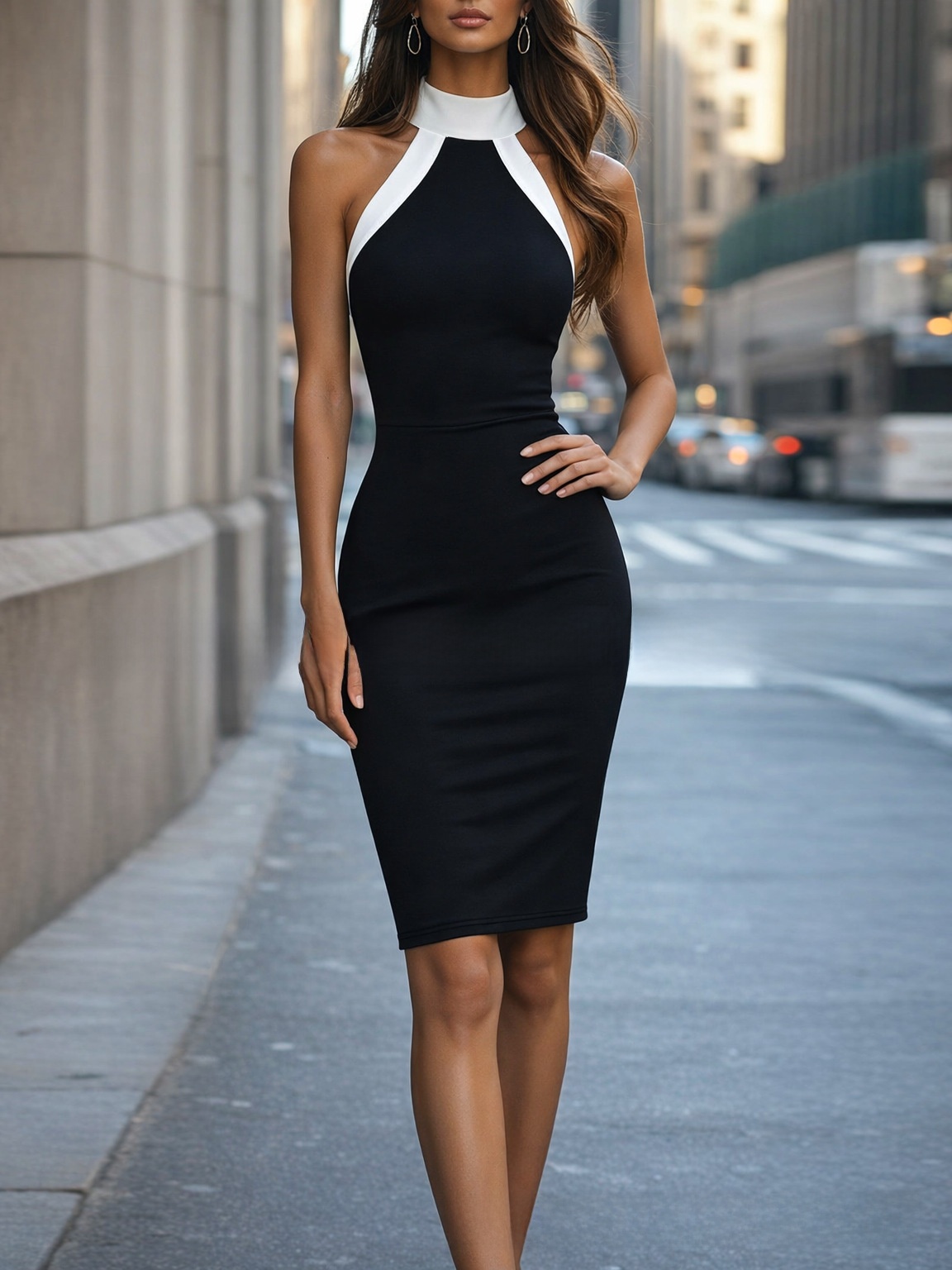
Clear panels and defined lines make it easier to judge where a dress should sit on your frame.
Reading a Size Chart Like a Fitter, Not a Browser
A size chart is the single most useful tool on a product page, and the most commonly ignored. The trick is to read it against your measurements rather than scanning for the letter or number you expect.
Match the Measurement That Matters Most for the Style
Different dresses are won or lost at different points on the body. A fitted bodycon or sheath lives and dies by the bust, waist, and hip together. A wrap or A-line dress is more forgiving through the waist but unforgiving at the bust and shoulders. A relaxed shift or smock depends mainly on shoulder and bust width, since the rest of the garment falls away from the body.
Identify the measurement your chosen dress cannot compromise on, and prioritise that one. If your bust sits in one size and your hips in another, consider the cut: a skirt with flare or gathering usually accommodates larger hips more easily than a bodice can accommodate a larger bust, so you may size to the bust and let the skirt do its work.
Check Whether the Chart Lists Body or Garment Measurements
This distinction is easy to miss and it changes everything. Body measurements describe the person the dress is designed for. Garment measurements describe the flat dimensions of the dress itself. If a chart lists a “bust” of 34 inches in the body column and your bust is 34 inches, the dress is designed to fit you with its intended ease. If the chart lists garment measurements, you need to add or subtract ease yourself: a fitted style might sit at your exact measurement or slightly under (relying on stretch), while a relaxed style might run two to four inches larger than the body.
When a page does not say which type of chart it shows, check the size and customer support information, or the Larose Couture FAQ, rather than guessing. A short message before ordering costs far less than a return.
What to Do When You Fall Between Sizes
Falling between sizes is common and usually resolvable. Ask three questions: does the fabric stretch, is the dress fitted or relaxed, and which part of the body is the sticking point? In a stretch fabric with a fitted cut, the smaller size is usually the more flattering choice if the difference is small, since the fabric will follow the body. In a woven fabric with no give, going up is safer, because a garment that is too tight cannot be rescued, while one that is slightly roomy can often be taken in at a seam.
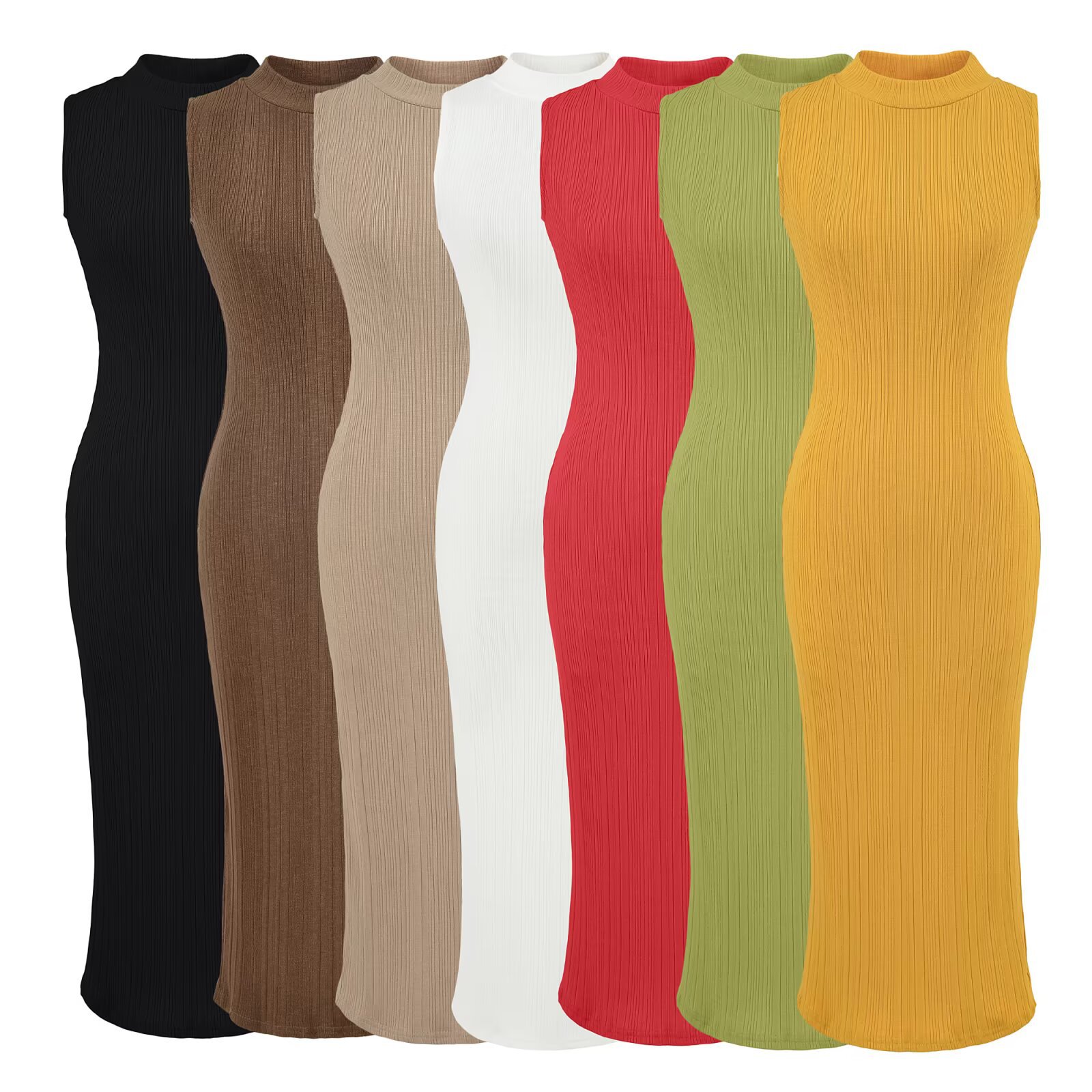
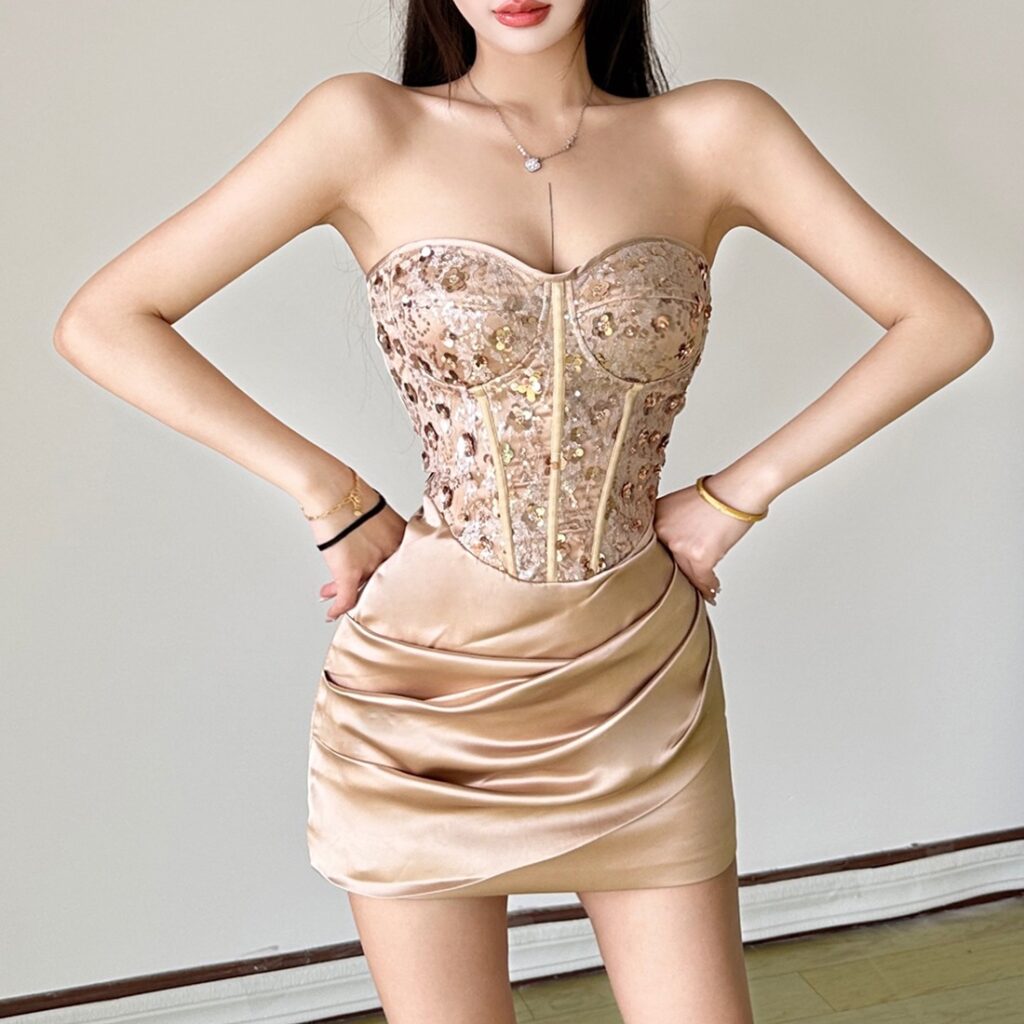
Slim-fitting shapes reward careful measuring, since there is little spare fabric to hide a mismatch.
Fabric Is Half the Fit: Stretch, Structure, and Drape
Two dresses cut to identical measurements can fit completely differently depending on what they are made from. Fabric determines how much give the garment has, how it hangs, and how forgiving it is when your measurements fall just outside the chart.
Stretch Fabrics Forgive, but Only Within Limits
Knit and elasticated fabrics follow the body and can accommodate a range of measurements within a single size. That flexibility is useful, but it has two catches. First, a stretch fabric pulled to its limit shows every line and seam beneath it, so a dress that technically closes may still not look comfortable. Second, stretch is not a reason to ignore the chart: if your hips are well outside the listed range, the dress will strain rather than skim.
Woven Fabrics Hold Their Shape, for Better or Worse
Woven fabrics such as chiffon, crepe, or lace overlays have little or no stretch unless the product description says otherwise. The cut does the fitting, so the measurements have to be right. The upside is a cleaner, more structured line when the size is correct. The downside is that a mismatch at the bust or waist cannot be absorbed by the fabric. Check whether a dress has a zip, elastic panel, or tie closure, because these features add adjustability that a plain, closed woven bodice does not.
Lining, Layers, and Why They Change the Feel
A lined dress or one with several layers will sit differently from a single-layer piece, adding weight and a little bulk but often improving the way the skirt falls. Sheer or lightweight chiffon can drape beautifully but may need the right undergarments to look smooth. If the product description mentions a lining, note that it may affect how the dress feels across the bust and waist when you move.
For broader guidance on how fabrics are labelled and cared for, the Federal Trade Commission’s guidance on textile labelling is a useful reference for understanding fibre content information, which in turn helps you judge likely stretch and behaviour.
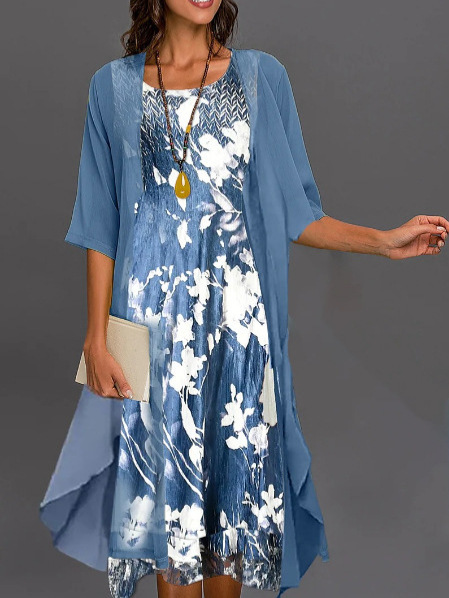
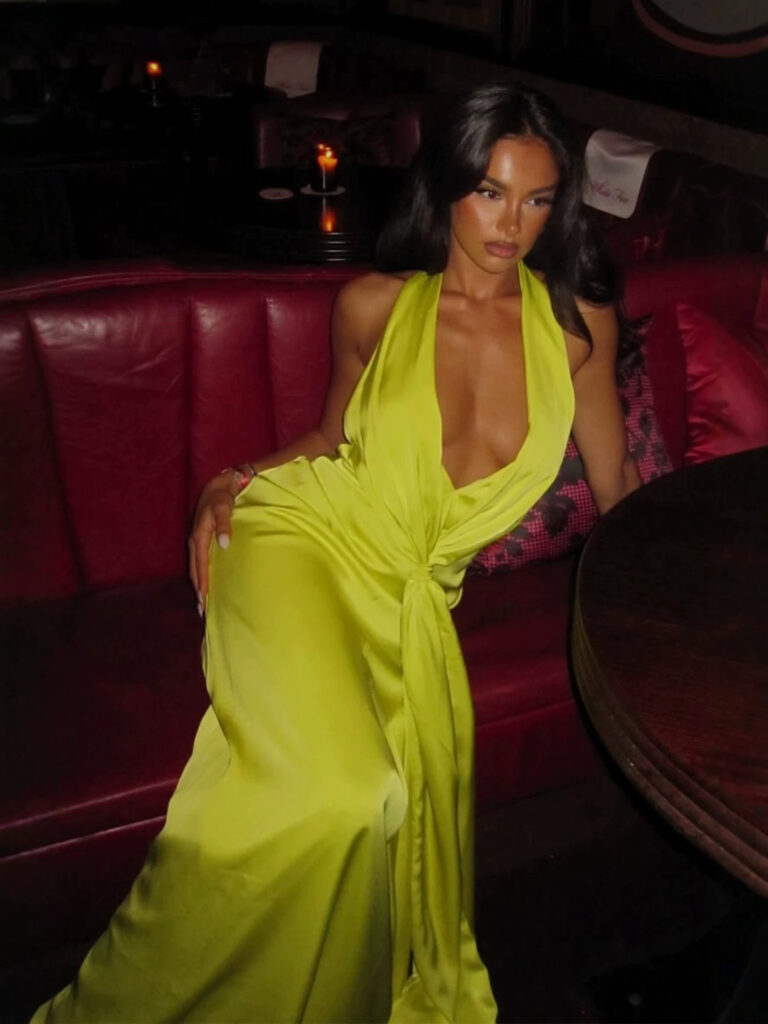
Chiffon is a fabric where drape, not stretch, decides how a dress will settle on the body.
Silhouette Rules: Which Cuts Are Easier to Size Online
Some dress shapes are naturally more forgiving than others when you cannot try them on. Knowing which category your dress falls into tells you how closely your measurements need to match.
The More Forgiving Shapes
Wrap dresses, A-lines, empire waists, and dresses with an adjustable tie or drawstring tend to accommodate a wider range of bodies, because the shape is built around adjustable or flared sections rather than a precise fit at every point. Off-shoulder and patchwork styles with some ease through the body can also be easier to size, provided the neckline or elastic at the top is not the only element holding the dress in place. A style like the Mathilde off shoulder patchwork dress is the type of silhouette where checking the bust and upper-body measurements matters most, since the neckline does the structural work.
The Less Forgiving Shapes
Bandage and bodycon styles, sheath dresses, and anything described as slim fit leave very little room for error. With these, a few centimetres can change the whole effect. If you are ordering this kind of dress, measure twice and compare every chart point rather than relying on the bust alone. A piece such as the Roxane party hollow out backless long bandage dress is a good example of a close-fitting evening shape where precise sizing is the difference between a polished line and a dress that never quite sits right.
Waist Placement and Skirt Length
Fit is not only about circumference. Where the waist seam lands relative to your natural waist, and where the hem falls relative to your height, both change how the dress looks. A dress with a defined fitted skirt, such as the Marine dress with a fitted skirt and a middle, will look noticeably different on someone with a long torso than on someone with a short one, even at the same size. Use your shoulder-to-waist and waist-to-hem measurements to estimate where seams and hems will fall, and cross-check against any garment length given on the page. If you are unsure which length suits your occasion, our guide to midi versus maxi dresses breaks the trade-offs down.
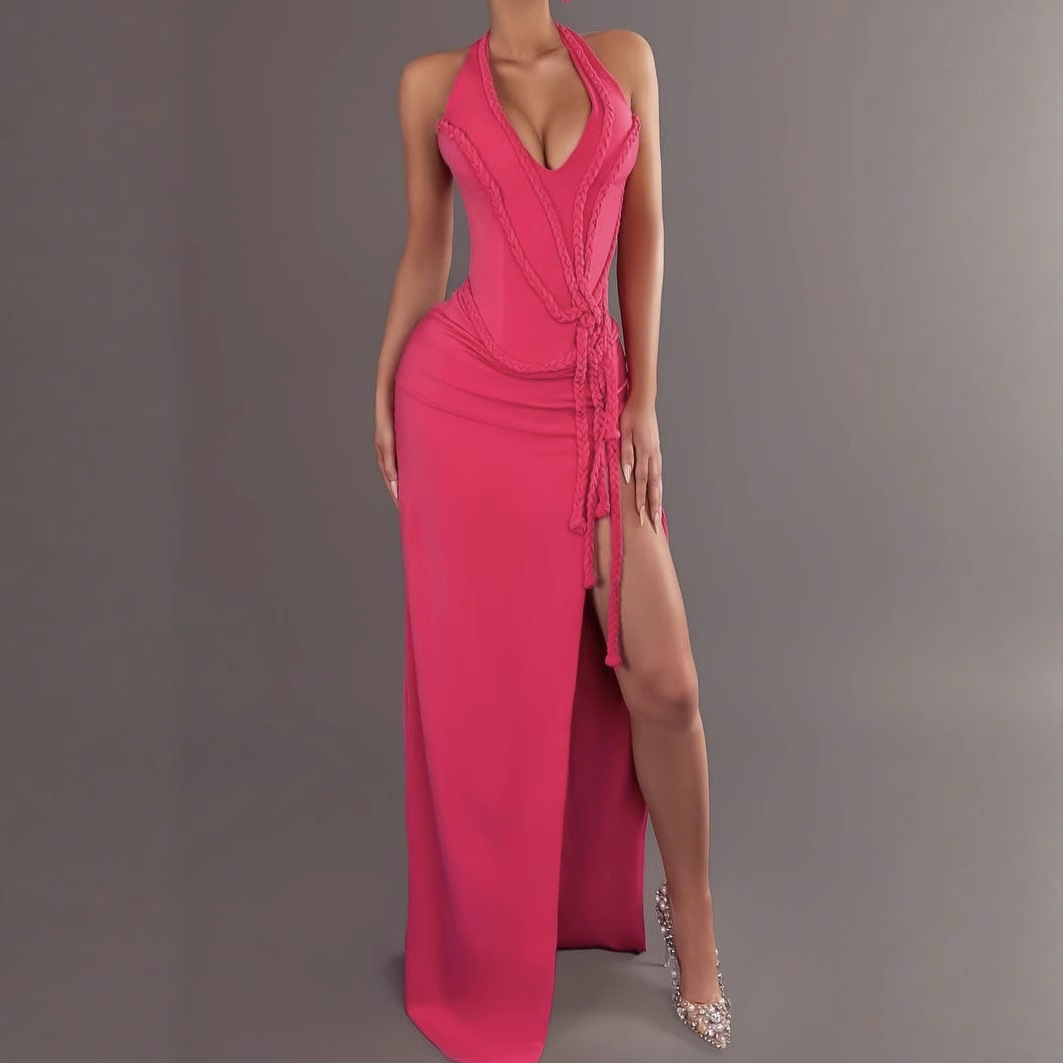
Close-fitting evening shapes leave little margin, so every measurement on the chart counts.
Reading the Product Page for Fit Clues
The product page holds more fit information than most shoppers use. Slow down and read it as a set of clues rather than a sales pitch.
Photos, Model Details, and What They Can and Cannot Tell You
If the page lists the model’s height and the size she is wearing, use it as a reference point, but with caution. A model’s proportions will not match yours exactly, and a dress pinned or styled for the camera may sit differently in real life. Look at how the dress falls at the bust, whether the waist seam sits at the natural waist or below, and whether the skirt skims or clings. Compare the model’s stated height with your own to estimate where the hem will land on you. Treat the photos as an indication of cut and silhouette, not a guarantee of how it will look on your frame.
Description Words That Signal the Fit
Certain terms in a product title or description tell you what to expect. “Slim fit” or “bodycon” points to a close cut with little ease. “Elastic” or “stretch” suggests some give. “Off shoulder,” “wrap,” or “A-line” describe structure that influences how the dress sits and where it needs to be secure. “Fitted skirt” indicates the hip and thigh area will be close to the body. Pair these clues with the size chart so the words and the numbers tell the same story.
Customer Reviews: Useful, with Caveats
Reviews can help when they mention height, size ordered, and whether the dress ran large or small, but treat any single review as one data point. Look for patterns across several reviews rather than reacting to one comment, and be mindful that a reviewer’s body shape and preferences may differ from yours. Where reviews are absent, rely more heavily on your measurements and the chart.
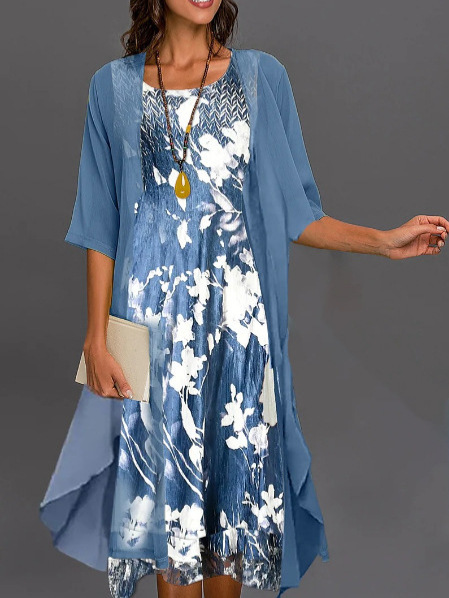
Product photos show cut and silhouette; your measurements show whether that cut will suit you.
Smart Trade-Offs and a Pre-Purchase Routine
Even with careful measuring, buying online involves trade-offs. Accepting that upfront makes the whole process calmer and the decisions clearer.
Decide What You Are Willing to Alter
Some fit issues are easy to fix and others are not. A hem can usually be shortened. A waist or side seam can often be taken in. A bust that is too small, shoulders that are too narrow, or a bodice that is too short in the torso are far harder to correct. Before you order, ask yourself which part of the dress you would be comfortable having a tailor adjust, and size so that any mismatch falls into the fixable category. If you are building a wardrobe around pieces that work in several ways, our guide on building a small wardrobe with versatile pieces shows how a well-fitting dress earns its place through repeated wear.
Know the Returns Policy Before You Order
Fit confidence improves when you know what happens if the dress does not work. Read the delivery and returns policy before you buy, so you understand the process, any conditions, and the timeframe. This is not a reason to order carelessly, but it does change the risk calculation, and it helps you decide whether to order a second size or stay with your best estimate.
A Simple Pre-Purchase Checklist
- Take fresh measurements of bust, waist, hips, and height.
- Identify whether the chart lists body or garment measurements.
- Decide which measurement the dress cannot compromise on.
- Check the fabric and closure for stretch, lining, or adjustability.
- Read the description for fit terms such as slim, fitted, or relaxed.
- Compare the model’s height with your own to estimate hem placement.
- Confirm the returns policy and ask a question if anything is unclear.
Once the dress arrives, test it properly: sit down, raise your arms, walk, and check the fit in natural light. A dress that looks right standing still but restricts movement is not truly fitting well. If you are shopping for a particular event and want to think through the overall look, our guide to choosing a birthday dress for the venue and occasion offers a useful framework for matching the dress to the setting.
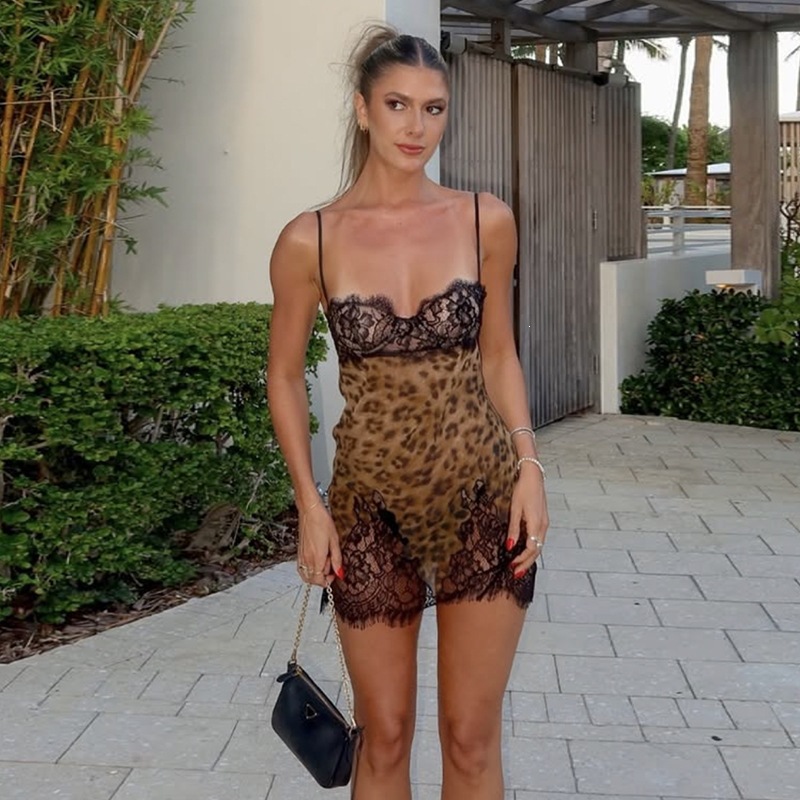
Once the dress arrives, move in it: sitting, reaching, and walking reveal fit that a mirror alone cannot.
The Styling Takeaway
A dress that fits well online is rarely a matter of luck. Measure your body honestly, read the size chart against those numbers, weigh the fabric and silhouette, and treat the product page as a source of clues rather than decoration. When a close-fitting style leaves little room for error, be exact; when a shape is more forgiving, let it work for you. Your next step is simple: take your measurements today, save them somewhere easy to find, and browse the women’s dresses collection with those numbers in hand.