To read an online clothing size chart correctly, take your own measurements first, then compare them against the chart’s listed ranges for bust, waist and hip, and choose the size that fits your largest or most fit-critical measurement, adjusting for the fabric and the cut. Most disappointing online orders are not caused by a bad garment. They come from a number on a tag being treated as a promise, when it is really a loose label attached to a set of measurements that varies from one brand to the next.
A size chart is a translation tool. It converts a label such as “M” or “UK 12” into centimetres or inches, and that conversion is the only part of online sizing you can verify before the parcel arrives. Once you know how to read it, ordering becomes far less of a gamble. Here is how to do it properly, from the tape measure onward.
Start With Your Own Measurements, Not Your Usual Size
The single most useful habit in online shopping is ignoring the size you normally wear. A “medium” in one wardrobe can sit a full size away from a “medium” in another, because there is no single universal standard that every brand follows. Your usual size is a memory of how other garments fitted, not a measurement. Your tape measure is the only reliable reference.
Use a soft, flexible tape, the kind used for tailoring rather than a rigid builder’s tape. Stand relaxed in light, close-fitting clothing or underwear, and keep the tape parallel to the floor and snug without pressing into the skin. Three measurements do most of the work for dresses and tops:
- Bust: around the fullest part of the chest, with the tape running straight across the back.
- Waist: around the narrowest part of the torso, which is usually just above the navel. Bend sideways and the natural crease shows you where it sits.
- Hip: around the fullest part of the hips and seat, typically seven to ten inches below the waist.
Write the numbers down rather than keeping them in your head, and measure twice. A few millimetres of difference is normal; a sizeable gap means the tape slipped. Measure again in the evening if you want a second reading, since the body shifts slightly across a day.
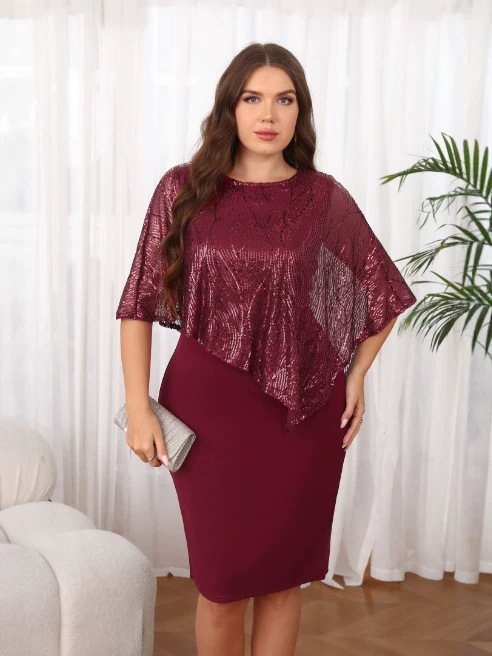
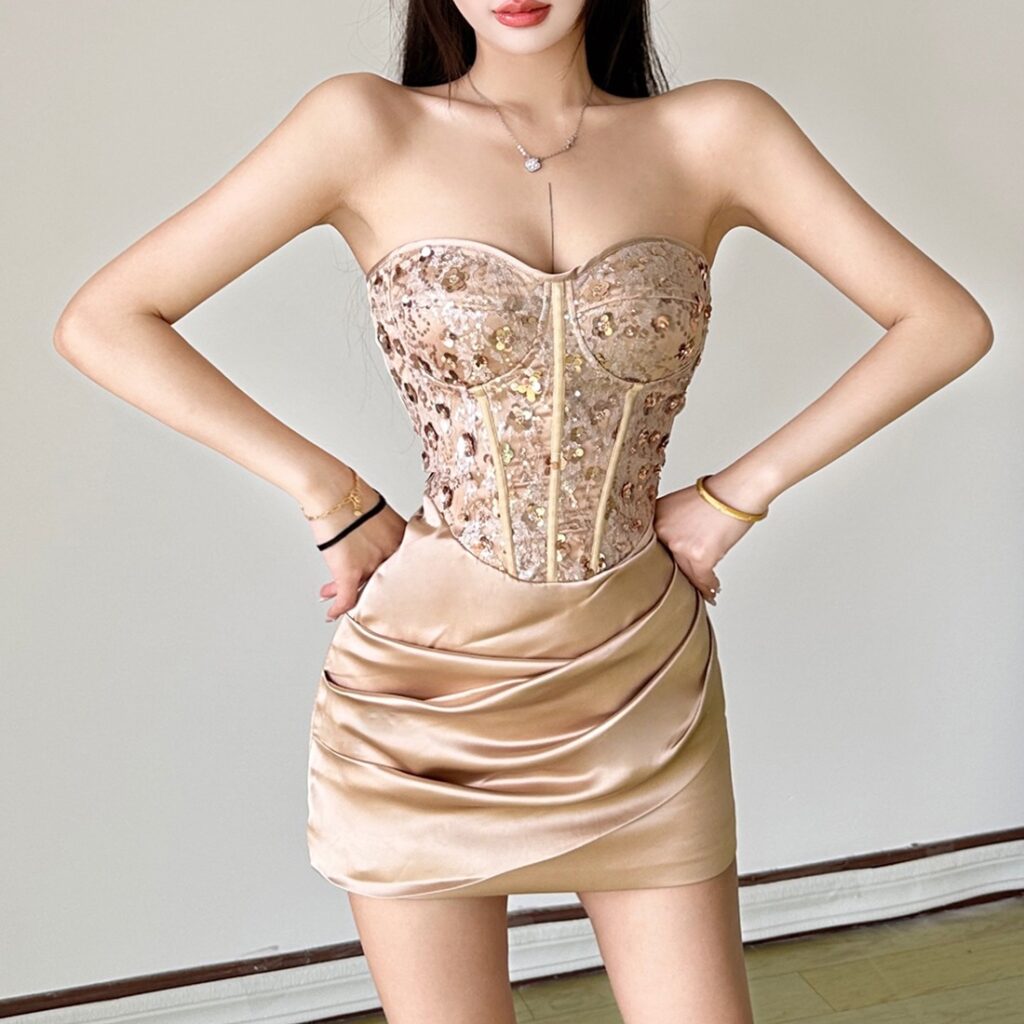
A defined waistline like this makes your waist and hip measurements the ones to check first.
Body Measurements Versus Garment Measurements: The Difference That Changes Everything
Many shoppers read a chart as though every figure describes the garment itself. In practice, charts come in two kinds, and confusing them is the most common reason a dress arrives too tight or oddly loose.
Body charts
A body chart lists the measurements of the person each size is designed for. If the chart says size M suits a bust of 90 to 94 cm, that range describes a body, and the garment has been cut with some allowance for movement built in. You match your measurements to the range and read across.
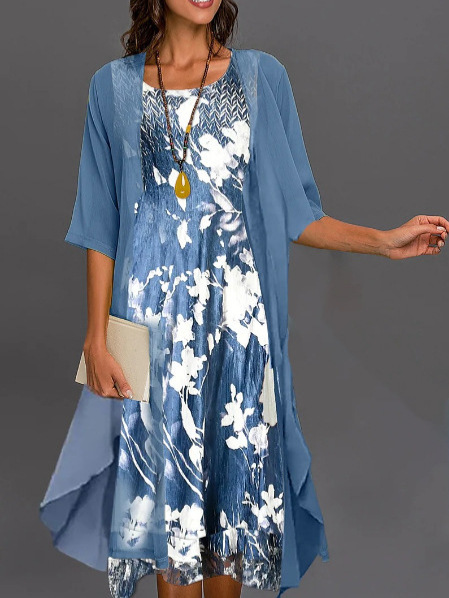
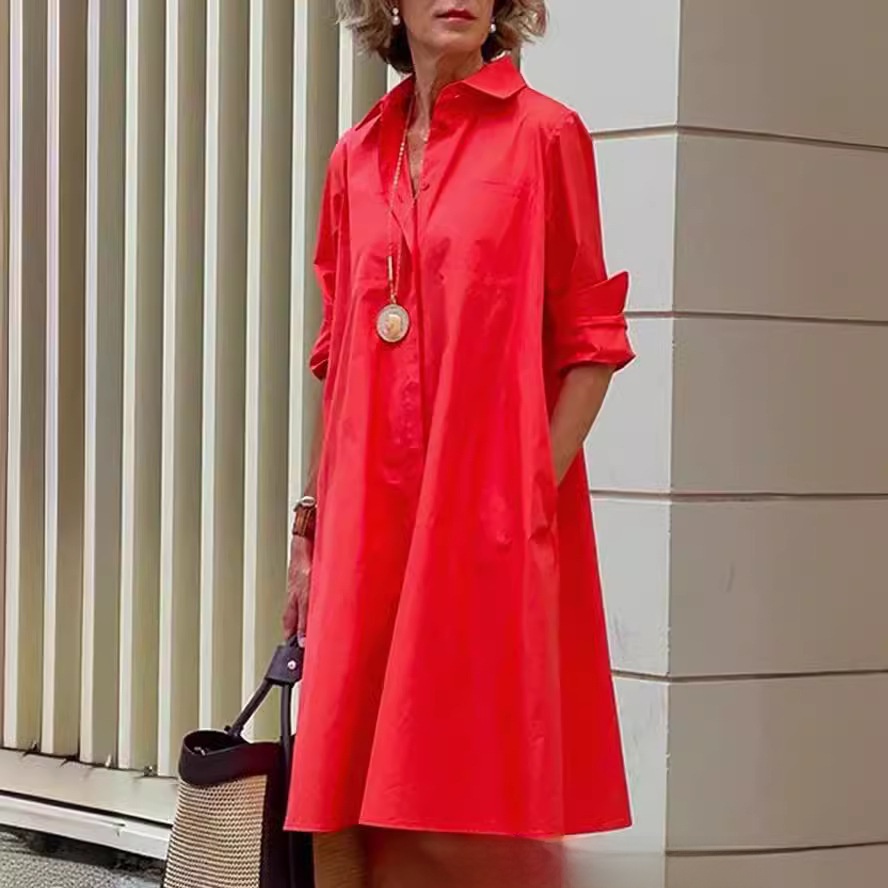
The Anais Fashionable and Elegant Chiffon Dress brings balanced proportion and clean silhouette lines to everyday and occasion styling.
Garment charts
A garment chart lists the flat or laid-out dimensions of the finished piece, for example “bust 98 cm, length 105 cm.” These numbers include ease, which is the extra room between the body and the fabric. To use this kind of chart, compare it with a garment you already own and like: lay it flat, measure it across the same points, and see whether the numbers are similar. This is more accurate than any label, because you are comparing a known fit with an unknown one.
Always check which type you are looking at before choosing. A chart that states a bust of 98 cm for a size M does not mean you need a 98 cm bust. If it is a garment measurement, a 90 cm bust may suit it well, with a comfortable allowance. Look for a line of text near the chart that says “body measurements” or “garment measurements.” If it is missing, the product page or the Larose Couture customer support page is the right place to ask before ordering.
Also note the units. A chart in inches read as centimetres, or the reverse, is a surprisingly frequent mistake, and it produces wildly wrong results. Confirm the unit at the top of the table before you compare a single figure.
Which Measurement to Prioritise When You Fall Between Sizes
Few bodies match a single column perfectly. Your bust may sit in one size and your hips in the next. The question is which measurement gets the final vote, and the answer depends on the garment’s shape.
For fitted pieces with little give, such as a structured bodycon or a close-cut sheath, the fit-critical measurement wins. A bandage-style dress hugs the body closely, so the widest point you have to accommodate sets the size. Choosing by the smaller measurement means pulling and strain across the fuller area. A style like The Roxane Party Hollow Out Backless Long Bandage Dress is the kind of closely shaped silhouette where checking every measurement against the chart matters most.
For pieces that fall away from the body, such as a flared skirt, a loose chiffon layer or an A-line cut, the bust or shoulders usually decide the size, because the lower half has room to spare. The upper body is where such a dress either sits correctly or does not, and the skirt looks after itself.
A practical rule that holds up well:
- Fitted and body-skimming: size to the largest relevant measurement.
- Flowing or gathered at the waist: size to the bust, and check the waist can still close comfortably.
- Structured with a zip or hidden fastening: leave a little room so the closure sits flat without tension.
If you land squarely between two sizes, the fabric and the cut should break the tie, which is the next thing to consider.
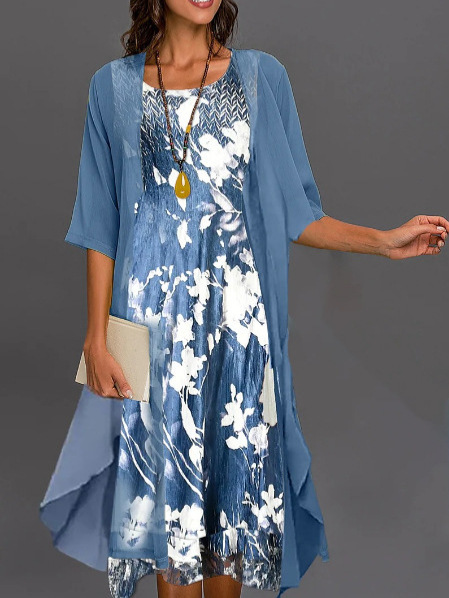
Lighter, flowing fabrics generally forgive a size decision more readily than rigid ones.
How Fabric and Cut Change the Numbers on the Chart
A size chart lists dimensions but says nothing about how the cloth behaves, and behaviour is half of fit. Two garments with identical chart numbers can feel entirely different on the body depending on how much the material stretches, drapes or resists.
Fabric with stretch moves with you and accepts a wider range of measurements. A fabric with no stretch holds its dimensions exactly, so the chart figures are the real limit. This is why product descriptions are worth reading alongside the chart: if a listing mentions that a garment is “elastic” or “slim fit,” that is a signal about how closely it is cut. A title like The Gaia Small Round Neck Elastic Slim Fit Waist Slit Dress tells you at a glance that it is designed to sit close to the body, so reading the measurements carefully before choosing is sensible.
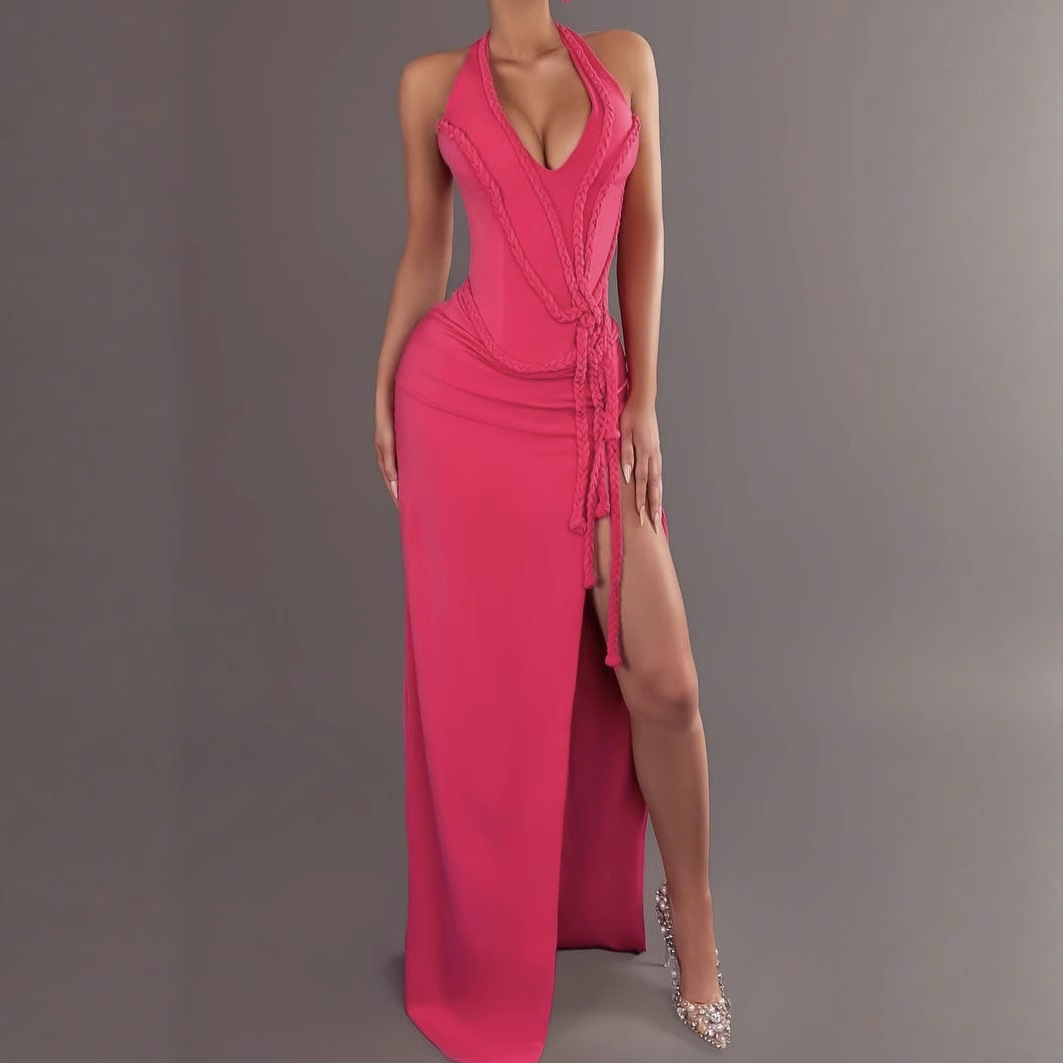
The Roxane Party Hollow Out Backless Long Bandage Dress brings balanced proportion and clean silhouette lines to everyday and occasion styling.
Care and composition also shift how a garment sits over time. Textile labels follow standard care and fibre conventions, and the Federal Trade Commission’s guidance on textile labelling explains what the information on a garment label is meant to tell you. Fibre content matters because different fibres relax, shrink or hold shape differently with wear and washing. When a product page lists the composition, take a moment to read it alongside the size table; when it does not, treat the chart figures as the only firm information you have and size with a little caution.
Cut matters just as much as cloth. A wrap shape adjusts at the waist, so it forgives small differences. A straight column dress has no adjustment at all. An off-shoulder neckline depends on the upper chest and shoulder measurement more than the waist, since that is the area keeping the garment in place. Match the measurement you prioritise to the point of the garment that does the structural work.
The Other Numbers on the Page: Length, Sleeve and Shoulder
Bust, waist and hip get the attention, yet length is where many orders quietly go wrong. A dress that fits perfectly through the body but lands at an unexpected point on the leg can feel entirely different from what the photograph suggested. Fashion imagery is shot on models of a particular height, so a hem that looks midi on the page may sit closer to the knee or calf on you.
Find the length measurement on the chart, usually taken from the highest point of the shoulder or the nape to the hem. Then measure the same distance on your own body, from the same starting point down to where you want the dress to finish. Holding the tape against yourself in front of a mirror takes under a minute and removes the guesswork.
Check these points as well when the chart provides them:
- Shoulder width: important for structured tops, jackets and anything with a defined sleeve seam.
- Sleeve length: relevant for long-sleeve styles, where a short sleeve changes the whole proportion.
- Model height and size: where listed, this helps you judge how the garment will fall on a body taller or shorter than your own.
If you are planning to wear a dress with a jacket or coat over the top, add room mentally for the layer. A garment that fits snugly on its own may feel restricted under outerwear, and our guide on how to choose a jacket that works with dresses, jeans and everyday outfits covers how the two pieces should work together.
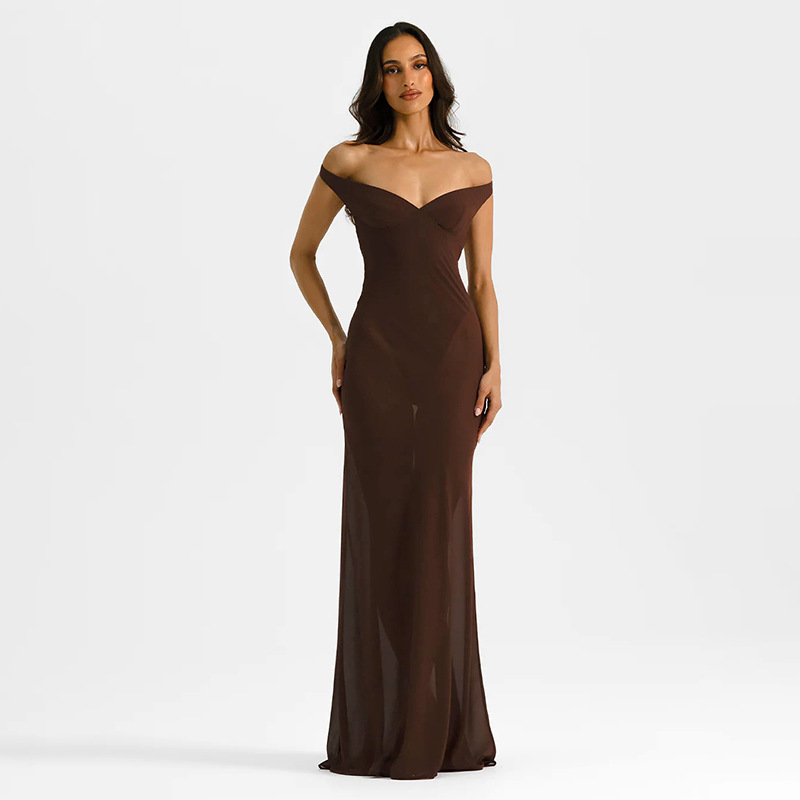
With an off-shoulder neckline, the upper chest and shoulder measurements carry the fit.
Reading Between the Lines: Reviews, Product Notes and Ordering Strategy
Once you have your measurements and understand the chart, the remaining uncertainty is the part the numbers cannot cover. This is where product notes and an informed ordering approach help.
Read the full description rather than only the table. Words such as “slim fit,” “relaxed,” “stretch” or “runs small” are small but meaningful hints about how generously a piece is cut. If a description gives no guidance and you are between sizes, the more cautious choice for a fitted, non-stretch garment is generally the larger size, since it is far easier to take a garment in than to let it out. A tailor can reduce width at the seams with little trouble, while adding fabric that is not there is rarely possible.
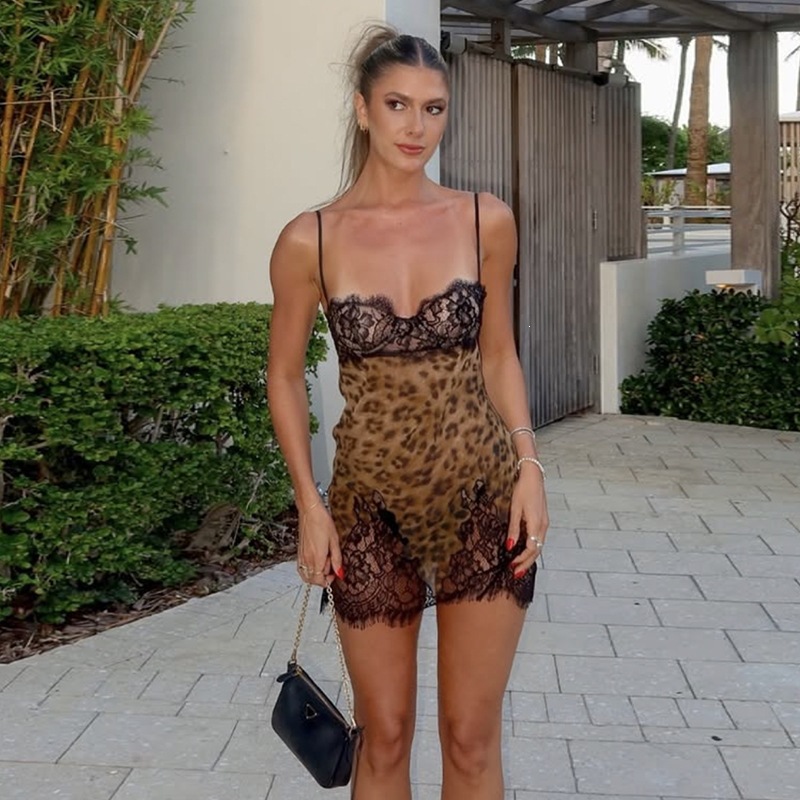
The Odette Sleeveless Leopard Print Lace Dress brings balanced proportion and clean silhouette lines to everyday and occasion styling.
Know the returns arrangements before you order, not after. If a size does not work, you want to be certain how an exchange or return is handled and within what timeframe. Larose Couture sets out its terms on the delivery and returns page, and reading it first turns a possible mistake into a low-risk decision. Ordering with confidence is partly about knowing there is a clear route back if the fit is not right.
A few habits make the whole process more dependable:
- Keep your measurements saved in your phone so you can check any chart in seconds.
- Measure a favourite garment that fits well and keep those numbers alongside your body measurements.
- Check the unit, the chart type and the length before looking at anything else.
- When you are truly between sizes, consider the fabric, the cut and the occasion, then decide.
The occasion plays a larger part than most people allow. A dress for a long seated dinner needs more ease than one worn for an hour at a cocktail reception. If you are shopping for a particular event, our guide to choosing a birthday dress that suits the venue and occasion is useful for thinking through how long you will be wearing the piece and how much you will be moving in it.
When the Chart and the Mirror Disagree: Realistic Expectations
Even a carefully read chart cannot guarantee a flawless result, and it helps to hold realistic expectations. Bodies are not uniform; shoulders, torso length, bust shape and proportions all vary, and a chart is built around averages. Occasionally you will find a garment that fits across the measurements yet sits a little differently from what you pictured. That is a limitation of the format, not a failure on your part.
Small adjustments solve more than people expect. A hem can be shortened, a strap can be altered, a seam can be taken in, and a good tailor can often make a near-fit into a precise one. Considering a modest alteration as part of the plan, particularly for an occasion piece you intend to wear more than once, shifts the goal from “perfect straight out of the bag” to “close enough to make perfect.”
It also helps to be honest about what you want from the silhouette. If you prefer a close fit, size to your measurements and accept the shape the designer intended. If you prefer a softer, more relaxed line, a larger size may serve you better, even if the chart suggests otherwise. The chart tells you what the garment will measure; only you can decide how you want it to feel. Understanding that distinction is what separates a considered order from a hopeful one.
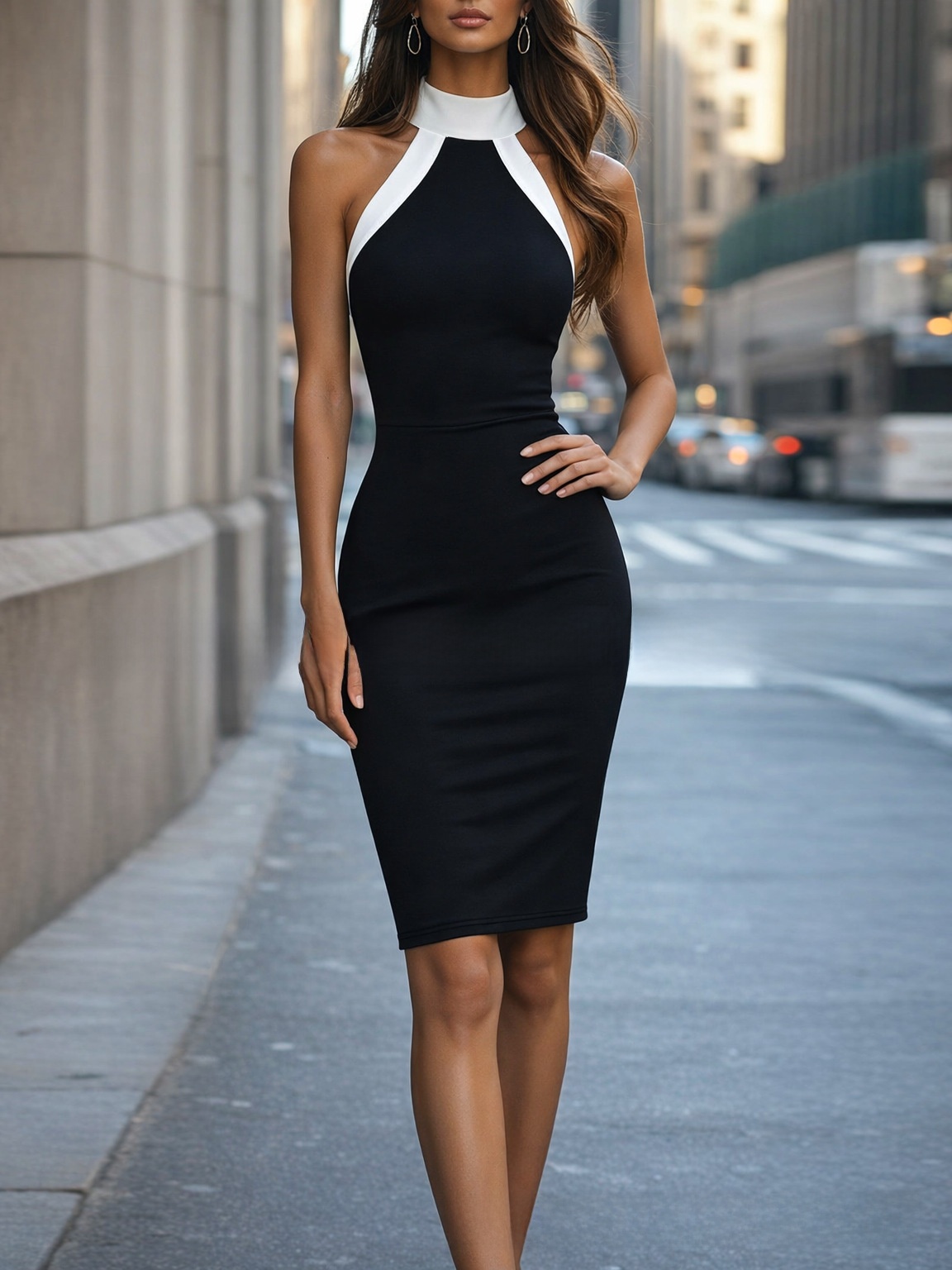
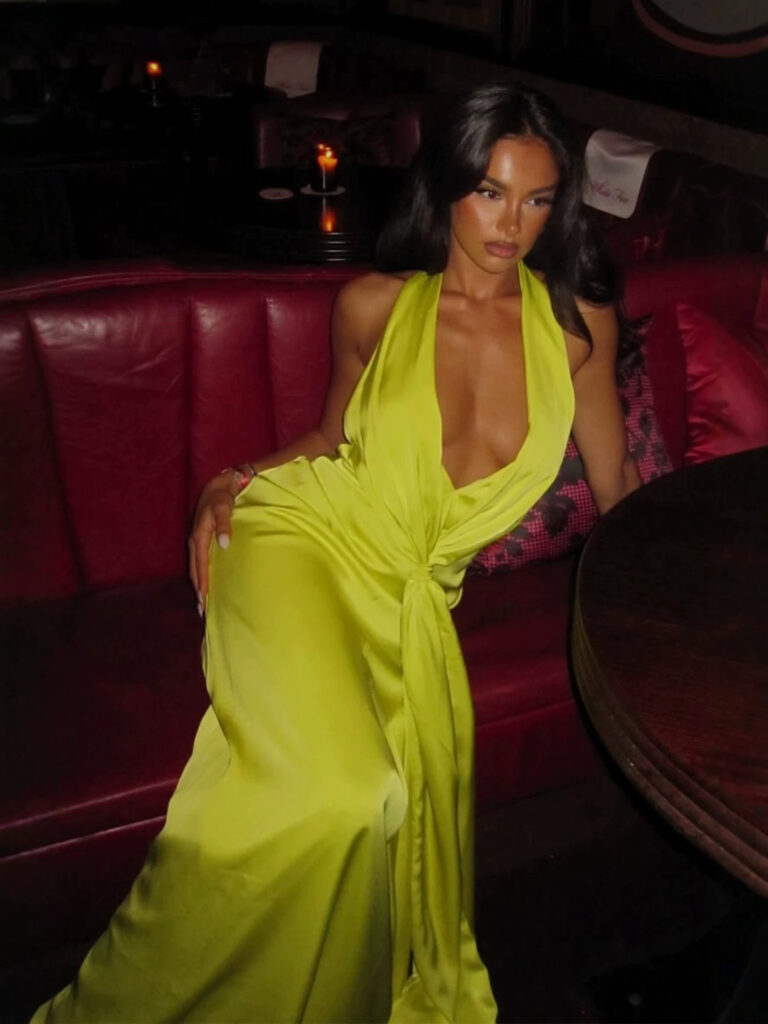
Bold colour-blocking makes proportion and length easy to judge before you commit to a size.
If you are building a wider wardrobe around pieces that fit well, browsing the full women’s dresses collection with your measurements to hand lets you compare several styles quickly, since you already know which numbers to look for.
The Styling Takeaway
Reading a size chart well comes down to a short routine: measure your body, identify whether the chart describes a body or a garment, size to the measurement that matters most for that cut, and let fabric, length and the occasion settle any tie. Keep your numbers saved, check the returns terms before you order, and treat the chart as a guide rather than a guarantee. Your next step is simple: take your measurements tonight, save them in your phone, and use them the next time a dress catches your eye in the Larose Couture boutique.