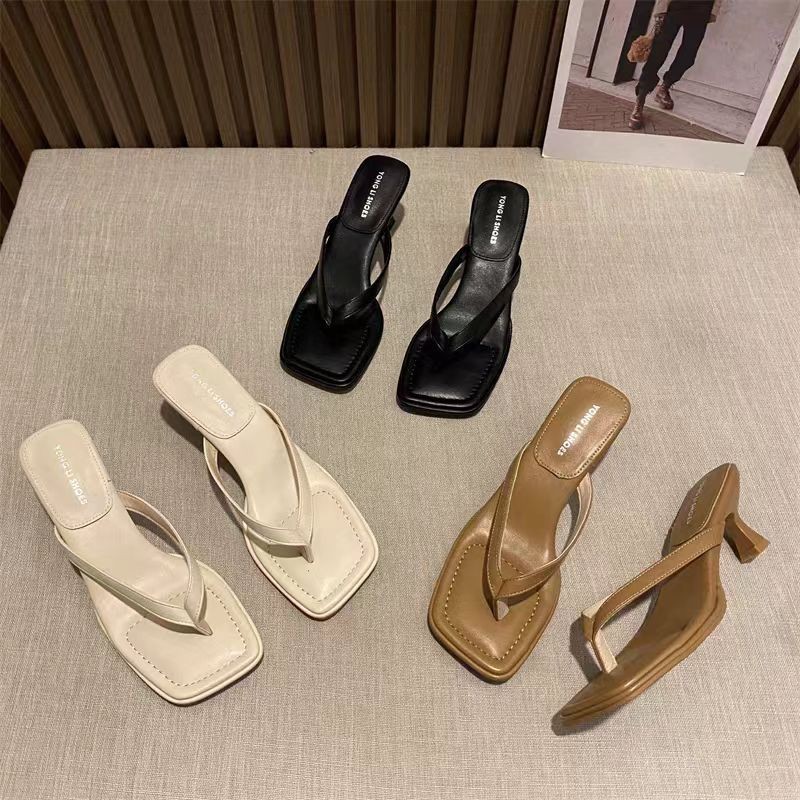
The short answer: black, nude, tan and brown, and metallics are the dependable choices for a black dress, and a single saturated colour (red, cobalt, emerald) works when you want the shoes to carry the outfit. The longer answer is more interesting, because black is the most forgiving backdrop in a wardrobe and also the one that exposes weak decisions about proportion, texture and finish. A black dress will not argue with your shoes, which means the shoes get to define the mood.
Start With the Job the Shoes Need to Do
Before choosing a colour, decide what role the shoes play. There are really three: they can disappear, they can echo the dress, or they can lead. Each produces a different result, and most styling mistakes come from choosing a colour that sends one message while the silhouette sends another.
Shoes that disappear (nude, skin-tone, or very close to black) keep the eye moving in one uninterrupted line. Shoes that echo the dress (black on black, or a deliberate tonal pairing) create a sleek, controlled column. Shoes that lead (red, metallic, a strong two-tone) turn the dress into a quiet frame for a single focal point. None of these is superior. The right one depends on the occasion, the dress shape and how much attention you want at your feet.
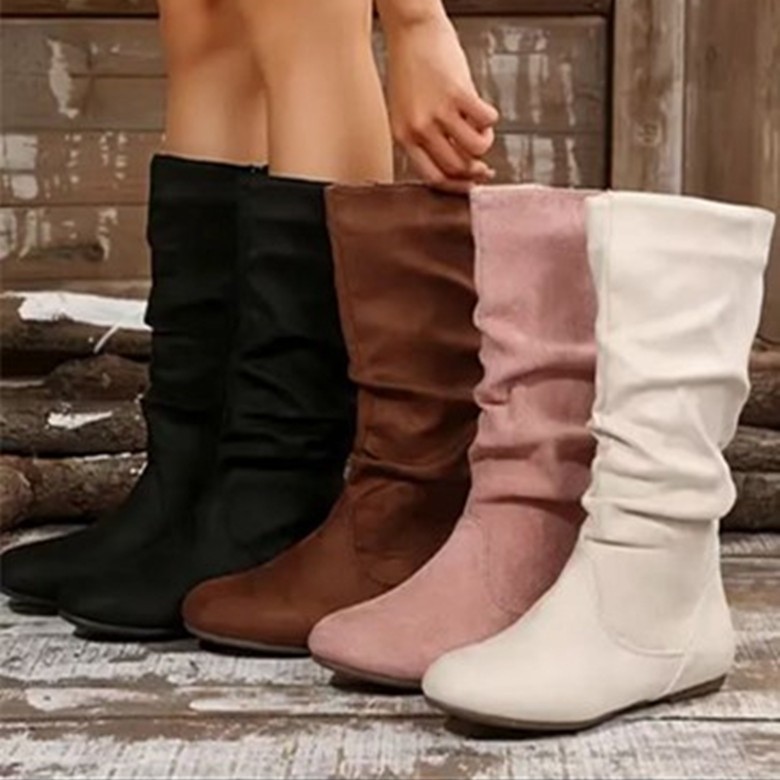
The Daphne Side Zipper Round Toe Boots brings balanced proportion and clean silhouette lines to everyday and occasion styling.
A useful test is to stand a metre back from a mirror and ask what you notice first. If it is the shoes and you did not intend it, the colour is too loud for the outfit. If your eye lands nowhere in particular and you wanted polish, the shoes may be too neutral.
The Reliable Neutrals: Black, Nude and Brown
Black on black
Black shoes with a black dress are the safest option, and safe does not have to mean dull. The effect is a continuous, slimming line, particularly useful when you want a long-looking leg or a streamlined silhouette. The detail that matters is finish. A matte black dress with glossy patent shoes reads more deliberate than matte on matte, because the contrast in texture adds interest without adding colour. A dress in a fabric with sheen paired with suede shoes works for the opposite reason.
If you like the idea of a sharper, shinier finish, The Capucine Pointed Toe Patent Leather Short Boots are a natural fit for cooler-weather black dresses, where the pointed toe and glossy finish do the visual work that a strappy heel would do in summer.
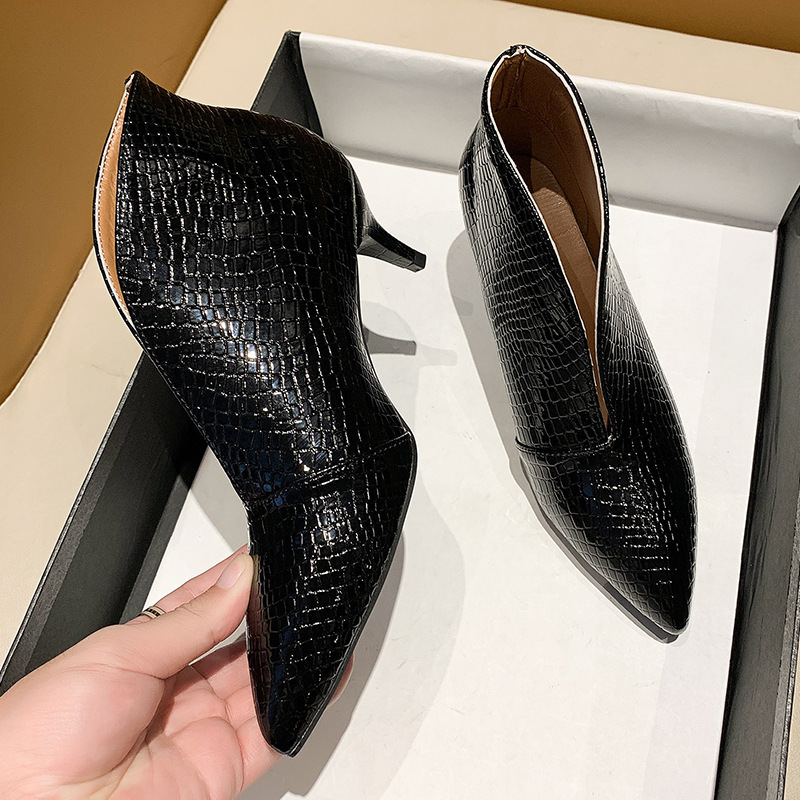
A glossy finish gives a black-on-black outfit texture without adding colour.
Nude and skin-tone shoes
Nude shoes are the quiet workhorse. Because they sit close to the colour of bare legs, they visually extend the leg and keep attention on the dress. The word “nude” is where people go wrong: it means a shade near your own skin tone, not a generic beige. A nude that is noticeably lighter or pinker than your skin creates a break at the ankle, which is exactly what you were trying to avoid.
Brown, tan and cognac
Brown with black used to be considered a rule broken. It is now an established pairing, particularly in autumn and with casual dress shapes such as shirt dresses, knitted dresses and simple jersey styles. The key is to choose a brown with enough warmth and richness that it looks like a choice. A muddy, mid-tone brown beside black can look accidental; chocolate, deep cognac and warm tan generally look intentional. Match the leather or suede tone to any brown in your bag or belt, and the combination holds together.
Colour as a Statement: Red, Cobalt, Emerald and Metallics
A black dress is the best canvas for one strong colour, and shoes are the easiest place to add it. The rule that keeps this from looking costume-like is restraint: one bold element, with everything else staying quiet. If the shoes are red, keep the bag and jewellery neutral or metallic. If the shoes are cobalt, avoid adding a competing accent elsewhere.
Red is the classic. It reads confident and slightly dramatic, and it suits evening dresses and cocktail lengths especially well. Cobalt and emerald feel more contemporary and work well with cleaner, more minimal dresses. Burgundy and deep plum are subtler alternatives that behave almost like a neutral while still adding depth.
Metallics deserve their own mention because they sit between neutral and statement. Gold and champagne warm up black and suit warm skin tones and evening settings; silver and pewter feel cooler and slightly more modern. Metallic shoes pair particularly well with a plain black dress and minimal jewellery, since the shoes already provide the sparkle.
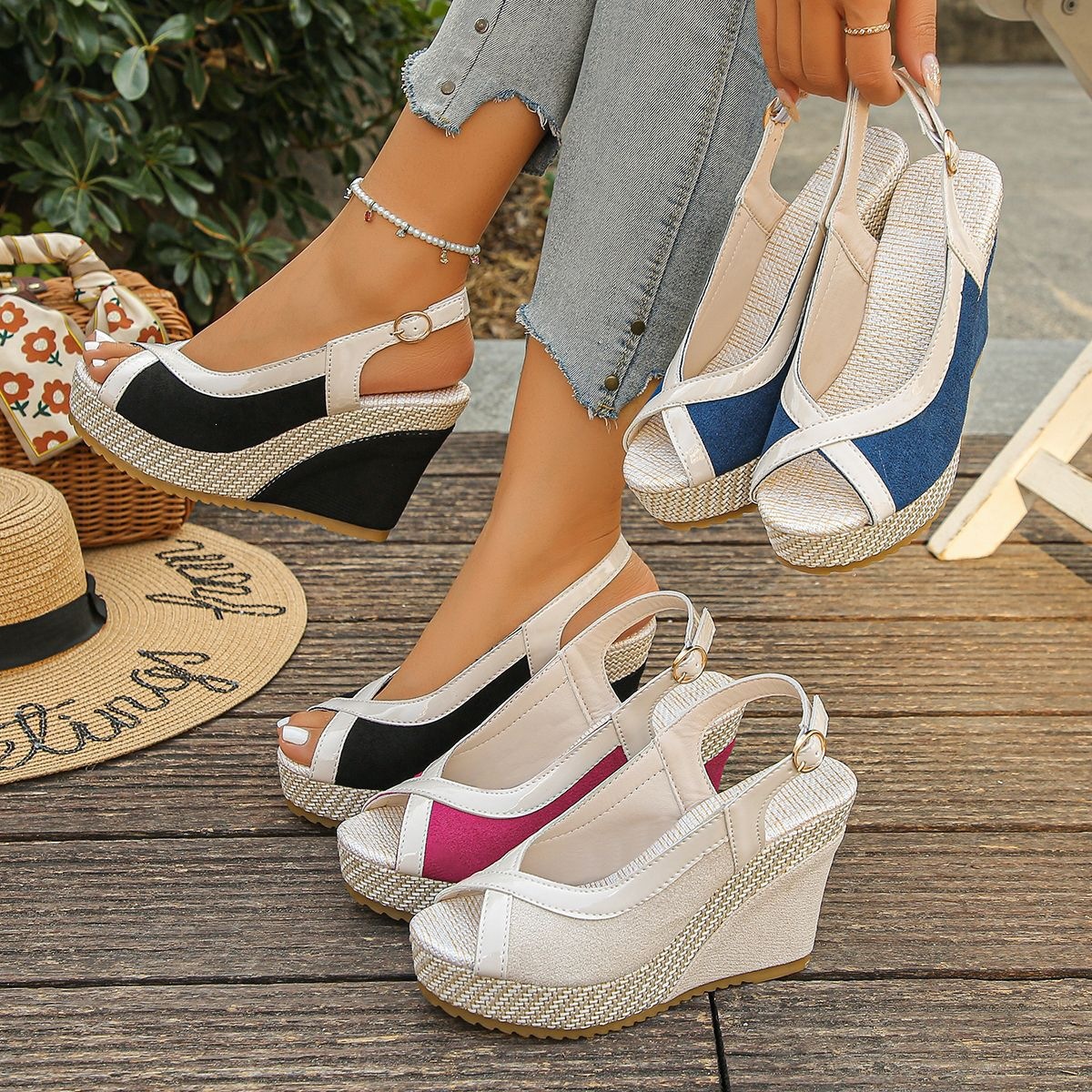
A two-tone sandal adds a focal point to a plain black summer dress.
For warmer months, The Therese Summer Suede Wedge Platform Peep Toe Sandals in a two-tone colourway are a good illustration of the “shoes lead” approach: a simple black dress stays simple while the footwear supplies the interest.
Matching Shoe Shape to Dress Length and Silhouette
Colour is only half of the decision. The same pair of shoes can look sharp with one black dress and awkward with another, and the difference is usually proportion rather than shade.
Mini and above-the-knee dresses
Shorter hemlines leave the whole leg visible, so the shoe becomes part of a long vertical line. Pointed toes, block heels and ankle boots all work, and tonal or nude shoes lengthen the look further. Tall boots work well here too, since the hem and boot top can create a deliberate balance of skin and leather. If you are layering with a jacket, the guidance in our guide to choosing a jacket that works with dresses, jeans and everyday outfits helps keep the overall proportions in check.
Midi dresses
Midis are the trickiest length, because the hem often lands at the widest part of the calf. A shoe or boot that stops at the same point can visually cut the leg in two. Pointed or almond toes, a slight heel and a colour close to the skin or dress tone help. A low or ankle boot with a midi works best when there is a gap of bare leg or sheer tights between the boot and the hem, or when the colours are tonal enough that the line stays unbroken.
Maxi and floor-length dresses
With long hems, the shoes are often partly hidden, so the choice matters less for colour and more for height and comfort. A heel or platform lifts the hem off the floor and keeps the line clean. For a deeper look at this length, our guide on what shoes to wear with a maxi dress covers it from casual days through to evening events.
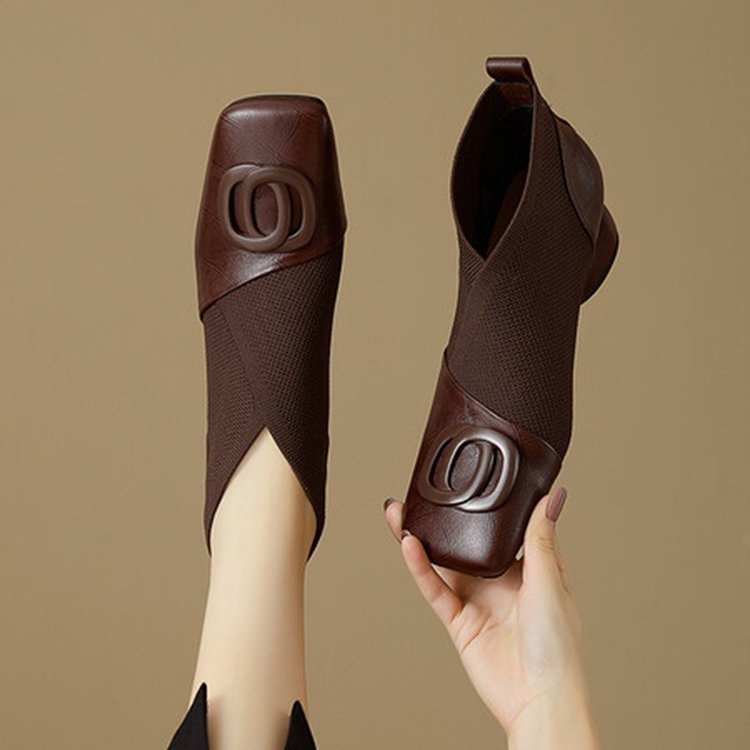
A chunky heel and square toe suit relaxed, retro-leaning black dress shapes.
Boots With a Black Dress: Height, Heel and Hemline
Boots are where a black dress shifts from occasion wear to a wearable everyday outfit, and the choice of boot height changes the whole effect.
Ankle boots are the most versatile. They suit mini and midi dresses and work with or without tights. A low heel keeps the look relaxed, while a higher heel makes it more polished. The Yvette Low Heel Round Toe Side Zipper Ankle Boots and The Daphne Side Zipper Round Toe Boots are both examples of the sort of understated, round-toe shape that sits comfortably beneath a simple black dress without competing with it.
Knee-high and over-the-knee boots change the proportions more dramatically. With a short dress, a knee-high boot creates a clean block of dark colour that elongates the leg; an over-the-knee style such as The Faustine Pointed Toe High Boots Heel Over the Knee makes a stronger, more evening-leaning statement. If you prefer texture over shine, The Solene Suede Knee High Tassel Chunky Heeled Boots bring a softer, more bohemian feel to a black dress.
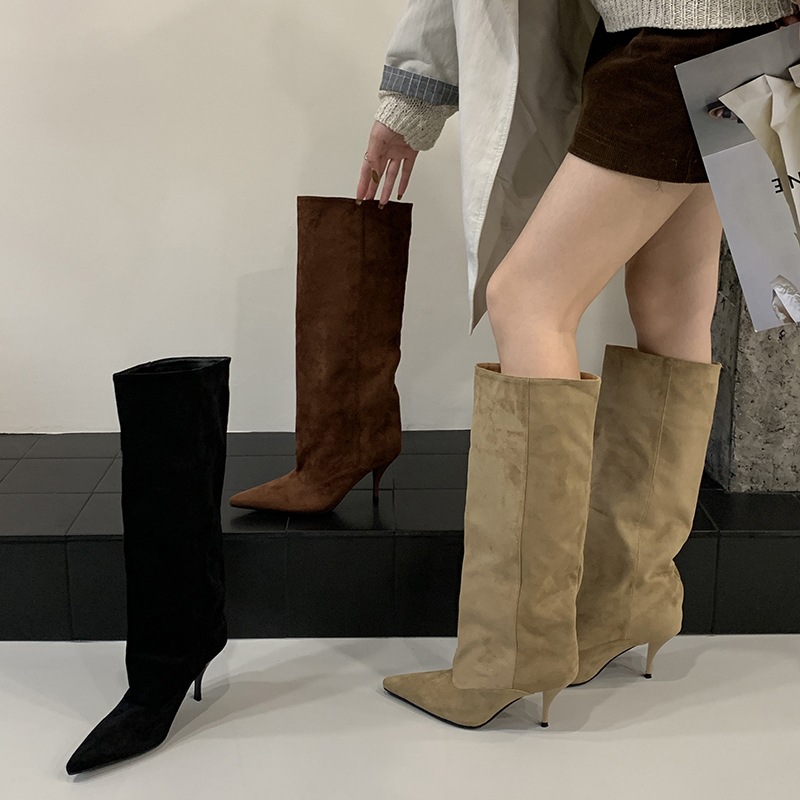
Over-the-knee boots turn a short black dress into a more dramatic evening look.
A practical trade-off worth knowing: the taller and more structured the boot, the more the dress needs to stay simple. A heavily detailed boot with a heavily detailed dress competes. If the boots carry the interest, let the dress be plain.
Fabric, Fit and Real-World Trade-Offs
Colour theory only gets you so far. The practical details are what make an outfit work for a full day or evening.
Match the weight of the shoe to the weight of the fabric. A fluid satin or chiffon black dress looks best with something refined: a slim heel, a pointed toe or a delicate sandal. A heavier knit or structured crepe can take a chunkier heel, a buckled boot or a platform. Mismatching the two is what makes an otherwise good outfit feel slightly off. A vintage-leaning option such as The Violette Vintage Buckle Boots suits heavier, more textured dress fabrics for exactly this reason.
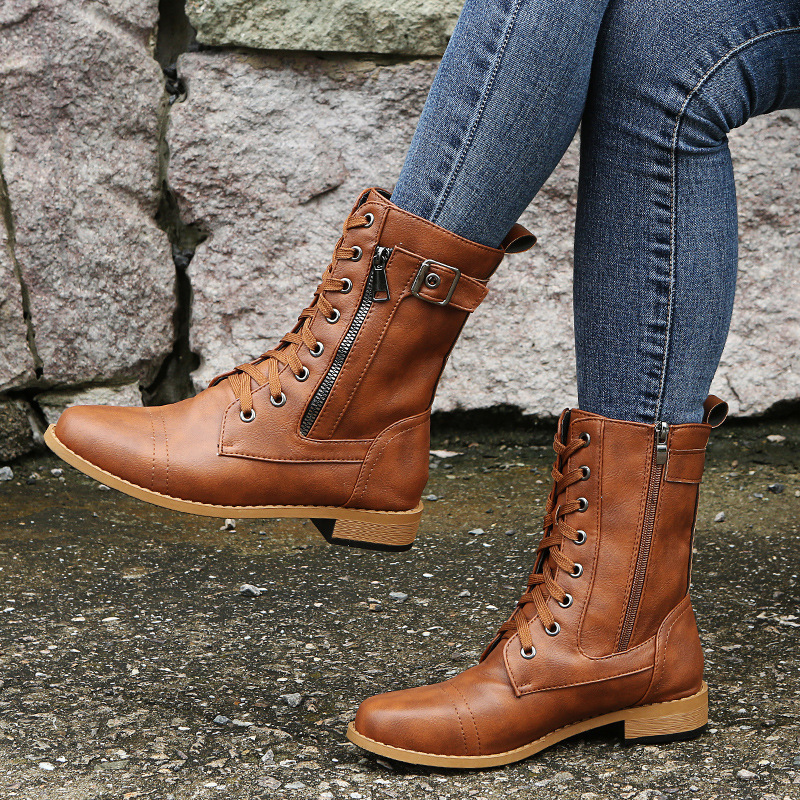
The Yvette Low Heel Round Toe Side Zipper Ankle Boots brings balanced proportion and clean silhouette lines to everyday and occasion styling.
Think about tights and bare legs. Sheer black tights keep everything tonal and extend the line; opaque black tights make boots and dress read as one dark block, which is useful in winter. Bare legs with a nude or metallic shoe feel lighter and more summery. Tights in a colour other than black or skin tone are a deliberate choice and work best when the shoes are neutral.
Be honest about comfort. A shoe you cannot walk in will be visible in how you move, however well the colour matches. For a long event, a block or chunky heel and a secure fit usually outperform a thin stiletto, and that practical decision often looks better than a precarious one.
Know when rules are flexible. Style guidance on colour pairing is a framework, not a regulation. Museum fashion collections, such as the V&A fashion collection, show how black dresses have been paired with a wide range of footwear across eras, which is a useful reminder that the “right” answer shifts with context and taste.
Choosing by Occasion: Work, Dinner, Weddings and Casual Days
Office and daytime. Black, nude, tan or dark brown in a modest heel or a polished ankle boot. The goal is quiet competence, so avoid heavily embellished or very high styles.
Dinner and cocktail events. This is where red, metallic and patent finishes earn their place. A fitted black dress with metallic heels and minimal jewellery is a reliable formula. If the dress is more relaxed, a refined boot can replace the heel without losing polish.
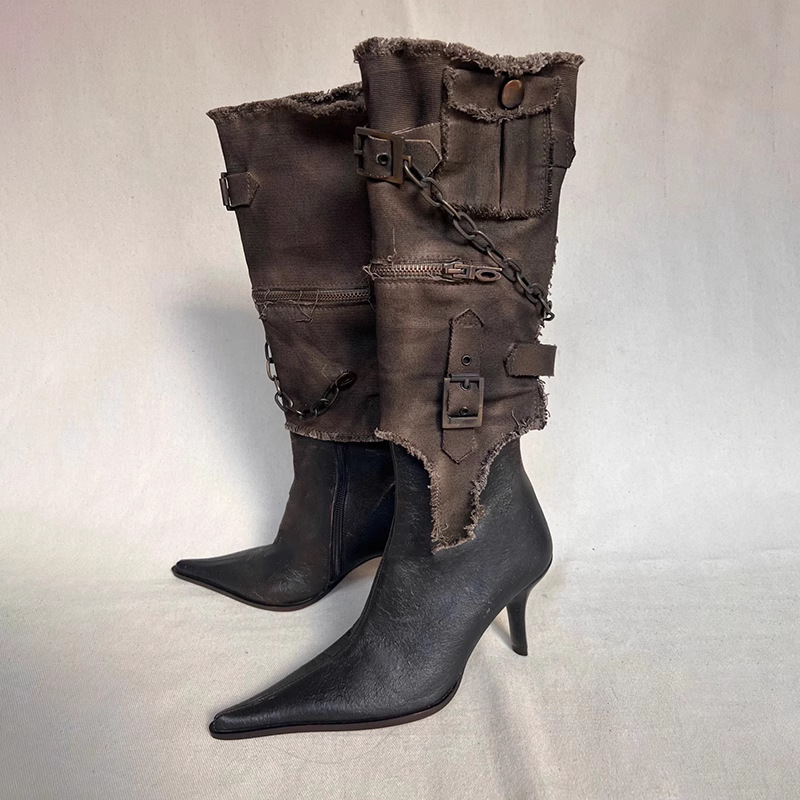
The Violette Vintage Buckle Boots brings balanced proportion and clean silhouette lines to everyday and occasion styling.
Weddings. Check the dress code first. Black is widely accepted at many weddings now, though traditions vary, and it is worth reading our guide on choosing a wedding guest dress without looking overdressed before settling on the full outfit. For shoes, metallics, nude and soft colours tend to feel more celebratory than black on black.
Casual days and travel. A black jersey or shirt dress with brown ankle boots, a low block heel or a clean chunky shoe feels relaxed and put together. Comfort and walkability take priority here, and tonal black is fine if you prefer minimal.
Birthdays and celebrations. This is where a statement shoe is most welcome. Our guide to choosing a birthday dress that suits the venue and occasion is a useful companion when the setting dictates the dress code.
If you are building a wardrobe around a black dress, it helps to browse the full women’s dresses collection alongside footwear so you can judge proportion and finish together rather than separately.
The Styling Takeaway
For a black dress, nude, black, brown and metallic shoes are the dependable choices, and a single bold colour works when you want the footwear to be the focus. Choose by role first (disappear, echo or lead), then check proportion against the hemline, then match the weight of the shoe to the weight of the fabric. A simple next step: lay your black dress next to two or three pairs of shoes in good light, step back, and notice which pair makes the outfit look finished without drawing attention for the wrong reasons.